

What does a 10-day cruise cost?
A 10-day cruise holiday is an investment whose value depends greatly on the type of ship, the destination, and the level of service on board. Choosing a large ocean cruise is a very different decision from stepping aboard a small, exclusive sailing ship. In this article, we answer the most frequently asked questions about a 10-day cruise, from what is included in the price to when you can book at the best rate.
What determines the price of a 10-day cruise?
The price of a 10-day cruise is determined by four main factors: the type of ship, the destination, the season, and the level of service. A cruise on a large ocean liner carrying thousands of passengers works very differently from a voyage on a small sailing ship with a maximum of 28 guests. Those differences in scale, staffing, and facilities translate directly into pricing.
Specifically, the following factors play a role:
- Ship type: Large cruise ships benefit from economies of scale. Smaller, boutique ships offer more service per passenger, which brings higher costs.
- Destination: A cruise in the Caribbean is more expensive than a European route along the Mediterranean or Atlantic coast, due to flight costs and logistics.
- Cabin category: An interior cabin is considerably cheaper than a suite with a private balcony or a luxury cabin with an en-suite bathroom.
- Season: High season (summer holidays, Christmas, New Year) means higher prices. Booking early or travelling outside school holidays pays off.
- Included services: Some cruises are all-inclusive; others charge extra for meals, excursions, and drinks.
How much does a 10-day cruise cost on average per person?
The investment for a 10-day cruise varies considerably depending on the chosen segment. Budget cruises on large ships offer an accessible base price for an interior cabin. Mid-range cruises provide a higher level of comfort and service. Premium and luxury sailing cruises, such as those aboard a historic clipper ship, come with exclusive pricing that reflects the unique nature of the experience. Please get in touch for a personalised quote.
That higher investment for a luxury sailing cruise reflects a fundamentally different product: a small group on board, personalised service, meals prepared by dedicated chefs, and a route that large cruise ships never sail. It is less a means of transport from A to B, and more a travel experience in its own right.
What is and is not included in the price?
On most standard cruises, the cabin, basic meals in the main restaurant, and on-board entertainment are included. What is not included varies considerably by operator and often comes as a surprise to first-time cruisers.
These are typically the items you pay extra for on large cruise ships:
- Alcoholic drinks and specialty coffee
- Dining outside the main restaurant
- Excursions and day trips at destinations
- Gratuities and service charges (sometimes mandatory, per person per day)
- Flights to and from the embarkation port
- Transfers and port taxes
On small-scale luxury sailing cruises, the model is often more comprehensive: breakfast, lunch, dinner, and a selection of drinks are included, as is the use of snorkelling equipment. Always check the terms and conditions before booking so you can make a fair comparison of the total price.
What is the difference between a large cruise ship and a sailing cruise?
The biggest difference between a large cruise ship and a sailing cruise lies in scale, atmosphere, and experience. A large cruise ship typically carries between 2,000 and 6,000 passengers and offers a wide range of entertainment, shops, and restaurants. A sailing cruise on a historic vessel carries a small group of up to 28 people and offers an intimate, authentic travel experience.
Atmosphere and connection
On a large cruise ship, you are one of thousands. The service is professional, but impersonal. On a sailing ship, the crew knows you by name. Contact with fellow travellers and the crew is personal and informal. Many guests describe this as the most valuable aspect of the journey.
Routes and destinations
Large cruise ships follow fixed routes between busy port cities and tourist harbours. A sailing ship can anchor in secluded bays, visit uninhabited islands, and reach places that are inaccessible to large vessels. This creates a fundamentally different sense of freedom and discovery.
When is a 10-day cruise cheapest to book?
A 10-day cruise is most affordable when booked outside peak season and with an early-booking discount. For Caribbean cruises, this is typically the period from April to June and from September to October. Booking early — sometimes up to 12 months in advance — yields a significant discount compared to last-minute rates with many operators.
A few practical tips for finding the best price:
- Book early: Early-booking benefits are often greatest for premium cruises, because the number of available places is limited.
- Avoid school holidays: Summer and Christmas holidays are the most expensive periods. Travellers with flexible schedules pay less.
- Compare the total price: An attractive base price can still add up considerably once extra costs for drinks, gratuities, and excursions are factored in.
- Watch out for port taxes: These costs are sometimes listed separately and can noticeably increase the total price.
Is a 10-day luxury sailing cruise worth the investment?
For travellers looking for more than a standard cruise holiday, a 10-day luxury sailing cruise is absolutely worth the investment. The combination of a small group, personalised service, authentic sailing, and destinations that large ships cannot reach offers an experience that is difficult to compare with a conventional cruise.
The exclusive pricing reflects a fundamentally different product. You are not just paying for a cabin and meals, but for the atmosphere on board, the freedom of the route, the sound of sails in the wind, and a genuine sense of connection with the sea. For those who have grown tired of the anonymity of large cruise ships, this is precisely what has been missing.
That said, a luxury sailing cruise is not for everyone. Those who enjoy a wide range of entertainment, casinos, and large stages will not find that on a historic sailing ship. But those seeking adventure, authenticity, and personal connection in a luxury setting will find something on a sailing ship that a large cruise ship simply cannot offer.
How Clipper Stad Amsterdam helps you choose the right cruise
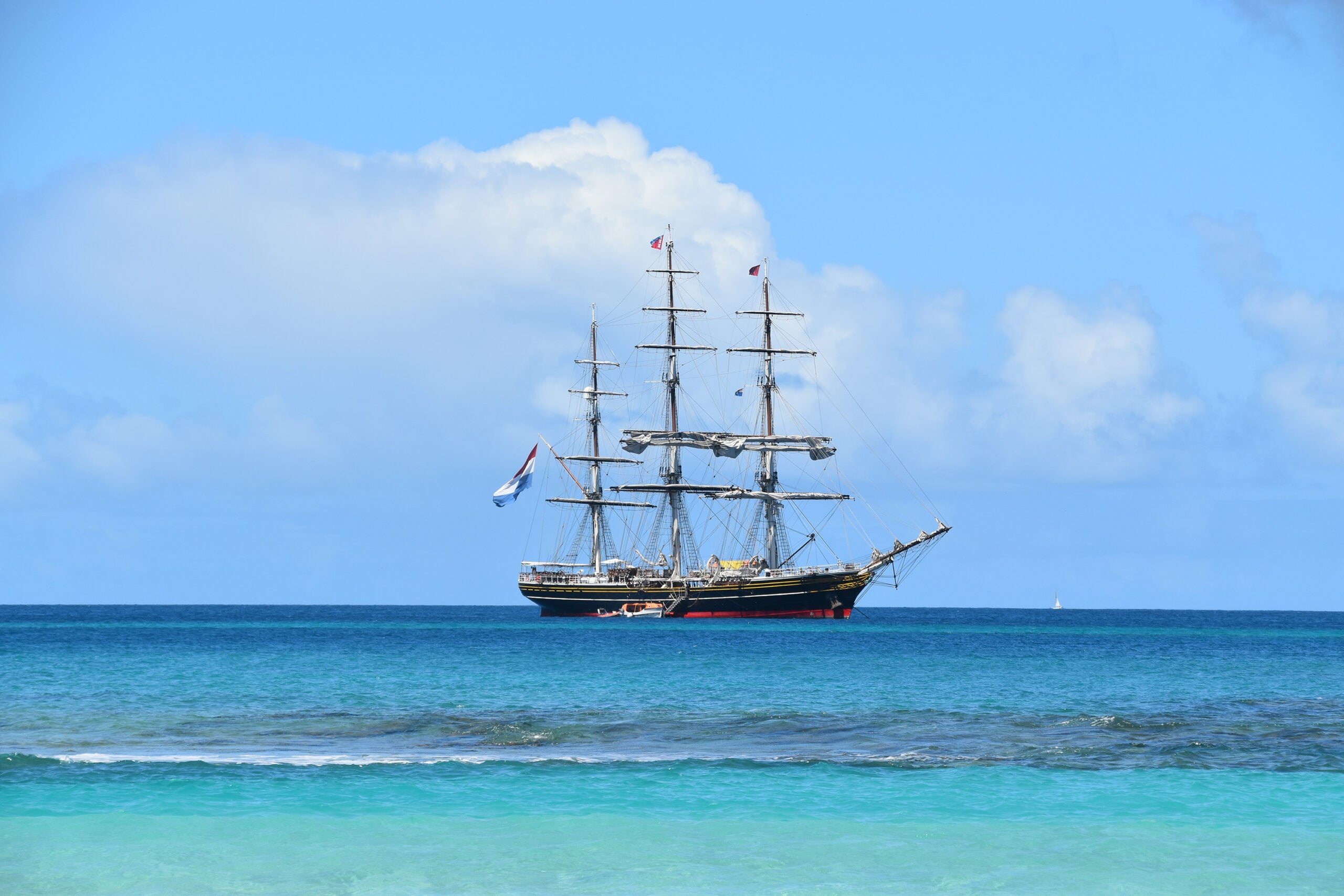
We offer a cruise holiday that is deliberately different from what the major cruise lines provide. On board the Clipper Stad Amsterdam, you sail as part of a small group of up to 28 guests on an authentic three-masted clipper ship of 76 metres. Our luxury sailing cruise in the Caribbean combines the comfort of a boutique hotel with the freedom of sailing on open water.
What you can expect from us:
- A maximum of 28 guests on board for an intimate and personal atmosphere
- 14 luxury cabins with a high level of comfort
- Fully catered meals: breakfast, lunch, and dinner prepared by our chefs
- Anchoring in secluded bays that large cruise ships cannot reach
- Activities such as snorkelling, day trips, and relaxing on white sandy beaches
- A young, dedicated crew who know you by name
Would you like to know more about our voyages, or would you like to reserve a place directly? Book your trip or contact us for personal advice and a tailored quote.
Frequently Asked Questions
Kan ik een cruise van 10 dagen ook solo boeken, en betaal ik dan meer?
Ja, solo boeken is bij de meeste cruisemaatschappijen mogelijk, maar let op de zogenaamde ‘single supplement’: een toeslag die je betaalt omdat je een hut alleen bezet. Bij grote cruiseschepen kan deze toeslag aanzienlijk oplopen. Bij kleinschalige zeilcruises varieert dit per aanbieder, dus vraag altijd expliciet naar de soloprijs voordat je boekt.
Hoe ver van tevoren moet ik een luxe zeilcruise boeken om zeker te zijn van een plek?
Voor kleinschalige luxe zeilcruises zoals die op de Clipper Stad Amsterdam is vroeg boeken sterk aan te raden, bij voorkeur 6 tot 12 maanden van tevoren. Omdat er maximaal 28 gasten aan boord zijn, zijn de beschikbare plekken beperkt en raken populaire vertrekdata snel vol. Bovendien profiteer je bij vroeg boeken vaak van de beste vroegboekkorting.
Wat moet ik meenemen op een cruise van 10 dagen, en zijn er speciale kledingvoorschriften?
De benodigde bagage hangt sterk af van het type cruise. Op grote cruiseschepen gelden soms formele avonddresscodes voor bepaalde diners, terwijl een zeilcruise doorgaans een informelere sfeer heeft waarbij comfortabele, windbestendige kleding en goede zolen de prioriteit zijn. Neem altijd een lichte regenjas, zonnebescherming en comfortabel schoeisel mee, en controleer van tevoren de specifieke kledingrichtlijnen van je aanbieder.
Wat als ik zeeziek word tijdens een cruise van 10 dagen?
Zeeziek worden is een veelgehoorde zorg, maar in de praktijk valt het voor de meeste reizigers mee, zeker op rustige wateren zoals de Caribische Zee. Preventieve middelen zoals pleisters, tabletten of acupressuurpolsbandjes helpen effectief. Kleinere zeilschepen bewegen meer mee met de golven dan grote cruiseschepen, maar ervaren zeilers beschouwen dit juist als onderdeel van de authentieke zeilervaring.
Heb ik een reisverzekering nodig voor een cruise van 10 dagen, en wat moet die dekken?
Een reisverzekering is voor een cruise van 10 dagen sterk aanbevolen, en sommige aanbieders stellen dit zelfs verplicht. Zorg dat je verzekering medische kosten en repatriëring dekt, want medische behandeling op zee of in het buitenland kan zeer kostbaar zijn. Controleer ook of annuleringsdekking en bagageverlies zijn inbegrepen, en of de polis specifiek cruises en watersporten zoals snorkelen omvat.
Zijn er cruises van 10 dagen geschikt voor mensen met beperkte mobiliteit?
Grote cruiseschepen zijn over het algemeen goed toegankelijk voor reizigers met beperkte mobiliteit, met liften, rolstoeltoegankelijke hutten en aangepaste faciliteiten. Kleinschalige zeilschepen zijn door hun historische bouw en smalle gangpaden minder geschikt voor mensen met ernstige mobiliteitsbeperkingen. Neem bij twijfel altijd contact op met de aanbieder om de specifieke situatie te bespreken voordat je boekt.
Kan ik tijdens een cruise van 10 dagen ook zelf meevaren of helpen met het zeilen?
Op grote cruiseschepen is actieve deelname aan het varen niet mogelijk. Op kleinschalige zeilcruises, zoals aan boord van de Clipper Stad Amsterdam, is dit vaak wél een optie: je kunt onder begeleiding van de bemanning leren over het zeilen, helpen met de zeilen of gewoon meekijken op de brug. Dit is voor veel gasten een van de meest memorabele onderdelen van de reis en iets wat een groot cruiseschip simpelweg niet biedt.