
Why is vacation good for you?
A holiday is more than a brief escape from daily life. It is a conscious investment in your health, your happiness, and your energy. Yet many people underestimate just how significant the impact of a good holiday can be — and how to get the most out of it. In this article we answer the most frequently asked questions about holidays, from the science behind relaxation to choosing a travel experience that truly suits you.
Why is taking a holiday so important for your health?
Taking a holiday is important for your health because it gives your body and mind the chance to recover from prolonged stress. When you regularly take a break from work and obligations, you lower your cortisol levels, improve your sleep quality, and increase your resilience against burnout. A holiday is not a luxury — it is maintenance.
Chronic stress has a measurable impact on your immune system, your concentration, and your mood. By periodically disconnecting completely from your daily routine, you give your nervous system the space to reset. People who take regular holidays consistently report higher energy levels, a better mood, and greater creativity upon their return.
A holiday also contributes to your social wellbeing. Travelling together with a partner, friends, or family strengthens bonds and creates shared memories that last for years. That connection is in itself a powerful buffer against stress and loneliness.
What happens to your brain when you go on holiday?
When you go on holiday, your brain switches from the so-called ‘task-focused mode’ to the ‘default mode network’ — a resting state in which your brain makes connections, processes ideas, and stimulates creativity. This is why you often have your best insights on holiday and suddenly see problems from a different angle.
In daily life your prefrontal cortex is constantly active: planning, deciding, responding. On holiday that pressure eases. Your brain gains space for what scientists call ‘incubation’ — the unconscious processing of information. That is why so many people return from holiday with fresh ideas and new perspectives.
New environments play an additional role in this. When you are somewhere where everything is different — sounds, smells, views — your brain is stimulated in a way that is not possible at home. This activates curiosity and strengthens your ability to learn and to feel.
How long does a holiday need to be to truly rest?
To truly rest, a holiday needs a minimum of seven to ten days. The first two to three days are generally needed to detach from work and daily stress. Only after that does the body begin to genuinely relax and the mind benefit from the distance. Shorter holidays can be refreshing, but rarely offer deep recovery.
A holiday of one or two weeks offers the best balance between genuine relaxation and practical life. After returning, the positive effect lasts on average for several weeks — but the more intense and meaningful the experience was, the longer that feeling persists.
Quality counts at least as much as duration. A holiday during which you are constantly reachable, packed with activities, or spent in a busy environment gives your brain little real rest. Rest requires conscious choices: fewer stimuli, more presence.
What is the difference between an ordinary holiday and a special travel experience?
An ordinary holiday takes you away from home. A special travel experience changes something in you. The difference lies not in the destination, but in the degree of engagement, wonder, and meaning that a journey brings with it. Special trips leave traces you can still feel years later.
What makes a travel experience meaningful?
A meaningful travel experience typically has a number of recognisable characteristics:
- You are actively present rather than a passive consumer
- You meet people or encounter situations that broaden your perspective
- You are outside your comfort zone — but in a safe way
- The environment has an authentic character you will not find anywhere else
- You share the experience with people who matter to you
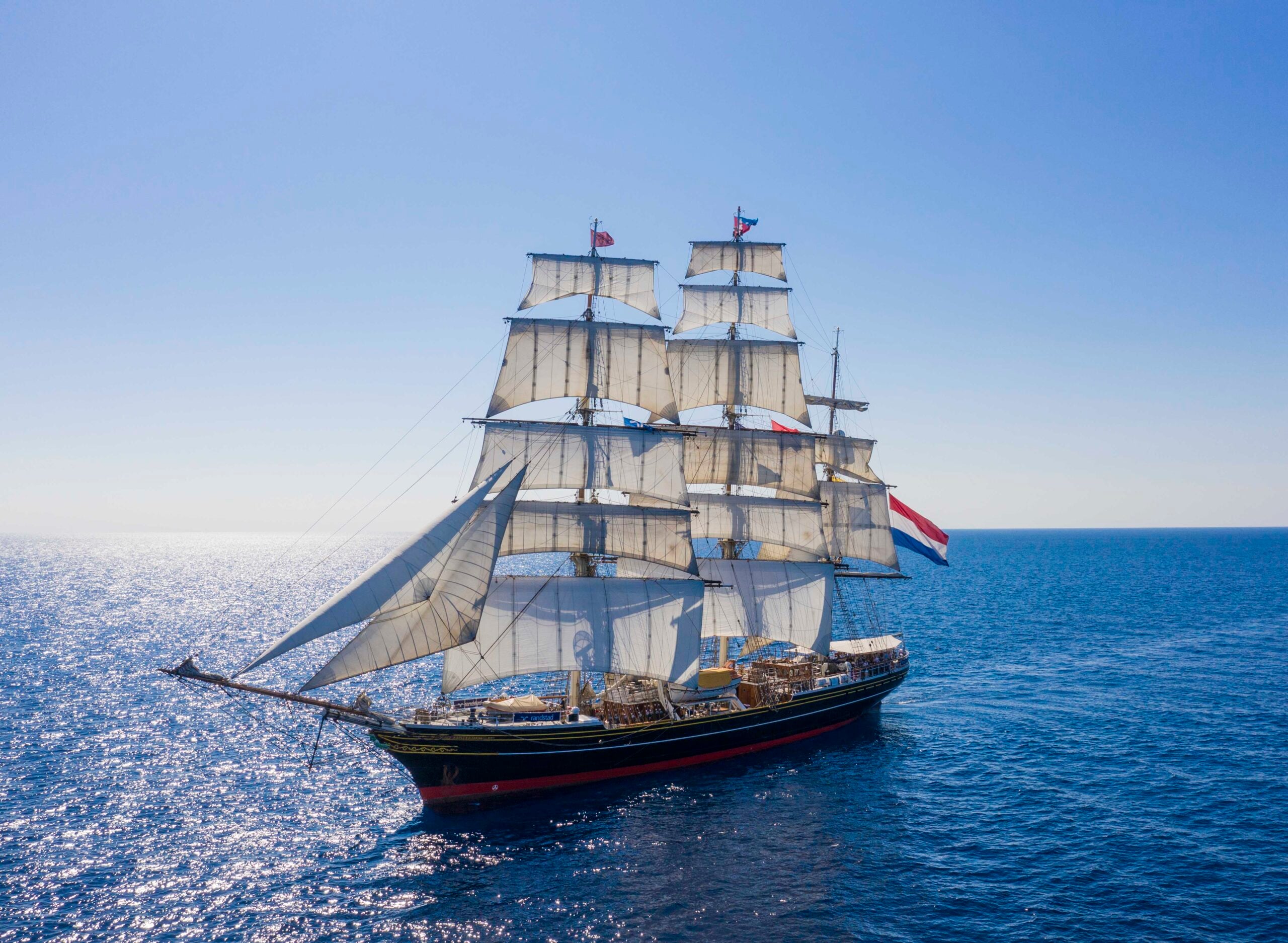
An all-inclusive resort offers comfort, but little of the above. A luxury sailing cruise on a historic clipper ship offers both: the comfort of a boutique hotel experience and a genuine connection with the sea, the wind, and the destination. That is the kind of contrast that turns a holiday into a memory for life.
Which type of holiday suits your need for rest and adventure best?
The type of holiday that suits you best depends on the balance between your need for rest and your desire for adventure. People who primarily want to decompress benefit from a calm, predictable environment. People who draw energy from new experiences thrive on a journey with movement, discovery, and variety.
Many travellers think that rest and adventure are mutually exclusive — but that is a misconception. The most satisfying holidays combine both. Think of a trip where you discover new places during the day and unwind in a quiet, secluded bay in the evening. That rhythm of action and relaxation is the ideal formula for many people.
Ask yourself the following questions to determine what you need:
- Do I arrive home empty or full of energy? (Empty = more rest needed, full = adventure is an option)
- Do I want to meet people or simply have no obligations for a while? (Social vs. withdrawn)
- Do I need structure or freedom in my daily schedule?
- What did I miss most over the past year: silence or experience?
Your answers will give you a clear picture of the type of holiday that will benefit you most right now.
How do you make every holiday an unforgettable experience?
You make an unforgettable holiday by consciously choosing presence over distraction, depth over breadth, and genuine connection over superficial comfort. That starts before you even depart: choose a destination or style of travel that truly matches what you need right now, not what is popular or what others are doing.
Once you are on your way, it helps to put your phone away more often, to travel at a slower pace, and to pay attention to small moments. The best memories rarely come from a planned attraction — they arise at the table, on the water, or in a conversation you never expected.
Also choose consciously for travel companions and forms of travel that give you energy. A small group aboard a remarkable ship, an unfamiliar coastline drifting past, a dinner at sunset on the open sea — those are the moments that stay with you.
How Clipper Stad Amsterdam helps create an unforgettable holiday
We understand that travellers who truly want to experience something are looking for more than a standard holiday. Clipper Stad Amsterdam offers a travel experience that combines rest, adventure, luxury, and authenticity in a way that few other journeys can match.
On board our historic three-masted clipper ship you will find:
- An intimate atmosphere with a maximum of 28 passengers — no anonymity, just genuine connection
- 14 luxury cabins with a boutique hotel feel in the middle of the sea
- A young, friendly, and dedicated hospitality team ready to assist you
- Daily sailing on the open sea, followed by anchoring in secluded bays
- Freshly prepared meals on board, including breakfast, lunch, and dinner
- Activities such as snorkelling, day trips ashore, and relaxing on white sandy beaches
Our luxury sailing cruises in the Caribbean are designed for travellers who are ready for something different — something that truly stays with them. Rates are tailored exclusively to season, suite category, and travel duration. Would you like to know more or are you curious which cruise suits you? Contact us for a personal quote — we are happy to help.