
Where Is It Always Between 20 and 25 Degrees?
A stable temperature between 20 and 25 degrees can be found year-round on islands and in coastal areas with an oceanic climate, such as Madeira, the Canary Islands and parts of Hawaii. In those places, the surrounding water keeps the air mild, so there is hardly any difference between summer and winter. Below, you can read why that is, where to find it and when is the best time to go. If you are looking for warm countries in spring, this is a good place to start.
Why does the temperature stay so stable in some places?
The temperature stays stable because large volumes of seawater absorb heat slowly and release it slowly again. As a result, islands in the middle of the ocean don’t experience extreme highs or lows. Trade winds, a location close to the equator and little surrounding landmass reinforce that effect even further.
Water has a much greater heat capacity than land. In summer, the sea cools the air slightly; in winter, it gives heat back. On the mainland, temperatures can vary by dozens of degrees within a few months, but on an island in the Atlantic Ocean, the thermometer often stays within a range of just a few degrees.
Altitude plays a part too. On volcanic islands such as Madeira and Tenerife, it is often warmer on the coast than higher up inland. That way, you can go from beach weather to fresh mountain air within a single day, while the average climate remains pleasant.
Which islands have a spring climate all year round?
Madeira, the Canary Islands and Hawaii are known for their year-round spring climate, with daytime temperatures that usually fall between 20 and 25 degrees. The Azores and parts of Cape Verde come close as well, although the weather differs per island and per side of the island.
- Madeira: known as the “island of eternal spring”, with mild winters and gentle summers.
- The Canary Islands: Tenerife, Gran Canaria and Lanzarote in particular have a stable climate, with a dry south and a greener north.
- The Azores: mild and green, but more changeable, with more rain and wind.
- Hawaii: tropically mild, with coastal averages that remain fairly constant throughout the year.
Keep in mind that “between 20 and 25 degrees” is an average. On a windy day or in the shade, it can feel cooler, so a light cardigan in your suitcase always comes in handy.
Is it 20 to 25 degrees in the Caribbean too?
No, in the Caribbean the temperature is usually higher: often around 28 to 31 degrees during the day. The wind and the sea breeze make it pleasant, but it is warmer than a true spring climate. It only feels a little milder at night and during the winter months.
That is no drawback. If you love sun, clear water and white beaches, you will find exactly what you are looking for in the Caribbean. The difference from Madeira or the Canary Islands is mainly in how the temperature feels: in the Caribbean, it is all about swimming, snorkeling and lounging lazily on deck, while a spring climate is more of an invitation to go walking and get out and about.
Especially in the winter months, from December through April, the weather in the Caribbean is dry and stable, with a gentle trade wind that keeps the heat bearable. That makes it a popular destination for anyone wanting to escape the Dutch winter.
When is the best time to travel for mild weather?
The best time to travel for mild weather is spring, from March through May, and early autumn, from September to October. During those periods, it is pleasantly warm at most sunny destinations, without the heat and crowds of high summer.
For anyone looking for warm countries in spring, there are a few clear advantages:
- Fewer tourists and more peace and quiet on beaches and in harbors.
- Pleasant temperatures for walking, cycling or exploring a city.
- Often lower prices than in the high-season months.
- A sea that may still be chilly, but is getting warmer all the time.
If you want warmer water and guaranteed sunny weather, choose the winter months in the Caribbean instead. The dry season there runs roughly from December to April and is regarded as the most reliable period.
What does sailing feel like at 20 to 25 degrees on board?
Sailing at 20 to 25 degrees feels wonderful: warm enough to sit on deck in short sleeves, yet cool enough to help out actively without overheating. The sea breeze provides cooling, while the sun creates a relaxed atmosphere.
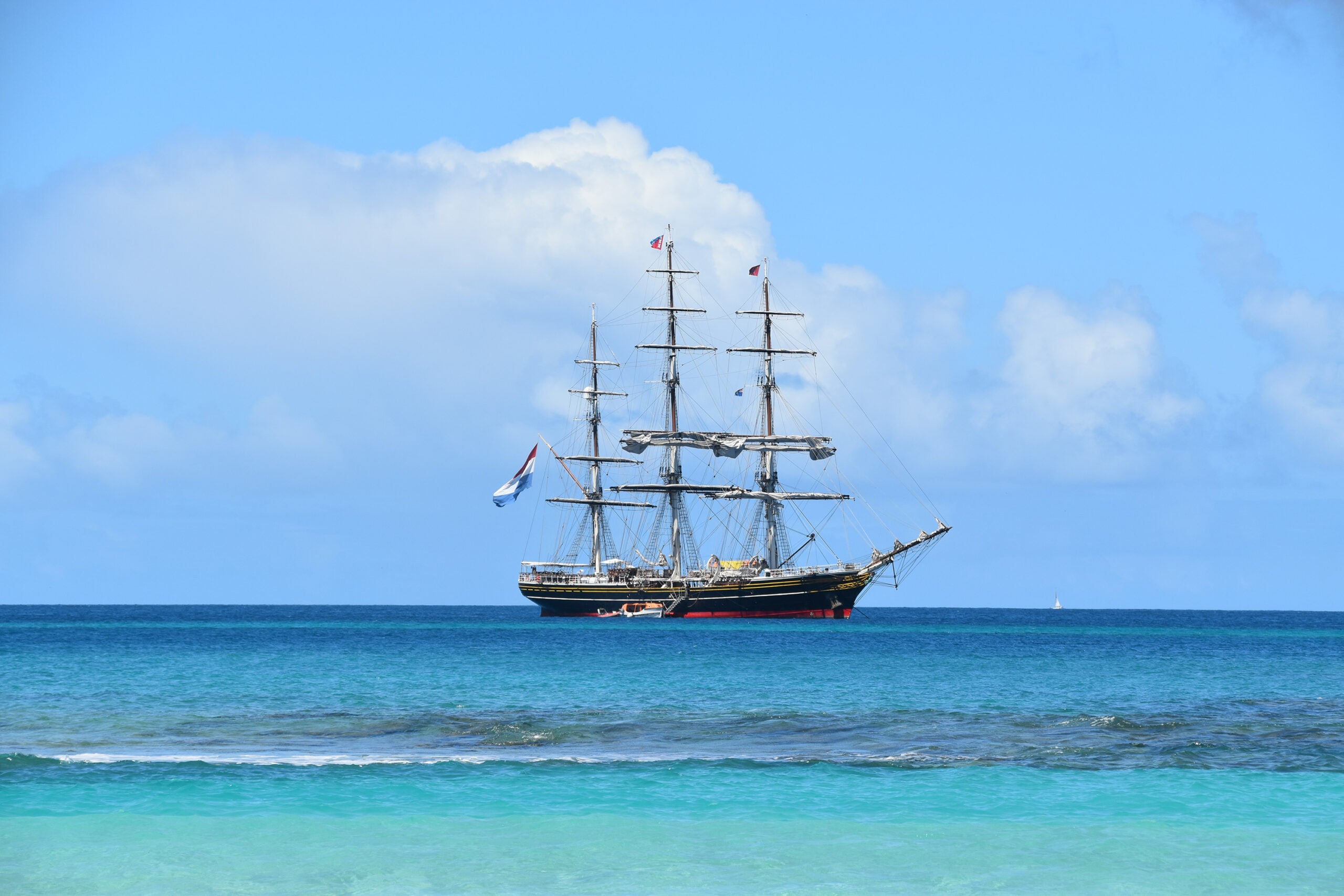
On board a large sailing ship, you notice the difference from an ordinary holiday right away. You feel the wind, smell the salt and see the sails taut against a blue sky. On open water, it is often a few degrees cooler than on land because of the wind, so a windbreaker or sweater for the evening is no unnecessary luxury.
At these temperatures, you can be outside all day. You can watch as the sails are set, have breakfast in the open air or watch the sunset with a drink in the evening. The weather plays along with exactly the kind of relaxed adventure that so many travelers long for.
Can you combine this climate with a sailing trip?
Yes, a sailing trip combines well with a mild or warm climate. Many routes lead past islands and coasts where the weather is stable, such as the Canary Islands, Madeira, the Azores and the Caribbean. That way, you see multiple destinations without constantly having to pack and unpack your suitcase.
The great advantage of sailing is that you travel from place to place at night or during the day and still wake up at a new location every morning. Especially on islands with a stable climate, that means predictably good weather, even if one bay is a little windier than another. If you prefer to travel on a small scale rather than with thousands of other passengers on a large cruise ship, you will find a more intimate atmosphere on a sailing ship.
Do keep in mind the cost of flights: these are usually not included in sailing trips and cruises, so take that into account when planning. Also choose your travel time deliberately, because the seasons determine how much sun, wind and tranquility you experience on board.
How Clipper Stad Amsterdam helps with sunny and mild sailing
At Clipper Stad Amsterdam, we combine the best of two worlds: a classic three-master and the comfort of a boutique hotel. Our ship is 76 meters long, has 14 cabins and accommodates a maximum of 48 passengers, so you enjoy a personal and relaxed journey to destinations with pleasant weather.
This is what you can expect from us:
- Luxury sailing cruises, mainly in the Caribbean, where we sail during the day and anchor in a secluded bay in the evening.
- A young, friendly and dedicated crew who sail the ship by hand, without automated systems for sails and rudder.
- Breakfast, lunch, dinner and cocktails, prepared by our chefs on board.
- Activities such as snorkeling, day trips and relaxing on white beaches.
- An intimate atmosphere, far away from the crowds of large cruise ships.
Our cruises are a premium experience, with prices starting from €5,300 per person. Flights are not included. Would you like to know which trip best suits your wishes? Then take a look at our trips and book your journey, discover more about our ship and our destinations or get in touch with us. We are happy to help you think it through.