

What should you look out for when booking a cruise?
When booking a cruise holiday, three things matter most: the type of ship that suits your travel preferences, the route you want to sail, and the total cost including extras. Thinking carefully about these in advance prevents disappointment and helps you choose a trip that truly matches what you are looking for. In this article, we answer the most frequently asked questions about choosing the right cruise.
What is the difference between a large and a small cruise?
The biggest difference between a large and a small cruise is the scale and the onboard experience. Large cruise ships carry thousands of passengers at a time and offer a wide range of facilities such as theatres, swimming pools, and multiple restaurants. Small cruises, with dozens to a few hundred guests, offer a more intimate atmosphere, more personal contact, and access to destinations that large ships cannot reach.
On a large cruise ship, you are part of a crowd. The organisation is impressive, but the anonymity is significant. You queue, share facilities with hundreds of others, and contact with the crew is limited. That suits travellers who place entertainment and variety above everything else.
Small cruises, on the other hand, create an entirely different dynamic. The crew knows you by name, the group is manageable, and the atmosphere is comparable to a boutique hotel at sea. Ports and bays that are out of reach for large ships become the highlights of the journey on a small cruise.
Which travel route suits you best?
The best route for your cruise holiday depends on what you want to experience: culture, nature, sun and sea, or a combination. Those who want to explore historic cities are more likely to choose a route through the Mediterranean. Those seeking tranquillity, turquoise water, and unspoilt nature are better served in the Caribbean or along the Atlantic coast of Europe.
When choosing a route, also consider the season. The Caribbean is most pleasant outside the Atlantic hurricane season, which runs from June through November. Europe offers wonderful conditions in the summer months for sailing trips along the Norwegian fjords, the Portuguese coast, or through the Mediterranean.
Ask yourself these questions before choosing a route:
- Do I want a new port every day, or would I prefer a slower pace with more rest?
- How important are day trips and cultural visits to me?
- Do I prefer warm weather, or is a temperate climate fine too?
- Do I want to visit well-known tourist destinations, or would I rather explore off-the-beaten-path locations?
What are the hidden costs of a cruise?
The most common additional costs on a cruise are service charges, drinks packages, shore excursions, gratuities, and port fees not included in the base price. With some cruise companies, the total amount can end up significantly higher than the advertised price. It is therefore wise to find out in advance exactly what is included.
Always check exactly what is included in the price. Pay attention to the following cost items:
- Drinks and meals: Are all meals and drinks included, or do you pay per item?
- Gratuities and service charges: Some companies automatically charge a daily amount per person.
- Shore excursions: Organised excursions are charged separately and can add up quickly.
- Wi-Fi on board: An internet connection is a paid extra on many ships.
- Flights and transfers: The cruise price rarely covers travel to and from the embarkation port.
An all-inclusive cruise may seem like a larger investment at first glance, but it often offers more certainty and transparency when you add up all the extras. Always compare the total price, not just the starting amount.
How do you choose the right ship for your travel style?
You choose the right ship for your travel style by looking at the onboard atmosphere, the size of the group, the level of service, and the type of activities on offer. A ship is more than a means of transport — it is the environment where you spend most of your cruise holiday.
Keep the following in mind when making your choice:
- Group size: The smaller the ship, the more intimate the atmosphere and the more personal the service.
- Activities: Are you looking for entertainment and distraction, or do you want peace and a connection with the sea?
- Age and company: Some ships cater to families, others to couples or adventurous adults.
- Comfort versus adventure: Do you want luxury cabins and fine dining, or does a more no-frills sailing experience suit you better?
Read reviews from previous passengers and look at photos of the accommodation. The atmosphere of a ship is hard to capture in brochures, but first-hand accounts give an honest picture.
When is the best time to book a cruise?
The best time to book a cruise is as early as possible, ideally six to twelve months in advance. Popular routes and ships with limited capacity fill up quickly, and booking early often means better availability and a wider choice of cabins. Last-minute deals exist, but they are unreliable if you have specific wishes.
For small ships with a limited number of places, this applies even more strongly. If a ship takes a maximum of a few dozen passengers, the most popular departure dates can sell out months in advance. Those who are flexible on dates and routes can sometimes benefit from more attractive rates outside the high season.
Also keep in mind:
- Early-booking advantages that companies offer when reserving well in advance
- Seasonal price differences — the high season is generally more expensive
- Cancellation conditions, especially if you book far in advance
What makes a sailing cruise different from a regular cruise?
A sailing cruise differs from a regular cruise in that wind and sea play an active role in the journey. Instead of a fixed schedule on a motor vessel, the weather also influences the course. This creates a sense of adventure and freedom that is absent on a regular cruise. The atmosphere is more intimate, the group smaller, and the connection with nature much greater.
On a sailing ship, the vessel often anchors in the evening in remote bays that are out of reach for larger vessels. Guests sleep on the water, surrounded by silence, far from busy ports. During the day, the ship sails with the wind, with time in between for snorkelling, swimming, or simply enjoying the view.
The type of people on board is also different. Sailing cruises attract travellers who consciously choose a small-scale, authentic experience over the anonymous comfort of a large cruise ship. They want to truly feel the sea, not just see it from a window on the tenth floor.
How Clipper Stad Amsterdam helps you choose the right cruise
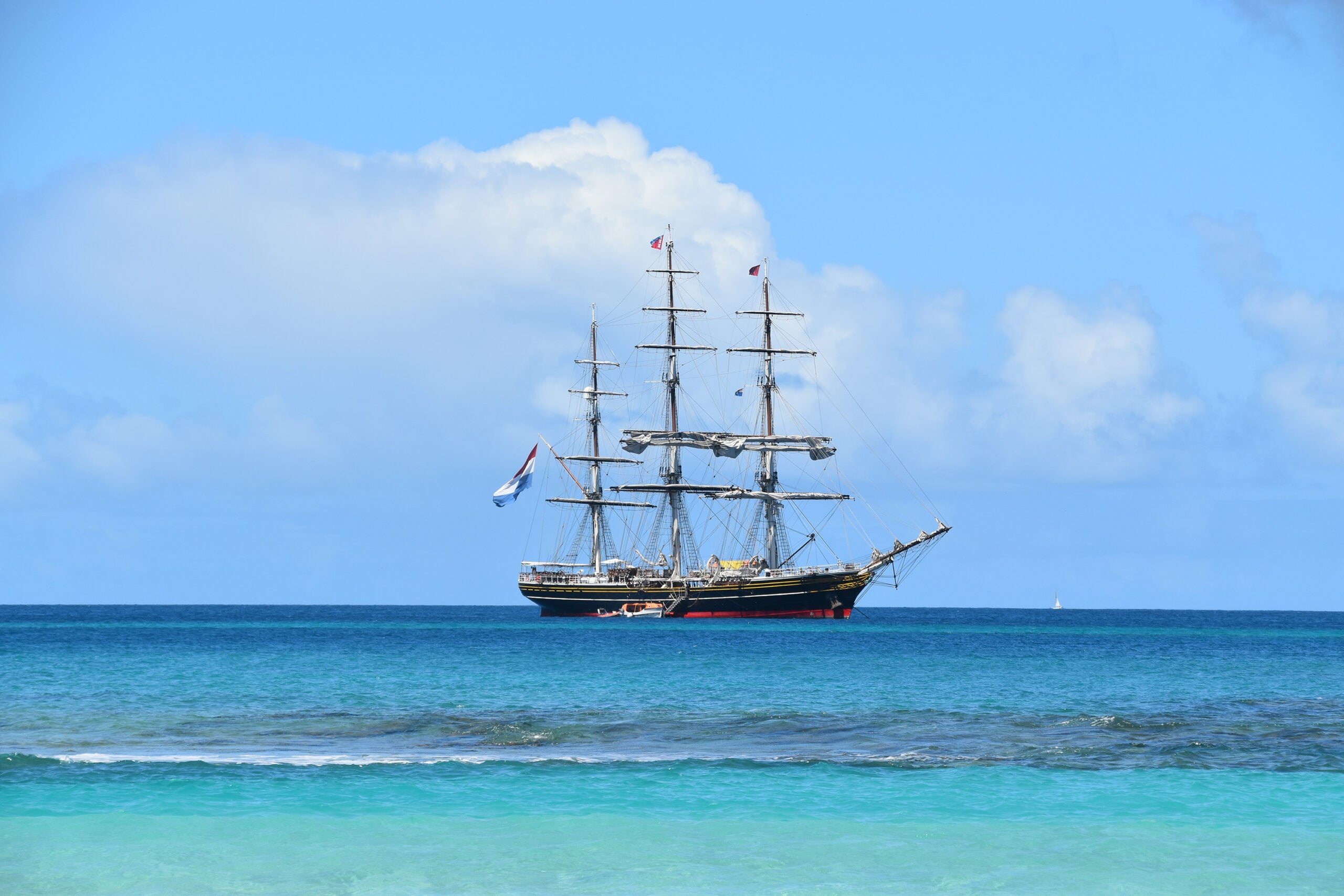
We understand that a cruise holiday is a meaningful choice, and that the range of options can be overwhelming. Clipper Stad Amsterdam offers an answer for travellers seeking the best of both worlds: the adventure of authentic sailing combined with the comfort of a luxury accommodation.
What sets our luxury sailing cruise apart:
- A maximum of 28 passengers on board, spread across 14 cabins — for an intimate, personal atmosphere
- Fully catered: breakfast, lunch, and dinner prepared by our chefs on board
- Anchoring in remote bays in the Caribbean, far from mass tourism
- Activities such as snorkelling, shore excursions, and relaxing on white sandy beaches
- A young, dedicated crew that knows you by name and is on hand throughout the entire journey
- Authentic hand-operated sailing on an iconic three-masted clipper with a rich history
Our cruises are exclusively priced to match the journey, depending on the season, cabin category, and duration of travel. Would you like to know which trip suits you best and what the options are? Contact our team for a personal quote, or view the available departure dates directly and book your trip.
Frequently Asked Questions
Is een zeilcruise ook geschikt voor mensen zonder zeilervarig?
Absoluut. Op een luxe zeilcruise zoals die van Clipper Stad Amsterdam hoef je zelf geen zeilervaring te hebben. De professionele bemanning zorgt volledig voor de navigatie en het zeilen. Jij geniet als passagier van de reis, het uitzicht en de sfeer — zonder dat je ook maar één touw hoeft aan te raken. Wel kun je, als je dat wilt, meer leren over het schip en actief meedoen.
Hoe weet ik of een all-inclusive cruise echt goedkoper uitvalt dan een standaard cruise?
Maak een realistische schatting van je dagelijkse uitgaven aan boord: drankjes, fooien, wifi en eventuele excursies. Tel die op bij de basisprijs van de standaard cruise en vergelijk dat totaal met de all-inclusive prijs. Reizigers die comfortabel willen genieten zonder constant bij te houden wat ze uitgeven, komen bij een all-inclusive aanbieding vrijwel altijd goedkoper uit.
Wat is het beste seizoen voor een cruise in het Caribisch gebied?
De beste periode voor een cruise in het Caribisch gebied is van december tot en met april. In deze maanden is het weer stabiel, zijn de temperaturen aangenaam en valt het buiten het Atlantische orkaanseizoen (juni tot november). Wie in het laagseizoen reist, profiteert soms van aantrekkelijkere tarieven, maar moet rekening houden met een hogere kans op regenbuien en sterkere winden.
Kan ik een cruise boeken als ik last heb van zeeziekte?
Zeeziekte is een veelgehoorde zorg, maar hoeft geen dealbreaker te zijn. Op grote cruiseschepen merk je de golfslag nauwelijks door de omvang en stabilisatoren van het schip. Op kleinere zeilschepen beweeg je meer mee met het water, wat voor sommige mensen onwennig kan zijn. Preventieve middelen zoals seasickness-pleisters of -tabletten werken goed; raadpleeg je huisarts vooraf voor een passend advies.
Hoe ver van tevoren moet ik een kleine zeilcruise boeken?
Voor kleine zeilcruises met beperkte capaciteit — zoals schepen met minder dan 30 passagiers — is het verstandig minimaal zes tot twaalf maanden van tevoren te boeken. Populaire vertrekdata in het hoogseizoen zijn soms al een jaar eerder uitverkocht. Vroeg boeken geeft je bovendien de beste keuze in hutten en vergroot de kans op vroegboekvoordelen.
Wat moet ik inpakken voor een zeilcruise?
Pak lichte, luchtige kleding voor overdag en een warme laag voor koelere avonden op zee. Goede zonnebrandcrème, een zonnehoed en stevige, niet-slippende schoenen zijn onmisbaar aan boord. Vergeet ook niet snorkelspullen, een waterdichte tas en een kleine rugzak voor daguitstapjes. Controleer altijd de paklijst of aanbevelingen van de cruisemaatschappij, want de opslagruimte in hutten is doorgaans beperkt.
Wat als mijn reisgezelschap andere voorkeuren heeft dan ik?
Bespreek vooraf de prioriteiten van iedereen in je reisgezelschap: wil de één ontspanning en de ander avontuur, dan is een cruise met een gevarieerd dagprogramma een goede keuze. Op een kleine zeilcruise is het programma flexibel genoeg om zowel actieve reizigers als mensen die gewoon willen genieten aan hun trekken te laten komen. Neem bij twijfel contact op met de cruisemaatschappij — zij helpen je de beste match te vinden.