

What Should You Not Miss When Your Cruise Stops at Dominica?
If your cruise calls at Dominica, you absolutely cannot miss the Boiling Lake, Trafalgar Falls, and the underwater park Champagne Reef. Dominica is different from most Caribbean islands: here it’s all about unspoiled nature, spectacular volcanic landscapes, and authentic local culture rather than busy beach resorts. In this article, we answer the most frequently asked questions about a cruise to Dominica, so you can step ashore fully prepared.
What makes Dominica different from other Caribbean islands?
Dominica is often called the “Nature Isle of the Caribbean,” and that’s no empty marketing term. The island has no vast white sandy beaches or all-inclusive resorts, but instead offers one of the most intact tropical ecosystems in the world: dense rainforests, hot springs, active volcanoes, and crystal-clear rivers. For cruise guests looking for something different from the typical Caribbean experience, Dominica is a revelation.
Where islands like Sint Maarten or Aruba are heavily focused on tourist infrastructure, Dominica has deliberately remained small-scale. The local population, including the indigenous Kalinago community, plays a visible role in daily life. This gives the island an authenticity that is hard to find elsewhere in the Caribbean. Those who have a cruise to Dominica on their itinerary will experience an island that operates at its own pace and on its own terms.
Which natural attractions should you absolutely not miss in Dominica?
The three absolute highlights for cruise guests in Dominica are the Boiling Lake, Trafalgar Falls, and Champagne Reef. The Boiling Lake is one of the largest hot lakes in the world, accessible via a challenging hike through Morne Trois Pitons National Park, a UNESCO World Heritage Site. Trafalgar Falls are two spectacular waterfalls a short distance from the capital Roseau. Champagne Reef takes its name from the volcanic gas bubbles that constantly rise from the seabed, making snorkeling there a surreal experience.
Hiking and jungle
Morne Trois Pitons National Park offers dozens of trails at various levels. The hike to the Boiling Lake takes an average of six to seven hours and is physically demanding, but the reward is an almost mystical landscape of steaming craters and sulfurous springs. Less intensive walks lead past the Emerald Pool, a small waterfall surrounded by lush greenery.
Snorkeling and diving
Dominica ranks among the best diving destinations in the Caribbean. In addition to Champagne Reef, there are multiple dive sites with rich coral reefs and a surprising variety of marine life. Even for snorkelers who don’t want to dive, the shallow waters surrounding the island are well worth exploring.
What is the best way to explore the island as a cruise guest?
As a cruise guest, you arrive in Roseau, the capital of Dominica, where a compact cruise terminal is located. From the pier you can walk to the city center. For excursions further into the island, it is advisable to book a local guide or organized tour in advance, especially if you want to visit remote spots such as the Boiling Lake or the interior of the rainforest.
Local guides know the terrain well, speak English, and ensure you make the most of your available time ashore. Dominica does not have a large tourist network of tour buses, but there are reliable local drivers and small tour operators active on the island. If you rent a car, keep in mind that the roads are narrow and winding and that driving in the interior requires concentration. For a short port day, an organized day trip is the most efficient choice.
What is the best season to visit Dominica by cruise?
The best season for a cruise to Dominica is from December through April. During these months the chance of rain is lowest, temperatures are pleasant, and the sea is relatively calm. This is also the high season for Caribbean cruises in general, which means ports can be busier than outside the season.
Dominica lies in the so-called “hurricane belt” and the official hurricane season runs from June through November, with the most activity in August and September. During that period, cruises to Dominica are less common and sometimes not possible. The months of May and November form a transitional period with changeable weather, but also less crowds. For those who want to see nature at its most beautiful, the rainforest is particularly lush and green after a rain shower, although that does require some flexibility in plans.
Which local food and drink experiences are worth trying?
The local cuisine of Dominica revolves around fresh ingredients from its own nature: tropical fruit, fish, root vegetables, and herbs grown on the island itself. A typical dish is “mountain chicken,” which despite the name is actually a large species of frog considered a local delicacy. Fresh fish, lobster, and seafood are widely available on the island and are often prepared simply but flavorfully.
In Roseau you’ll find small local restaurants and street food stalls where you can sample authentic Dominican cuisine. Also try the local fruit juices and “Kubuli,” the island’s national beer. For a special experience, visit one of the local markets, where fresh produce and handmade souvenirs are sold alongside local snacks and drinks.
Is Dominica suitable for both adventurous and relaxed cruise guests?
Yes, Dominica offers enough to do for both types of travelers, although the island is adventurous at its core. Active travelers can fill their day with hiking, diving, snorkeling, and canyoning. Those who prefer to relax can enjoy the warm sulfur springs at Wotten Waven, visit the botanical gardens of Roseau, or stroll leisurely through the city center.
It is worth knowing that Dominica is not a typical beach island. The beaches are predominantly dark volcanic sand, which takes some getting used to for some travelers, but for others actually adds to the unique atmosphere of the island. Those purely looking for white beaches and sun loungers will find fewer of them here than on other Caribbean islands. However, those open to a different Caribbean experience will be richly rewarded.
How Clipper Stad Amsterdam helps you get the most out of Dominica
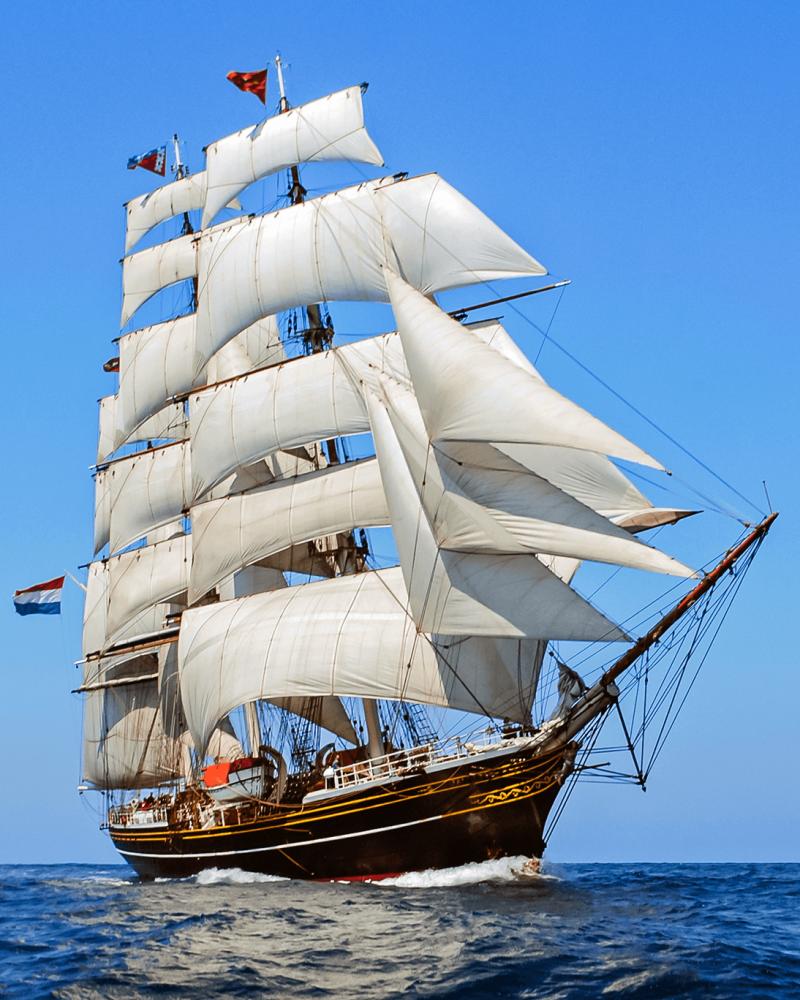
A cruise to Dominica is at its best when you explore the island at your own pace and with the right guidance. That is exactly what we focus on. On board the Clipper Stad Amsterdam, a maximum of 28 guests travel together, spread across 14 cabins, for an intimate and personal experience that is completely different from the anonymity of large cruise ships.
What you can expect from a luxury sailing cruise with us:
- Daily arrival at unique, sometimes remote ports and bays that are inaccessible to large ships
- Fully catered meals: breakfast, lunch, dinner, and cocktails, prepared by our own chefs on board
- Organized day trips, including snorkeling and visits to local attractions
- A young, dedicated crew that personally accompanies you throughout the entire journey
- Sailing by wind power during the day, anchoring in a quiet bay in the evening
Our Caribbean cruises depart in January and February, when the weather in the region is at its best. Prices for a luxury cruise start from €5,300 per person (excluding flights). Want to know more or ready to reserve a spot? Book your trip directly online or contact us for personal advice.
Frequently Asked Questions
How long does a typical port day in Roseau last and how much can you realistically see?
Most cruise ships spend six to ten hours in Roseau, depending on the itinerary. In that time it is realistic to combine one major excursion with a short exploration of the city — think Trafalgar Falls plus a walk through the city center, or Champagne Reef plus a visit to the local market. The Boiling Lake hike takes a full day and is therefore only feasible if you have enough time ashore.
How fit do I need to be to hike to the Boiling Lake?
The hike to the Boiling Lake is a serious trek of six to seven hours with significant elevation changes, muddy trails, and unstable terrain. You need a good basic level of fitness, sturdy hiking boots are an absolute must, and it is best to go in the company of a certified local guide. Those who are less experienced with hiking are better off choosing the Emerald Pool or Trafalgar Falls as an alternative.
Do I need diving experience to enjoy Champagne Reef?
No, Champagne Reef is also excellent to explore as a snorkeler without any diving experience. The volcanic gas bubbles rise from shallow water, so you can already observe this remarkable phenomenon well from the surface. If you want to go deeper, there are local dive schools that also offer beginner courses and guided introductory dives for those who have never dived before.
What currency is used in Dominica and can I pay everywhere by debit or credit card?
The official currency of Dominica is the Eastern Caribbean dollar (XCD), but US dollars are widely accepted by most vendors and restaurants in Roseau. Credit cards are usable at larger shops and restaurants, but at street food stalls, local markets, and smaller vendors, cash is strongly recommended. Bring a limited amount of cash upon arrival for day-to-day expenses.
Is it safe for cruise guests to explore the island independently without a guide?
In Roseau itself it is perfectly fine and safe to walk around independently and explore the city. For excursions into the interior — particularly to remote hiking areas such as Morne Trois Pitons National Park — it is strongly recommended to hire a local guide. The roads are narrow and the terrain is unfamiliar, and a guide not only ensures safety but also greatly enriches the experience with local knowledge and context.
What should I bring for a day ashore in Dominica?
Pack your day bag with sunscreen, insect repellent, plenty of water, a light rain jacket or poncho (showers can come on quickly), and sturdy hiking shoes if you plan to hike. For snorkeling or swimming, bring a swimsuit and a towel. Don’t forget your camera either: Dominica’s landscape offers photo opportunities you won’t find anywhere else in the Caribbean.
Can I also learn about the indigenous Kalinago culture on Dominica?
Yes, absolutely. The Kalinago Territory in the northeast of the island is the home of the indigenous Kalinago community and offers organized visits where you can learn more about their history, crafts, and traditions. You can purchase handmade products there that directly support the local community. A visit to the Kalinago Territory does require half to a full day, so plan this carefully in combination with your available time ashore.