

What is the best spot on a cruise ship?
The best spot on a cruise ship depends on what matters most to you on board: comfort, views, peace and quiet, or a sense of adventure. Generally speaking, a cabin amidships on a middle deck offers the least movement and is therefore the most comfortable option for most travellers. But on smaller sailing vessels, very different factors come into play. In this article, we answer the most frequently asked questions about the best position on board, from the choice between bow and stern to finding the ideal cabin for a sailing voyage.
What factors determine the best spot on board?
The best spot on board is determined by three main factors: susceptibility to seasickness, preference for peace or social activity, and the type of vessel you are sailing on. Those who are prone to motion discomfort should choose amidships and low. Those who prioritise views and fresh air should opt for a higher position or an outside cabin. On a small sailing ship, the atmosphere on deck also plays a role.
Beyond physical comfort, your travel goals matter too. Are you looking for relaxation and want to avoid noise? Then a cabin well away from the engines and the bar is a wise choice. Do you want to be right in the middle of the action and reach the deck quickly? Then a central position is ideal. On larger cruise ships there are hundreds of options; on smaller vessels with just a handful of cabins, the choice is more personal and intimate.
What is the difference between the bow, midship, and stern of a ship?
The difference between the bow (front), midship, and stern (rear) comes down mainly to movement and noise. The bow moves the most in heavy seas, which can lead to greater seasickness. Amidships is the calmest and most stable position. Towards the stern you feel less rolling motion, but more engine vibration. For travellers who are sensitive to movement, amidships is the safest choice.
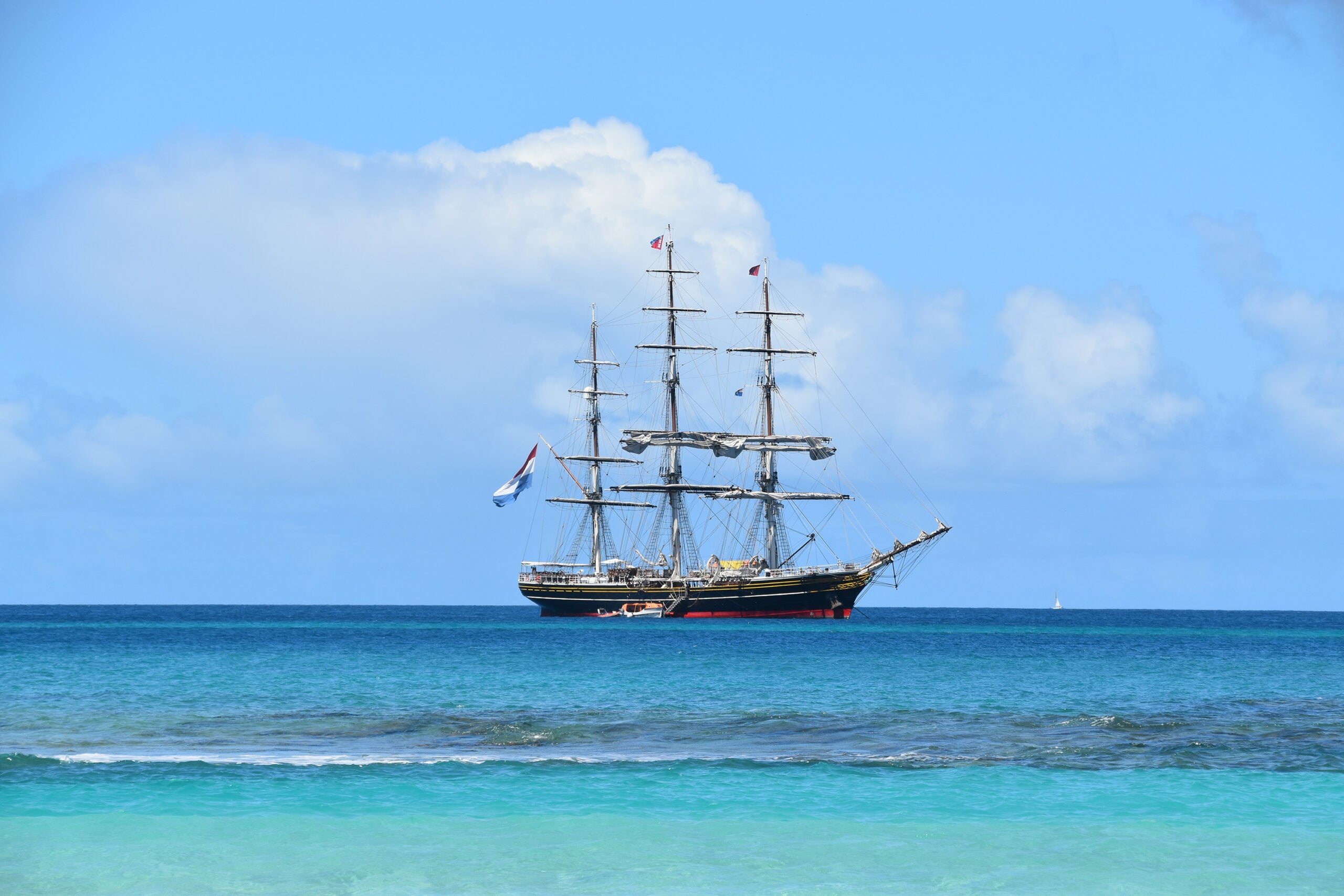
On a classic sailing ship such as a clipper, position also has a romantic dimension. At the bow you feel the wind most strongly and can see the bowsprit and the sails towering above you. At the stern there is often a quieter deck with a view of the wake. Both spots offer an authentic experience, but they are not equally comfortable for everyone in rougher weather.
Which deck is best on a cruise ship?
On large cruise ships, a middle deck is generally the best option: far enough from the waves to feel little movement, yet not so high that you experience excessive rolling. A lower deck close to the waterline is more stable but offers less of a view. A higher deck provides spectacular vistas but amplifies the motion in heavy swells.
On smaller sailing ships, the concept of multiple decks barely applies. Here it is more a question of whether you prefer an inside cabin or one with a porthole, and how close you want to be to the main deck. Being close to the deck means stepping outside quickly, smelling the sea, and watching the sails at work — an experience you will not find on any large cruise ship.
How do you choose the best cabin for a sailing voyage?
For a sailing voyage, you choose the best cabin based on three criteria: the size of your group, sensitivity to movement, and how much you value privacy. On a small sailing ship, cabins are more compact than on large cruise ships, but that intimate character is precisely what appeals to many travellers. Choose an amidships cabin if you are prone to seasickness, and a cabin with a porthole if natural light is essential to you.
On a luxury sailing cruise aboard a ship with a limited number of cabins, the choice is more personal than on a large mass-market cruise ship. You share the vessel with a small group, which means every cabin is a good option. When booking, check whether the cabin is suitable for two people and ask about the layout and its position relative to the deck. A good shipping company will always help you make the best choice based on your preferences.
Why are travellers increasingly choosing smaller ships?
Travellers are increasingly choosing smaller ships because they are looking for personal connection, authenticity, and a genuine bond with the sea and the destination. On large cruise ships it is easy to feel anonymous among thousands of fellow passengers. A small ship offers an intimate atmosphere, an engaged crew, and the freedom to anchor in places that are out of reach for larger vessels.
Small ships can sail into secluded bays, moor in small harbour towns, and adjust their route to suit the wind and weather. That creates a sense of adventure that you rarely experience on a large cruise holiday. The social dynamic on board is also very different: you truly get to know your fellow passengers, share meals and experiences, and build memories that go far deeper than a standard holiday.
- Smaller groups lead to more personal contact with the crew
- Access to remote anchorages and small harbours
- Authentic sailing experiences rather than a floating theme park
- More freedom in routing and daily schedule
- A close-knit atmosphere on board that meets the need for genuine experience
How Clipper Stad Amsterdam helps you choose the perfect spot on board
At Clipper Stad Amsterdam we understand that the question of the best spot on board is really a deeper question: how do you want to feel during your voyage? We offer an experience that large cruise ships simply cannot match, precisely because our ship is small, authentic, and personal.
- 14 cabins for a maximum of 28 passengers on our luxury cruises, ensuring the atmosphere always remains intimate and relaxed on board
- Amidships positioning for most cabins, providing optimum comfort even in higher swells
- An engaged, young hospitality team that helps you choose the best cabin based on your wishes and travel party
- Anchoring in secluded bays in the Caribbean, far from busy cruise ports
- Personal advice at the time of booking, so you know exactly what to expect
Would you like to know more about our luxury sailing cruises, or are you curious which cabin suits you best? Browse our voyages or get in touch with our team for a personalised quote. We would be delighted to help you put together the perfect cruise holiday.
Frequently Asked Questions
Hoe ver van tevoren moet ik een specifieke hut boeken op een klein zeilschip?
Bij populaire zeilcruises op kleine schepen met een beperkt aantal hutten is het verstandig om zo vroeg mogelijk te boeken, bij voorkeur drie tot zes maanden van tevoren. Omdat schepen zoals de Stad Amsterdam slechts 14 hutten hebben, zijn de meest gewilde plekken — zoals midscheepse hutten met patrijspoort — al vroeg volgeboekt. Neem bij het boeken direct contact op met de rederij, zodat je persoonlijk advies krijgt over welke hut het beste bij jouw wensen past.
Wat kan ik doen als ik tijdens de reis toch last krijg van zeeziekte, ook al zit ik midscheeps?
Zelfs op de meest stabiele positie aan boord kan zeeziekte optreden bij onverwacht ruw weer. Bewezen hulpmiddelen zijn seasickness-pleisters (scopolamine), niet-receptplichtige tabletten zoals promethazine of cinnarizine, en acupressuurpolsbandjes. Praktisch gezien helpt het om frisse lucht op te zoeken, naar de horizon te kijken en lichte maaltijden te eten. De bemanning van een goed zeilschip is altijd op de hoogte van de beste aanpak en helpt je snel verder.
Is een hut met patrijspoort altijd beter dan een binnenhut?
Niet per se — het hangt volledig af van jouw persoonlijke voorkeuren en reisgedrag. Een hut met patrijspoort biedt daglicht, frisse lucht en een gevoel van verbinding met de zee, wat voor veel reizigers een grote meerwaarde is. Een binnenhut is echter donkerder en daardoor vaak rustiger voor wie diep wil slapen. Op een klein zeilschip breng je bovendien veel tijd op dek door, waardoor het verschil in de praktijk kleiner is dan je misschien verwacht.
Hoeveel ruimte heeft een hut op een klassiek zeilschip zoals de Stad Amsterdam vergeleken met een grote cruise?
Hutten op een klassiek zeilschip zijn compacter dan op grote cruiseschepen, wat een bewuste keuze is die bijdraagt aan de authentieke beleving. Verwacht een functionele, comfortabel ingerichte ruimte met alle basisvoorzieningen, maar zonder de uitgebreide luxe van een drijvend hotel. Het intieme karakter is juist wat reizigers aanspreekt: je verblijft op een historisch schip met karakter, niet in een anonieme hotelkamer midden op zee. Controleer bij het boeken altijd de exacte afmetingen en indeling van de hut.
Kan ik als alleenreiziger ook terecht op een luxe zeilcruise, en welke hut past dan het beste?
Absoluut — alleenreizigers zijn van harte welkom op een luxe zeilcruise en profiteren zelfs extra van de intieme sfeer aan boord. Op een klein schip kom je snel in contact met medepassagiers en de bemanning, waardoor de sociale dynamiek heel anders is dan op een groot cruiseschip. Informeer bij het boeken naar beschikbaarheid van eenpersoonskabines of de mogelijkheid om een tweepersoonskajuit te delen; sommige rederijen koppelen alleenreizende gelijkgestemde reizigers aan elkaar. Een midscheepse hut met patrijspoort is ook voor alleenreizigers de meest comfortabele en populaire keuze.
Wat is het grootste verschil in ervaring tussen een hut voorin en een hut achterin op een zeilschip?
Voorin voel je de zee het meest intens: de wind, de deining en het geluid van de golven zijn het sterkst, wat een avontuurlijk maar ook bewogener gevoel geeft. Achterin is het over het algemeen rustiger en heb je vanuit je hut of het achterdek zicht op het kielzog en de horizon achter het schip. Bij slecht weer is voorin de minst comfortabele plek vanwege de sterkere beweging. Wie op zoek is naar avontuur en niet gevoelig is voor zeeziekte, vindt voorin een unieke beleving; wie rust en stabiliteit zoekt, kiest beter voor midscheeps of achterin.
Zijn er bepaalde reisroutes waarbij de keuze van je hut extra belangrijk is?
Ja, bij routes door ruwere wateren — zoals de Noord-Atlantische Oceaan of gebieden met veel wind en hoge golven — maakt de positie van je hut een merkbaar verschil in comfort. Op rustigere routes in beschutte wateren, zoals in de Caraïben of de Middellandse Zee, is het verschil tussen de hutten kleiner. Bij een Caribische cruise zijn de weersomstandigheden over het algemeen aangenamer, waardoor ook een hut voorin of achterin een prettige ervaring biedt. Vraag bij het boeken altijd naar de verwachte zeecondities op de geplande route, zodat je een weloverwogen keuze kunt maken.