
What is a post-vacation slump?
You know the feeling: after a wonderful holiday you come home and instead of feeling rested and energised, you feel empty, listless and perhaps even a little down. That is the notorious post-holiday blues. It happens to many people, yet it is rarely talked about. In this article we explain exactly what the post-holiday blues are, why they occur and — more importantly — what you can do about them.
What exactly are the post-holiday blues?
The post-holiday blues are a temporary feeling of low mood, emptiness or lack of motivation that sets in after you return from holiday. You have enjoyed freedom, new impressions and relaxation, and the return to everyday life therefore feels abrupt and colourless.
This is not a clinical depression or a serious psychological condition. The post-holiday blues are more of an emotional transition: your brain and body need to shift from a relaxed, stimulating environment back to the familiar but less exciting home situation. That contrast can take a little getting used to.
What are the most common symptoms of the post-holiday blues?
The symptoms of the post-holiday blues vary from person to person, but almost always involve a combination of emotional and physical complaints that appear immediately after returning home.
The most common symptoms are:
- A feeling of emptiness or low mood without an obvious cause
- Lack of motivation for work, hobbies or social contact
- Fatigue, even after a good night’s sleep
- Irritability or a short fuse
- Difficulty concentrating or getting started
- Longing for the holiday destination or the holiday feeling
Do you recognise several of these complaints after your holiday? Then you are almost certainly dealing with the post-holiday blues. The intensity differs from person to person and from holiday to holiday. After a particularly impressive or adventurous trip the dip can feel deeper than after a relaxing week at home.
Why do you get the blues after a holiday?
The post-holiday blues arise from the sudden contrast between the freedom and stimulation of the holiday and the structure and routine of everyday life. Your brain gets used to novelty, adventure and relaxation — and upon returning home it has to switch back to a different rhythm.
During a holiday your brain produces more dopamine: a substance associated with pleasure, curiosity and the sense of reward. New environments, flavours, sounds and experiences continuously stimulate this system. As soon as you get home, that constant stream of stimuli disappears. The feeling that remains can resemble a kind of hangover.
Expectation also plays a role. Many people look forward to their holiday for months and build high expectations around it. When that holiday is over, the anticipation disappears too — and that sense of loss can weigh surprisingly heavily.
How long do the post-holiday blues typically last?
The post-holiday blues typically last a few days to around two weeks. Most people find that the feeling naturally fades once they have settled back into their daily routine and have new things to look forward to.
The duration depends on a number of factors:
- The length and intensity of the holiday — the longer and more extraordinary the trip, the greater the contrast upon returning home.
- The situation at home or at work — if you return to a stressful environment, the blues can last longer.
- Whether you have something to look forward to — people who already have a next goal or plan tend to recover more quickly.
- Your general mental resilience — someone who already experiences mood fluctuations more often may feel the dip more intensely.
Do your post-holiday blues last longer than two to three weeks and seriously affect your daily functioning? Then it is wise to speak with a GP or psychologist.
How do you prevent the post-holiday blues after your trip?
Preventing the post-holiday blues entirely is difficult, but you can significantly reduce their impact by consciously choosing a soft landing after your holiday.
Practical tips to prevent the post-holiday blues:
- Plan a rest day after your return so you do not go straight from the plane to the workplace
- Bring back photos and souvenirs that remind you of the holiday and activate positive memories
- Share your experiences with friends or family — retelling them extends the holiday feeling
- Plan something enjoyable for the weeks after your return, however small
- Choose a luxury sailing cruise or another special trip that stays with you for a long time
Most importantly, try not to see the holiday as a conclusion, but as part of a life filled with regular moments of adventure and relaxation. Those who fill their lives with meaningful experiences are less likely to feel that “it is all over”.
What helps when you are already in the middle of the post-holiday blues?
If you are already experiencing the post-holiday blues, it helps to take active steps rather than passively waiting them out. Acknowledge the feeling, but do not let it paralyse you.
What concretely helps:
- Move — physical exercise stimulates the production of endorphins and quickly improves your mood
- Seek social connection — make plans with people who give you energy
- Make your holiday memories tangible — create a photo book, write a travel journal or share your story
- Set a new goal — start planning your next holiday or adventure
- Limit your screen time — endlessly scrolling through social media intensifies the feeling of missing out
The post-holiday blues are also a signal. They tell you that you have enjoyed something special and that in everyday life you might be able to create more space for adventure, freedom and new experiences.
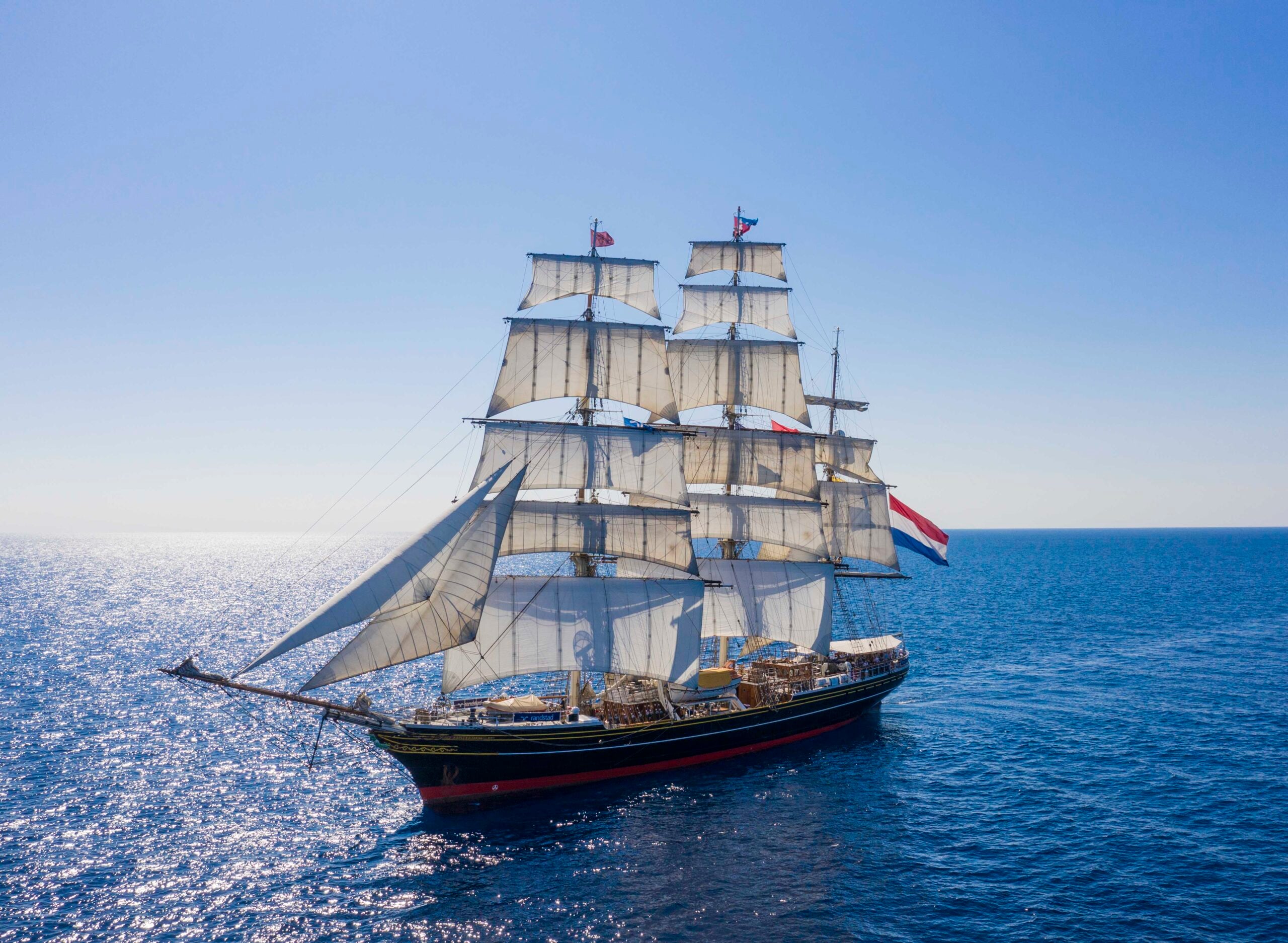
How a sailing trip on the Clipper Stad Amsterdam helps with the post-holiday blues
Sometimes the solution to the post-holiday blues lies not in a quick recovery strategy, but in a fundamentally different approach to how you travel. The post-holiday blues are often at their worst after a passive, anonymous trip — such as an all-inclusive resort or a large cruise ship — where you feel little connection with the surroundings, the other guests or yourself.
We offer a different way of travelling. On board the Clipper Stad Amsterdam, our iconic three-masted clipper ship, we combine adventure with luxury in a way that truly stays with you:
- A maximum of 28 passengers on board across 14 cabins — intimate and personal, no mass tourism
- A young, dedicated crew who give you the authentic sailing experience
- Luxury cabins and fresh meals prepared by our chefs on board
- Sailing the Caribbean Sea by day, anchoring in a secluded bay in the evening
- Activities such as snorkelling, beach excursions and relaxing in nature
A trip that is this intense and meaningful does not leave you with an empty feeling, but with memories and stories you will carry with you for years. Our rates are tailored exclusively to season, cabin category and trip duration. Contact us for a personal quote and we will be happy to tell you more about the possibilities. Or browse our offering directly at stadamsterdam.com.