

What are the most beautiful cruises of this year?
The most beautiful cruises of 2026 combine remarkable destinations with an authentic on-board experience. The most popular choices this year are the Caribbean, the Mediterranean and the Atlantic islands — regions that appeal to travellers for their nature, culture and climate. Whether you choose a luxury cruise, a sailing voyage or a classic holiday route depends on what you are looking for in a trip. In this article we answer the most frequently asked questions about cruise destinations, luxury on board and practical booking tips.
Which cruise destinations are most popular this year?
The most popular cruise destinations in 2026 are the Caribbean, the Mediterranean, the Norwegian fjords and the Canary Islands. Travellers choose these regions for the combination of fine weather, varied landscapes and the opportunity to visit multiple places in a single trip. The Caribbean leads the way as the most in-demand cruise destination worldwide.
Within the Caribbean, islands such as Sint Maarten, Antigua, Guadeloupe and the British Virgin Islands are particularly beloved. What makes these destinations so appealing is the variety: crystal-clear water, white beaches, colourful towns and a relaxed island culture. For travellers seeking peace and space, secluded bays and smaller islands offer a welcome contrast to the busier tourist spots.
The Mediterranean remains popular for travellers who want to combine culture and sunshine. Greece, Italy and Croatia rank highly, with port cities steeped in history and culinary traditions found nowhere else. The Norwegian fjords are attracting a growing number of adventurous travellers who prefer breathtaking nature over mass tourism.
What makes a luxury cruise different from a regular cruise?
A luxury cruise sets itself apart from a regular cruise through the combination of a smaller group of passengers, a higher level of service and a more personal on-board experience. Where large cruise ships carry hundreds or even thousands of passengers, a luxury cruise offers calm, space and individual attention. It is not just about the destination — the entire journey is the experience.
On a true luxury cruise, the difference shows in the details. Think of freshly prepared meals by an on-board chef, a hospitality team available throughout the day, and an intimate atmosphere that simply cannot be found on large ships. Guests know each other by name, the crew knows your preferences and there is room for spontaneity.
Another hallmark of a luxury cruise is access to places that large ships cannot reach. Secluded bays, unspoilt anchorages and harbours where tourism has not yet taken over — these are the places that make an extraordinary trip truly distinctive. A luxury sailing cruise adds an extra dimension to this: the experience of sailing itself.
How do you choose the best cruise for your travel preferences?
The best cruise for you depends on three factors: the destination that appeals to you, the size of the group on board and the type of experience you are looking for. Do you want to be active, immerse yourself in culture or simply relax? That largely determines which type of cruise suits you best.
Start by asking yourself what you want to feel during your trip. Are you looking for adventure and freedom, or do you want to be pampered without a care in the world? Large cruise ships offer many facilities but little personal contact. Smaller ships give you more room for a genuine connection with the sea, the crew and your fellow travellers.
Think also about who you are travelling with. A cruise with a partner calls for a different atmosphere than a trip with a group of friends or family. And if sustainability plays a role in your choice of travel, it is worth researching which shipping companies are actively working on this. Not every ship sails with the same environmental awareness.
Practical tips for choosing a cruise:
- Start by deciding on the region: the Caribbean, the Mediterranean, Northern Europe or elsewhere
- Choose a ship that matches the desired group size — smaller is often more intimate
- Compare the level of service: what is included and what costs extra?
- Check the sailing schedule: how long is spent at sea and how much time is there at each destination?
- Read reviews from previous passengers to get a sense of the atmosphere on board
What are the advantages of a sailing cruise over a motor vessel?
A sailing cruise offers a fundamentally different experience from a cruise on a motor vessel. The advantages are the authenticity of sailing, the silence on board when the engines are off, the smaller scale and the ability to reach places that are inaccessible to large ships. A sailing cruise is travel in its purest form.
The most striking difference is the atmosphere. On a sailing ship you are part of the journey — you feel the wind, you watch the sails being hoisted and you experience the power of nature in a way that is simply not possible on a motor vessel. This creates a sense of adventure and freedom that travellers describe as unlike anything they have experienced elsewhere.
Added to this, sailing cruises typically take place on smaller ships with a limited number of passengers. This creates an intimate, personal atmosphere. The crew is visibly engaged, there is space for conversation and the group is small enough for genuine connection. Activities such as snorkelling, day trips ashore and relaxing on secluded beaches are a natural part of the programme.
From an environmental perspective, a sailing ship also has an advantage: wind is free and clean. Although sailing ships do use an engine in harbour and in calm conditions, the ecological footprint per passenger is generally lower than that of large cruise ships.
When is the best time to book a cruise?
The best time to book a cruise is as early as possible — ideally six to twelve months in advance. Booking early gives you the widest choice of cabins, travel dates and destinations. Many shipping companies also offer early-booking benefits that are no longer available closer to departure.
For a Caribbean cruise, the high season runs from December through April. The climate is dry and pleasantly warm during this period, and the sea is calm. Those wishing to travel in this season would do well to reserve well in advance, especially on smaller ships with a limited number of places.
The Mediterranean is best visited between May and October. The shoulder seasons — May, June and September — offer a pleasant combination of good weather and fewer crowds. For the Norwegian fjords, summer is the most suitable time, with the longest days and the best conditions for enjoying the scenery.
A practical rule of thumb: book your cruise as soon as you know when you want to travel. Do not wait for last-minute deals on premium products — they are rare, and the best places will long since have been taken.
How Clipper Stad Amsterdam helps you find the most beautiful cruise
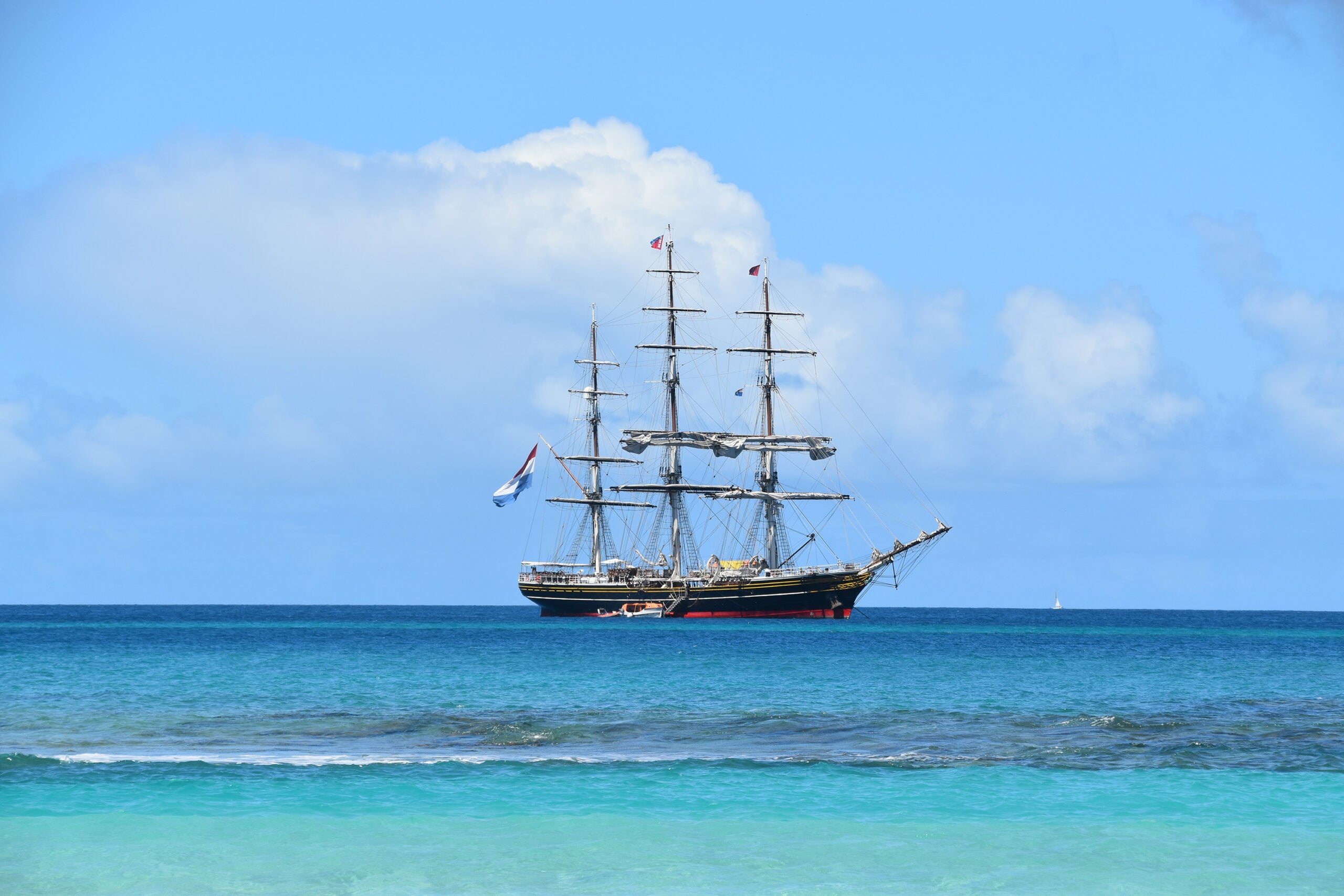
We offer a unique combination of adventure, luxury and authenticity on board a historic three-masted clipper ship. Clipper Stad Amsterdam is no ordinary cruise ship — it is an icon with a rich history, a young and dedicated crew and an experience you will find nowhere else.
What we offer for travellers seeking the most beautiful cruise:
- Luxury sailing cruises in the Caribbean, with a maximum of 28 passengers in 14 cabins — intimate and personal
- Sailing by day, anchoring in secluded bays in the evening — far from mass tourism
- Fully catered on board: breakfast, lunch and dinner prepared by our own chefs
- Activities such as snorkelling, day trips ashore and relaxing on white beaches
- An authentic sailing experience on a hand-rigged ship — no automated systems, but real sailing
- Exclusive tailor-made pricing, depending on season, cabin category and trip duration — contact us for a personal quote
Curious about what a sailing cruise on the Clipper Stad Amsterdam could mean for you? Book your trip directly online, or contact us for more information and personal advice.
Frequently Asked Questions
Is een zeilcruise ook geschikt voor mensen zonder zeilervaing?
Absoluut — je hoeft geen enkele zeelervaring te hebben om volledig te genieten van een zeilcruise. Op een schip zoals de Clipper Stad Amsterdam zorgt de professionele bemanning voor alles wat met het varen te maken heeft. Jij geniet als passagier van de beleving, het uitzicht en de sfeer aan boord. Wie wil, kan uiteraard meekijken of vragen stellen aan de bemanning — dat maakt de ervaring alleen maar rijker.
Wat is het verschil tussen een hut op een klein zeilschip en een cabine op een groot cruiseschip?
Op een klein zeilschip zijn de hutten compacter dan op een groot cruiseschip, maar wat je terugkrijgt is een intieme, persoonlijke sfeer die op een groot schip ontbreekt. De ruimte aan boord voelt anders: minder gangen, minder anonimiteit en meer contact met de zee en je medepassagiers. Voor reizigers die de voorkeur geven aan beleving boven oppervlakte is een hut op een zeilschip dan ook vaak de betere keuze.
Hoe zit het met het weer tijdens een cruise in het Caribisch gebied — wat als er een storm opkomt?
Ervaren kapiteins en bemanningen houden de weersomstandigheden continu in de gaten en passen de route aan wanneer dat nodig is. Het hoogseizoen in het Caribisch gebied — december tot en met april — valt buiten het officiële orkaanseizoen, wat de kans op ernstig stormweer aanzienlijk verkleint. Kleine aanpassingen in het vaarschema omwille van het weer zijn juist een teken van goed seamanship en dragen bij aan de veiligheid en het comfort aan boord.
Kan ik een zeilcruise boeken als cadeau of voor een speciale gelegenheid?
Ja, een zeilcruise leent zich uitstekend als cadeau voor een bijzondere gelegenheid zoals een jubileum, verjaardag of pensioen. Veel rederijen, waaronder Clipper Stad Amsterdam, bieden de mogelijkheid om direct contact op te nemen voor persoonlijk advies over het samenstellen van een passend cadeauaanbod. Het is wel verstandig om tijdig te boeken, zeker op kleinere schepen met een beperkt aantal plaatsen.
Wat zijn veelgemaakte fouten bij het boeken van een cruise die ik beter kan vermijden?
Een van de meest voorkomende fouten is te laat boeken — zeker bij kleinere, exclusievere schepen zijn de beschikbare plaatsen snel vergeven. Daarnaast onderschatten veel reizigers het belang van het vaarschema: hoe lang wordt er daadwerkelijk gevaren versus hoeveel tijd er op de bestemmingen wordt doorgebracht? Tot slot vergeten mensen regelmatig te controleren wat er precies inbegrepen is in de prijs, zoals maaltijden, activiteiten en havenkosten — dit bepaalt sterk de uiteindelijke waarde van de boeking.
Hoe duurzaam is een zeilcruise in vergelijking met andere vormen van cruisen?
Een zeilcruise heeft doorgaans een beduidend lagere ecologische voetafdruk per passagier dan een grote cruisereis op een motorschip. Zeilschepen maken gebruik van windkracht als primaire aandrijving, wat het brandstofverbruik aanzienlijk beperkt. Bovendien varen kleinere schepen met minder passagiers, wat de totale uitstoot per reis beperkt houdt. Voor reizigers die duurzaamheid meewegen in hun keuze, is een zeilcruise dan ook een bewustere en milieuvriendelijkere optie.
Wat moet ik meenemen op een zeilcruise in het Caribisch gebied?
Voor een zeilcruise in het Caribisch gebied zijn lichte, ademende kleding, goede zonnebescherming en stevige (dek)schoenen met witte zolen de absolute basisbenodigdheden. Denk ook aan snorkelspullen als je die liever zelf meeneemt, een lichte regenjas voor tropische buien en een goede zonnebril. Houd er rekening mee dat de opslagruimte in een hut beperkter is dan in een hotelkamer — een zachte reistas is praktischer dan een harde koffer.