
How do I truly relax on vacation?
Taking a vacation is one thing, but truly relaxing is something else entirely. Many people return from a trip feeling barely rested. They’ve seen, done, and experienced plenty, but their batteries haven’t really recharged. The question is: how do you make sure a vacation actually gives you the rest you need?
The answer lies not in the destination itself, but in the way you travel. In this article, we answer the most frequently asked questions about relaxation during a vacation, so that you come back from your next trip with a clear head and a rested body.
Why don’t you truly relax on a typical vacation?
Most ordinary vacations aren’t a real break — they’re just a change of scenery. You’re away from work, but you fill the void with packed daily schedules, crowded tourist attractions, and endless scrolling. Your brain never gets the chance to genuinely unwind.
The core problem is that many vacations are built around distraction rather than recovery. You hop from one flight to the next, you stay in large hotels with hundreds of other guests, and your itinerary is more tightly packed than your schedule at home. The feeling of freedom is there, but the real silence is missing.
Your surroundings also play a major role. Busy airports, tourist crowds, and noisy beach clubs create a constant background tension. Your body stays on high alert all day long, even when you’re officially “on vacation.”
What is the difference between relaxing and seeking distraction?
Relaxing means your nervous system actually calms down. Seeking distraction means redirecting your attention elsewhere, without the underlying tension disappearing. The difference is essential: distraction is temporary, relaxation is recovery.
Distraction feels pleasant in the moment. Watching a series, exploring a city, or sipping a cocktail by the pool gives a sense of escape. But the moment the stimulation stops, the fatigue is still there.
True relaxation requires conditions in which your brain doesn’t constantly have to process new information. That might mean silence, slow movement, contact with nature, or simply being somewhere without a plan. It’s about being present, not being kept busy.
How does nature help you relax more quickly?
Nature demonstrably lowers stress levels in the body. The combination of fresh air, natural light, the sounds of water or wind, and the absence of artificial stimuli brings the nervous system into a state of calm more quickly than any urban environment can.
This has to do with how our brains are wired. Human beings are naturally attuned to natural environments. Cities and screens demand constant active attention. Nature calls for passive attention, which gives the brain the space it needs to recover.
Think of the sound of waves, the smell of salt water, the horizon stretching out endlessly. These aren’t romantic clichés — they are environmental factors that calm the body on a physiological level. People who spend time by the sea, in the mountains, or in a forest generally experience deeper and faster relaxation than those who take a city trip.
What type of vacation is best suited to deep relaxation?
The vacation best suited to deep relaxation combines three elements: a peaceful environment, a slow pace, and a sensory connection with nature. That could be a hiking vacation, a retreat, a stay in the countryside, or a journey on the water.
What all these forms have in common is that they disconnect you from the daily flow of information and obligations. You have no packed agenda. You move at the rhythm of the day, not the rhythm of a schedule.
The following characteristics make a vacation well suited to genuine rest:
- A small group, with no crowds of tourists around you
- A direct connection with nature, such as the sea, mountains, or forests
- No fixed daily programs, but the freedom to follow the moment
- Limited screen time and few artificial stimuli
- Good sleep, healthy food, and room for physical activity
Vacations that actively involve you with your surroundings — such as sailing, hiking, or diving — often score highly on all of these points. You’re focused on the moment, not on your phone.
How do you prepare for a stress-free vacation?
A relaxing vacation starts at home. Most travel stress doesn’t arise on the road, but in the days before departure. Those who prepare well step onto the boat or plane feeling calm and ready.
Follow these steps to make your preparation stress-free:
- Plan ahead: Book well in advance and make sure your travel documents, insurance, and luggage are sorted early.
- Clear your schedule: Make sure your work obligations are completed or delegated before you leave.
- Pack light: Less luggage means less hassle and more freedom.
- Set boundaries around your availability: Let colleagues and family know clearly when you will not be reachable.
- Leave with a buffer: Build in extra travel time and don’t start your vacation on the day of departure itself.
Good preparation is not only practical, but also mental. When you know everything is taken care of, you can let your mind go. And that is exactly what relaxation requires.
Why do people relax better on a sailing trip?
A sailing trip combines the most effective relaxation factors: movement on the water, a slow and natural rhythm, a small group, and a complete disconnect from daily routine. People who have been sailing often describe it afterward as one of the most restorative experiences they’ve ever had.
The rhythm of a sailing trip is unique. You sail during the day and anchor in a quiet bay in the evening. There’s no rush, no next flight, no hotel lobby. The sea sets the pace, and that creates a sense of surrender that many people never experience in their everyday lives.
What’s more, the environment at sea is low in stimulation — in the best possible way. No city noise, no billboards, no endless choices. Just water, wind, and the horizon. This is precisely the kind of environment in which the brain finally has the space to empty itself.
How a sailing trip helps you truly unwind
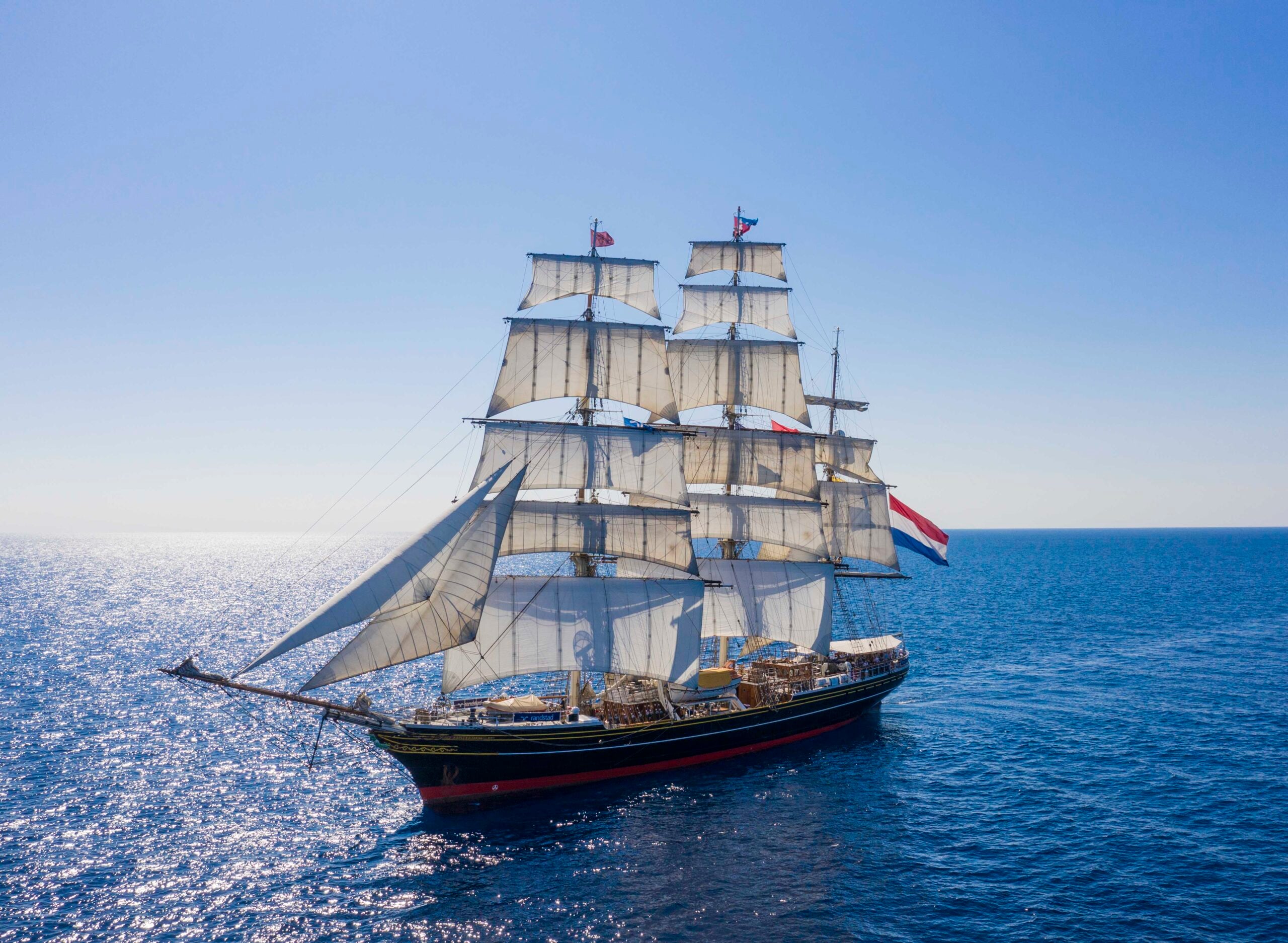
At Clipper Stad Amsterdam, we offer a way of traveling that aligns perfectly with everything described in this article. On board our three-masted clipper ship, we combine the tranquility of the sea with a high level of comfort and personal attention.
Our sailing cruise in the Caribbean is designed for people who truly want to let go. Here’s what you can expect:
- A maximum of 28 guests across 14 cabins, for an intimate and peaceful atmosphere
- Sailing on open water during the day, anchoring in secluded bays in the evening
- Freshly prepared meals from our chefs, with nothing for you to worry about
- Activities such as snorkeling and beach visits, at your own pace
- A young, dedicated crew that sails the ship by hand, in a truly authentic way
This is not a standard cruise and not an all-inclusive resort. It’s a journey where the sea, the ship, and the moment take center stage — and where you finally have the space to truly relax. Pricing is tailored to your travel period, cabin category, and journey duration. Contact us for a personal quote and we’d be happy to tell you more.