

What Nature Excursions Fit a Cruise Day in Dominica?
Dominica offers some of the most beautiful and varied nature excursions in the Caribbean, making the island particularly well suited for a cruise day. Hikes through tropical rainforest, snorkeling above colorful coral reefs, and swimming in hot springs are all achievable within a single day. In this article, we answer the most frequently asked questions about what you can do and expect during a day on Dominica.
What makes Dominica different from other Caribbean islands?
Dominica is the most unspoiled island in the Caribbean and is known as the “Nature Isle of the Caribbean”. Unlike islands such as Sint Maarten or Aruba, Dominica has no vast white sandy beaches or large tourist resorts. Instead, you will find lush tropical rainforest, active volcanoes, waterfalls, and hot springs that make the island truly unique.
Where other Caribbean islands focus on all-inclusive resorts and busy beaches, Dominica is all about nature and adventure. The island has more than 365 rivers, an active volcanic interior, and the second-largest boiling lake in the world: Boiling Lake. For travelers who genuinely want to connect with nature and island life, Dominica is a revelation. The local population is welcoming and tourism remains small-scale, keeping the island atmosphere authentic and peaceful.
Dominica is also one of the few islands in the Caribbean where you can spot whales, particularly sperm whales that reside in the waters around the island year-round. This makes a cruise day trip to Dominica an experience that far surpasses an ordinary beach day.
Which hikes can be done during a cruise day on Dominica?
During a cruise day on Dominica, several hikes are very manageable, depending on your fitness level and available time. The most popular routes are the hike to Emerald Pool, Trafalgar Falls, and the route to Boiling Lake. Emerald Pool is the most accessible choice for a day trip and is achievable for almost everyone.
Emerald Pool and Trafalgar Falls
The hike to Emerald Pool takes only about 20 minutes and leads through dense tropical rainforest to a beautiful waterfall that empties into a crystal-clear pool. It is an ideal choice if you have limited time but still want to experience Dominica’s nature. Trafalgar Falls is a double waterfall and also easily reachable from the capital Roseau. The walk is short but impressive, with two side-by-side waterfalls where you can cool your feet in the water at their base.
Boiling Lake for the adventurous hiker
The trek to Boiling Lake is considerably more demanding and takes an average of six to seven hours. This is only realistic if you arrive early enough and are well prepared. The route passes through Morne Trois Pitons National Park, a UNESCO World Heritage Site, and offers spectacular panoramic views. If you want to do this, plan the day carefully and preferably go with a local guide.
Can you snorkel or dive from the port of Dominica?
Yes, snorkeling and diving are excellent around Dominica and rank among the best experiences the island has to offer. The underwater world around Dominica is renowned for its rich marine biodiversity, volcanic seabed, and outstanding visibility. Snorkel sites are easily accessible from the port of Roseau, and there are local operators who rent equipment and offer excursions.
Champagne Reef is Dominica’s most famous snorkel site. Due to volcanic activity on the seabed, tiny bubbles rise up from the sand, giving the sensation of swimming inside a glass of champagne. The reef is colorful, shallow sections are suitable for snorkelers, and deeper zones offer plenty for divers. In addition to Champagne Reef, Scott’s Head and Soufriere Bay are popular dive sites featuring coral gardens and a wide variety of tropical fish.
Dominica is internationally regarded as one of the best diving destinations in the Caribbean, thanks in part to the volcanic geology that has created an extraordinary underwater landscape. Even for beginner snorkelers, the water around the island is accessible and well worth exploring.
How warm is the water and which season is best for Dominica?
The water around Dominica maintains a temperature of approximately 26 to 29 degrees Celsius throughout the year, making it comfortable for snorkeling and swimming without a wetsuit. The best season to visit Dominica is the dry period from January to April, when the chance of rain is lowest and the sea is calm and clear.
Dominica receives more rainfall than most other Caribbean islands due to its mountainous interior. Even during the dry season, a brief rain shower can occur, but that is part of the island’s character and rarely affects daily activities. The months of January and February are particularly popular for sailing in the Caribbean, as the trade winds are favorable and the weather is stable.
Hurricane season officially runs from June to November, with September and October being the most active months. Those planning a Caribbean cruise are best advised to choose the period from December through April for the best weather conditions and the most pleasant temperatures, both at sea and on land.
What is the best way to explore Dominica in one day?
The best way to explore Dominica in one day is to choose a fixed itinerary in advance and hire a local driver or guide. Dominica is compact but the roads are narrow and winding, making it wise not to drive yourself if you are unfamiliar with the area. A guide knows the best spots, the shortest routes, and can bring the island to life with local stories.
An ideal day itinerary looks like this:
- Morning: hike to Trafalgar Falls or Emerald Pool
- Afternoon: snorkeling at Champagne Reef or a visit to the hot springs
- Early afternoon: a short exploration of Roseau, the colorful capital
- Return to the ship for dinner
It is important to keep the ship’s departure times in mind and to build in sufficient buffer time. Dominica is not an island to rush. Nature calls for attention and calm, and those who give it that will go home enriched.
How Clipper Stad Amsterdam helps you experience an unforgettable Dominica cruise
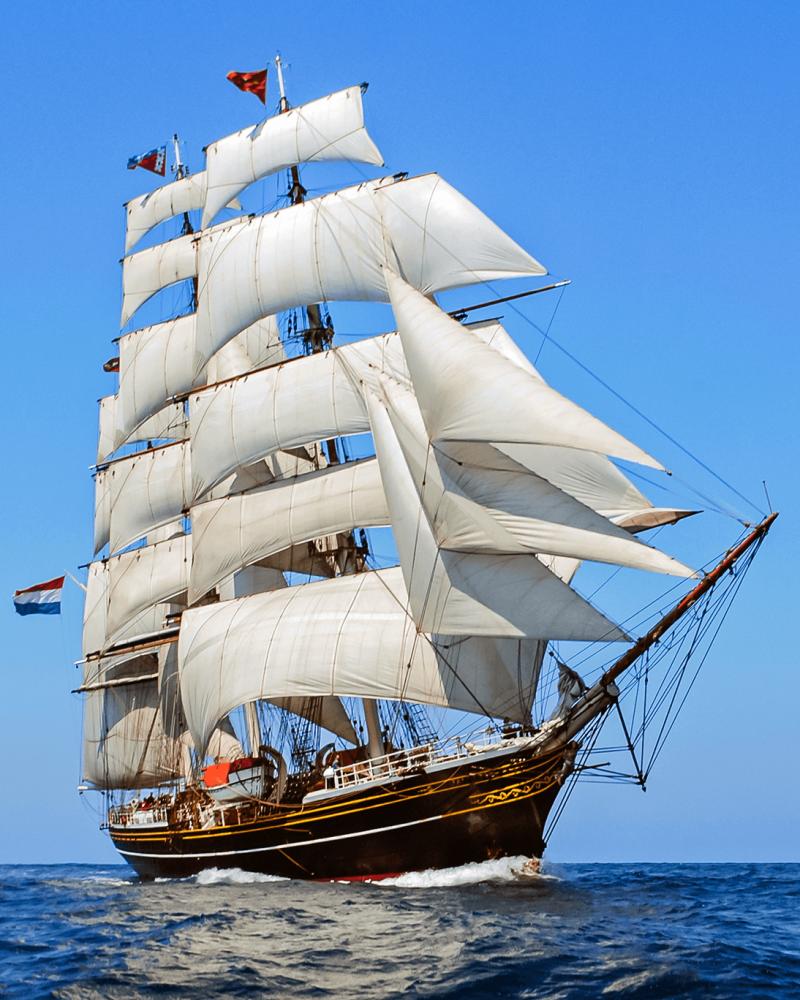
We take you to destinations like Dominica like no other. On board Clipper Stad Amsterdam you sail on a historic three-masted clipper ship that anchors in secluded bays in the evening, far away from busy cruise terminals. That means you can discover Dominica at your own pace, without the rush of mass tourism.
This is what we offer during our luxury sailing cruise in the Caribbean:
- Small-scale and intimate: a maximum of 28 guests on board, spread across 14 cabins
- Fully catered: breakfast, lunch, dinner, and cocktails prepared by our own chefs
- Opportunity to snorkel, go on day trips, and relax on secluded beaches
- A young, dedicated crew who will show you the most beautiful spots
- Authentic sailing with manually operated sails and helm
Our luxury cruises in the Caribbean are offered in January and February, when the weather is optimal for sailing and the nature of islands such as Dominica is at its most beautiful. Flights are not included in the cruises. Would you like to know more or are you ready to reserve your spot? View our trips or contact us for personal advice.
Frequently Asked Questions
Do I need a visa or special documents to visit Dominica during a cruise?
As a cruise passenger, you generally do not need a visa for Dominica. Your passport and a valid cruise document (such as a boarding pass from the ship) are usually sufficient to go ashore. Do make sure your passport is valid for at least six months beyond your travel date, and always check the most up-to-date entry requirements via the official website of Dominica or your cruise company.
What should I bring for a day on Dominica?
Pack light but thoughtfully: hiking shoes with grip are essential for the wet and uneven paths in the rainforest, and a waterproof bag will protect your valuables. Also bring swimwear, a towel, sunscreen (preferably reef-safe for Champagne Reef), insect repellent spray, and enough drinking water. A light rain jacket or poncho is strongly recommended, as a brief tropical shower can always appear.
Is Dominica suitable for children or older travelers?
Yes, Dominica offers suitable activities for almost every age, provided you make the right choices. The hike to Emerald Pool and a visit to Trafalgar Falls are accessible for children and less mobile travelers, while snorkeling at Champagne Reef is also a wonderful experience for beginners and younger visitors. Strenuous treks such as Boiling Lake are better suited for fit, experienced hikers. Discuss with your guide in advance which activities match the fitness level and wishes of the whole group.
Can I explore Dominica independently, or do I always need a guide?
For accessible spots such as Emerald Pool or the center of Roseau you can explore perfectly well on your own, but for deeper excursions into the rainforest or the trek to Boiling Lake a local guide is strongly recommended. The roads on Dominica are narrow, steep, and unpredictable, and a guide not only knows the way but also adds cultural and ecological context that enriches the experience. Moreover, hiring a local guide directly contributes to the local economy, which aligns with the island’s sustainable travel philosophy.
Are there good places to try local food in Roseau?
Absolutely. Roseau has a lively market and various small eateries where you can sample authentic Dominican dishes, such as callaloo soup, roasted breadfruit, and grilled fish with rice and beans. The Old Market Plaza in the center of Roseau is a great starting point for local food and handmade souvenirs. Bear in mind that the choice of restaurants is limited compared to other Caribbean islands, but that is precisely what makes the culinary experience authentic and unpretentious.
What are common mistakes when visiting Dominica for a day?
The biggest mistake visitors make is trying to cram too many activities into one day. Dominica calls for a relaxed pace: the roads are winding, nature demands attention, and unexpected delays due to rain or traffic are not unusual. A second common mistake is forgetting cash, as many local guides, market stalls, and small restaurants do not accept card payments. Always bring some East Caribbean dollars (XCD) or US dollars for small expenses along the way.
How does visiting Dominica on a small sailing ship differ from a large cruise terminal?
On a large cruise ship you often arrive at a busy terminal, together with hundreds of other passengers booking the same excursions and visiting the same places. On a small-scale sailing ship like Clipper Stad Amsterdam you anchor in secluded bays, step ashore directly at quiet spots, and experience Dominica at an intimate and authentic level. You have more flexibility in your daily schedule, less crowding at popular sites, and a more direct connection with nature and the local population.