

What are the best all-inclusive trips?
The best all-inclusive trips combine a fully catered stay with a destination and atmosphere that suit you. Think sun, sea, and relaxation in the Caribbean, culturally rich cities along the Mediterranean, or adventurous routes through Europe. Whether a vacation truly feels rewarding depends less on the “all-inclusive” label and more on the quality of the experience, the company you keep, and how well the trip aligns with what you’re looking for. This article answers the most important questions to help you make the right choice.
What is the difference between all-inclusive and half-board?
With all-inclusive travel, meals, drinks, snacks, and often activities or excursions are included in the price. With half-board, you pay for breakfast and dinner, but lunch, drinks, and extras are your own responsibility. The key difference lies in financial predictability: all-inclusive gives you a fixed price, while half-board requires a more flexible budget.
In practice, all-inclusive means you barely need to pay anything extra once you arrive. That makes it appealing for families or travelers who don’t want to constantly keep track of spending. Half-board offers more freedom to discover local restaurants and provides a more authentic experience of the destination. Which option suits you better depends on your travel style: do you want everything taken care of, or do you prefer to plan your own day?
Which destinations are most suitable for all-inclusive travel?
The most popular destinations for all-inclusive vacations are the Caribbean, the Dominican Republic, Mexico (Cancún and the Riviera Maya), Turkey, Greece, and Spain. These regions combine a warm climate, beautiful beaches, and a well-developed hospitality infrastructure, enabling all-inclusive providers to deliver a high level of service.
The Caribbean scores particularly high: the combination of turquoise water, white sandy beaches, and a laid-back island atmosphere makes it an ideal setting for a fully catered vacation. Turkey and Greece are popular for their blend of rich culture, excellent food, and a well-established resort tradition. For travelers who also want culture and adventure, destinations such as Portugal, the Canary Islands, or even Norway are interesting alternatives, although the all-inclusive offering there is more limited.
How do you choose the best all-inclusive provider?
The best all-inclusive provider is chosen based on five criteria: the quality of food and drink, the level of service, the location, the size of the resort or ship, and the target audience the provider caters to. A provider that scores highly on all these points is the right fit for travelers who genuinely want to enjoy themselves, not just find a cheap deal.
When comparing providers, look at the following points:
- What exactly is included? Some providers charge extra for premium drinks, water sports, or excursions.
- How large is the group? Large resorts can feel impersonal; smaller concepts offer more personal interaction.
- What do other travelers say? Recent reviews on reputable platforms give a realistic picture.
- What is the atmosphere on board or at the resort? A family resort feels very different from an adults-only concept.
- How transparent is the pricing structure? Hidden costs are a common complaint with all-inclusive vacations.
Compare multiple providers side by side and read the fine print before you book.
What are the downsides of traditional all-inclusive vacations?
The biggest downsides of traditional all-inclusive vacations are the anonymity, the monotony of what’s on offer, and the lack of genuine connection with the destination. Many travelers rarely leave the resort and consequently miss out on the culture, food, and people of the country they’re visiting.
Other commonly cited drawbacks include:
- Mass tourism: Large resorts host hundreds or even thousands of guests at a time, which comes at the expense of peace and exclusivity.
- Mediocre quality: When food and drink are served in bulk, quality often suffers.
- Lack of adventure: The all-inclusive formula doesn’t encourage exploration; everything is already available in one place.
- Little personal interaction: Staff serve hundreds of guests per day, making it difficult to build any personal connection.
For travelers who value authenticity, adventure, and personal connection, the traditional all-inclusive formula can be a disappointment. Fortunately, alternatives exist that combine the convenience of all-inclusive with a richer experience.
Are there all-inclusive options for adventurous travelers?
Yes, there are certainly all-inclusive options for adventurous travelers, but they are found outside the traditional resort formula. Think small-scale expedition cruises, sailing trips, and boutique lodges in remote areas where meals, activities, and guided experiences are fully included. The difference from a standard resort is that the destination itself takes center stage, not the swimming pool.
A sailing cruise is a great example of an all-inclusive format that combines adventure and comfort. During the day you sail to new destinations; in the evening the ship anchors in a quiet bay. Breakfast, lunch, and dinner are taken care of by a dedicated team on board, while during the day you snorkel, swim, or explore the coastline. This type of trip gives you the ease of all-inclusive, but with the freedom and experiences that a resort simply cannot offer. Take a look at the types of trips that make this possible to get a clear sense of what’s available.
When is an all-inclusive cruise a better choice than a resort?
An all-inclusive cruise is a better choice than a resort when you want to visit multiple destinations without repacking every time, when you’re looking for a small-scale and personal alternative to mass tourism, or when you want the sea itself to be part of the experience. A resort offers stability; a cruise offers movement and variety.
Cruises on smaller ships, with a maximum of a few dozen guests, offer an atmosphere that large resorts simply cannot match. The staff know you by name, meals are freshly prepared, and every day brings a new setting. That is fundamentally different from spending a week on the same sun lounger. For travelers who want to combine adventure and luxury, a cruise is therefore often the better choice.
Large cruise ships carrying thousands of passengers, it should be noted, replicate many of the downsides of large resorts: anonymity, crowds, and a limited connection with the destination. Choosing a small-scale cruise is what makes the real difference.
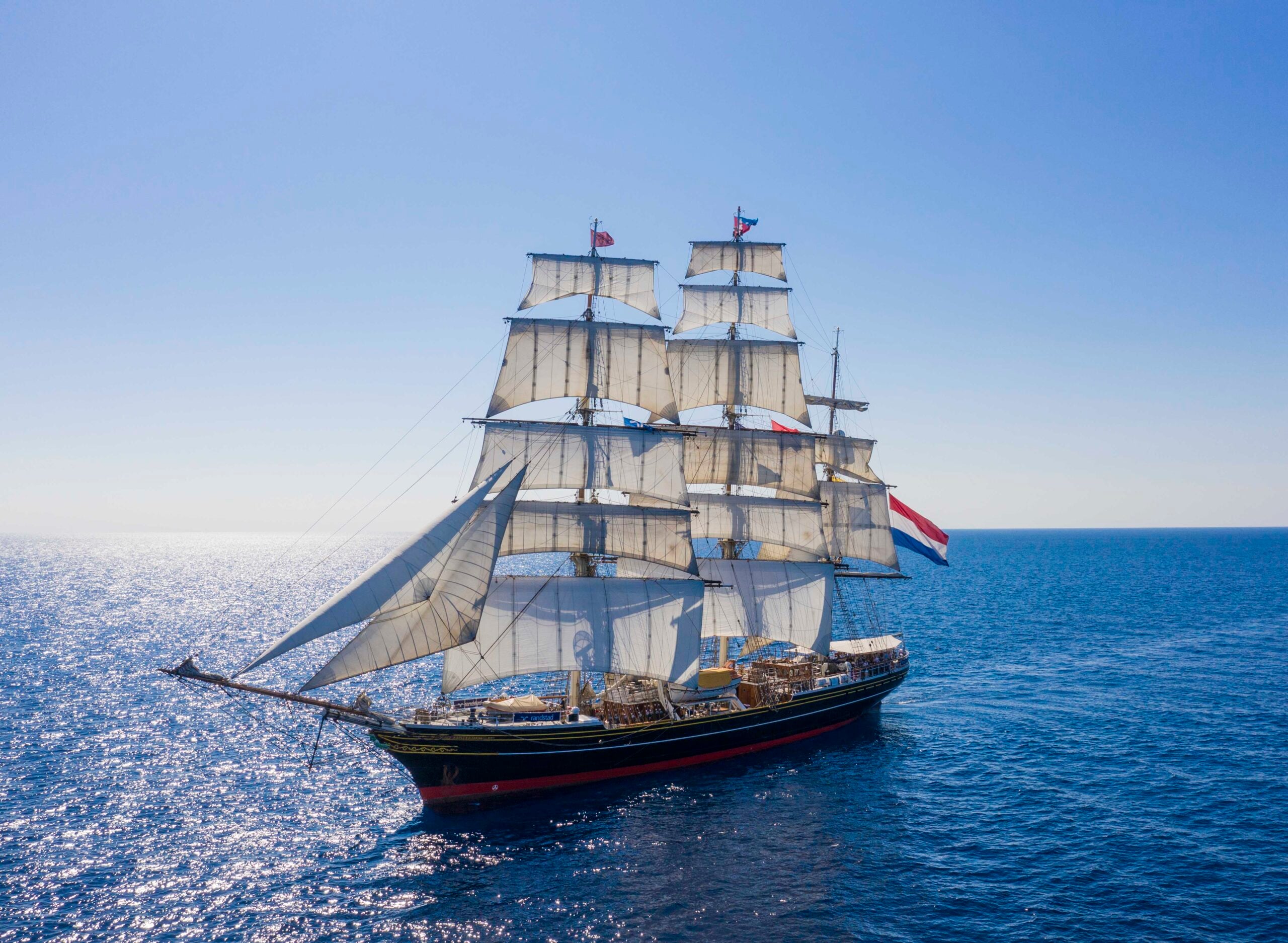
How Clipper Stad Amsterdam offers an all-inclusive sailing experience
Clipper Stad Amsterdam offers an all-inclusive sailing cruise that perfectly matches what adventurous travelers are looking for: the ease of a fully catered stay, combined with the freedom and experience of sailing aboard an iconic three-masted clipper ship.
What is included on board:
- Breakfast, lunch, and dinner, prepared by the on-board chefs
- Day excursions, snorkeling, and free time on white sandy beaches in the Caribbean
- Personal service from a young and dedicated hospitality team throughout your entire stay
- Accommodation in one of 14 luxury cabins, with a maximum of 28 guests on board for an intimate atmosphere
- A new destination every day, while your luggage stays right on board
This is no ordinary all-inclusive vacation. It is a boutique cruise experience aboard a ship with a rich history, for travelers who are ready for something that goes beyond the resort. Pricing is tailored to your chosen voyage, cabin category, and travel period. Want to know which trips are available in 2026? Browse the offerings or get in touch for a personal quote.