

Where do most Dutch people spend the winter?
Most Dutch winter sun seekers head to Spain, especially the Costa Blanca, the Costa del Sol and the Canary Islands. Portugal and Morocco are also growing in popularity. If you’re looking for warmth in January, you’ll usually choose a destination within a few hours’ flight, with sunshine, a pleasant climate and plenty of fellow Dutch people nearby. Below you can read which places those are, why they are so popular and which alternatives there are if you’re looking for warmth in January.
Which destinations do winter sun seekers choose most often?
Winter sun seekers most often choose Spain, with the Costa Blanca, the Costa del Sol and the Canary Islands as favorites. Next come Portugal (the Algarve and Madeira), Morocco and Turkey. These destinations combine a mild winter climate with short flight times and well-developed infrastructure.
Exact numbers differ by source and by year, but the ranking has been fairly stable for years. Spain comes out on top, and within Spain the coastal towns around Alicante, Torrevieja and Málaga score high. The Canary Islands, such as Tenerife, Gran Canaria and Lanzarote, are especially popular in the winter months because temperatures there are generally around 20 degrees even in January.
If you look further afield, you can also find warmth in January in Egypt, Cape Verde, Thailand and the Caribbean. Those destinations require a longer flight, but offer temperatures of 25 to 30 degrees.
Why do Spain and the Canary Islands attract so many Dutch people?
Spain and the Canary Islands attract so many Dutch people thanks to the combination of sunshine, short flight times, affordable accommodation and a large existing Dutch community. You can be in Spain in three to four hours, and in the Canary Islands in four to five hours, and in winter it is considerably milder there than at home.
A few factors make the difference:
- Accessibility: many direct flights from Dutch airports, even in the winter months.
- Price level: rental apartments and food are generally reasonably priced for a longer stay.
- Amenities: good healthcare, supermarkets, golf courses and hiking trails.
- Familiarity: in many coastal towns you’ll find Dutch-speaking shops, clubs and restaurants, so you quickly feel at home.
On the other hand, the Spanish mainland can cool down considerably at night in January. For that reason, the Canary Islands are the safest choice for many people who want reliable warmth.
What is the difference between wintering abroad and a winter trip?
The difference lies mainly in duration and purpose: wintering abroad means staying in one place for several weeks to months to escape the cold season, while a winter trip is a shorter vacation of one or two weeks, often with multiple stops or a set itinerary.
Wintering abroad is all about having a second home for a while. You rent or buy an apartment, build a daily routine and settle in almost like a temporary resident. It’s about peace, familiarity and lower costs per day.
A winter trip is more focused on experience. You want to see something new, taste a different culture or simply chase the sun for a week or two. The daily budget is usually higher, but total spending is lower because you’re away for a shorter time. Many people combine the two: a long stay in a fixed place, supplemented by a short trip to another destination.
When is the best time to winter abroad?
The best time to winter abroad is from November through March, with January and February as the core of the winter season. During those months it is coldest and darkest in the Netherlands, while destinations such as the Canary Islands and southern Spain remain pleasantly mild.
A few considerations can help you choose your departure and return dates:
- Leaving early (October or November): it’s still quieter and often cheaper, and temperatures are mild.
- Mid-winter (December to February): peak season with the highest prices, but also the best chance of sunny days in the Canary Islands.
- Returning late (March): spring arrives late in the Netherlands, so an extra month elsewhere often feels like a luxury.
If you’re specifically looking for where it’s warm in January, look to the Canary Islands, Cape Verde, Egypt, Southeast Asia and the Caribbean. Conditions there are ideal this month.
Is wintering at sea or in the Caribbean a good alternative?
Yes, wintering at sea or in the Caribbean is a good alternative for those who want more than an apartment on the Spanish coast. In January, the Caribbean offers dry, sunny days of 27 to 30 degrees, and a sailing cruise combines that warmth with adventure and an ever-changing view.
The biggest difference from the classic winter sun spots is the experience. Instead of one fixed place, you discover multiple islands in a single trip, with beaches, snorkeling spots and villages that are often not so easy to reach from land. January also falls in the dry season, which increases the chance of beautiful weather.
It is, however, a different kind of investment. A luxury sailing cruise is not a cheap alternative to a winter apartment in Spain, and flights to the Caribbean are usually not included in the trip price. On the other hand, you get a fully catered trip, with meals and service on board. For those who want to combine a week or two of sunshine with something special, it is an attractive option, especially in a small group rather than on a large cruise ship.
How do you choose the winter destination that suits you?
Choose your winter destination based on four questions: how much warmth do you want, how long will you stay, how much do you want to spend and how much relaxation or adventure are you looking for? If you answer those questions honestly, you’ll usually quickly arrive at a suitable destination.
- Temperature: if you want a guaranteed 20 degrees or more, choose the Canary Islands or a destination further away. Southern Spain is lovely, but less predictable.
- Length of stay: for a few months, an apartment in a fixed location is practical. For a week or two, a trip or cruise is a better fit.
- Budget: don’t just calculate the accommodation, but also flights, food, transport and insurance.
- Style: do you like familiarity and a fixed routine, or would you rather go exploring?
It’s practical to plan a trial period. First spend two to four weeks in a place that appeals to you before booking a longer stay. That way you’ll know whether the climate, atmosphere and surroundings truly suit you.
How we help you find warmth in January
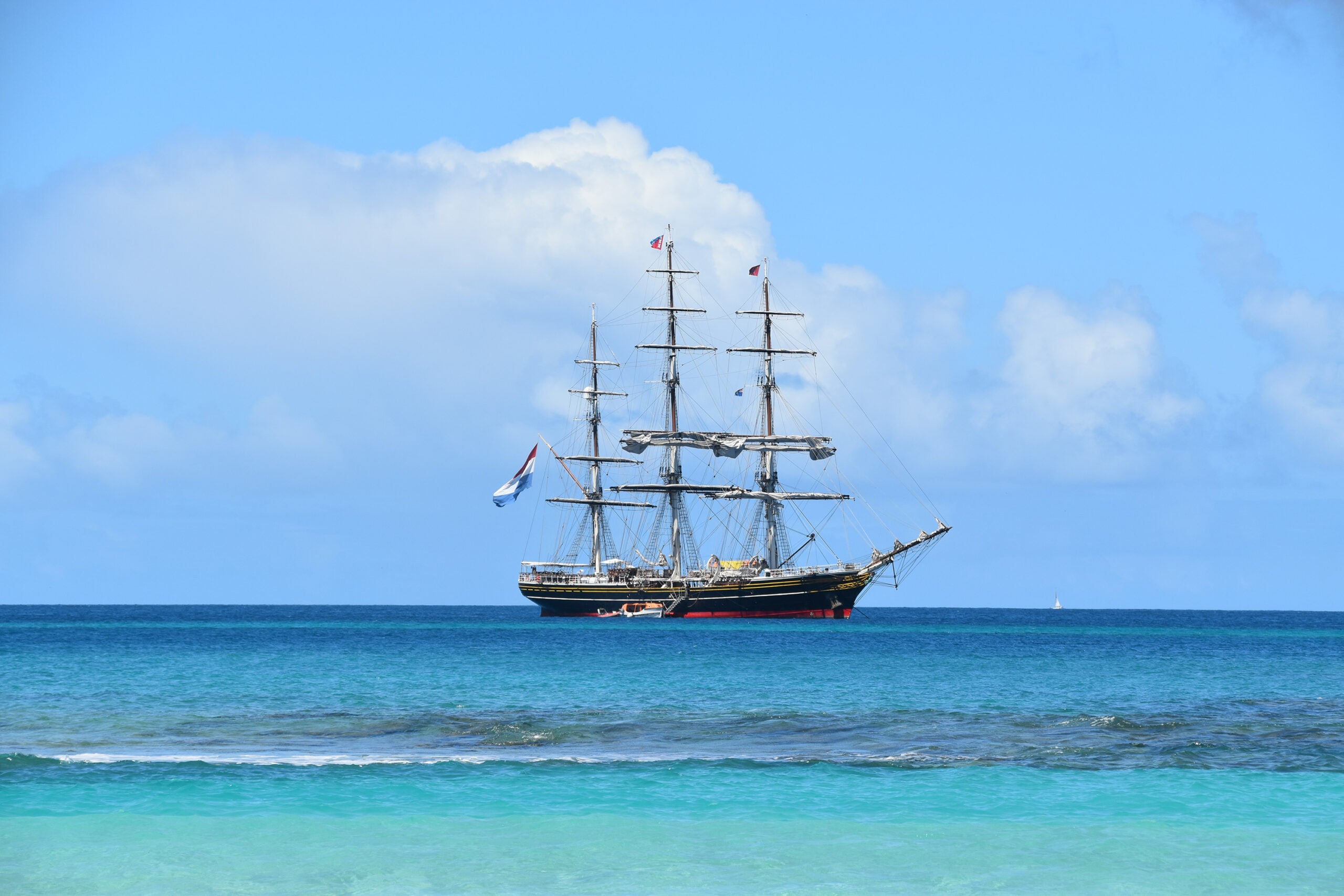
Do you want to escape the Dutch winter without choosing a standard vacation? Then at Clipper Stad Amsterdam we offer a special alternative: a luxury sailing cruise in the Caribbean, aboard a traditional three-masted clipper. It is not a large cruise ship, but an intimate vessel with a maximum of 48 passengers, 14 cabins and a high level of service, comparable to a boutique hotel.
This is what you can expect from us:
- During the day we sail from island to island, and in the evening we anchor in a quiet bay.
- Our chefs prepare breakfast, lunch, dinner and cocktails on board.
- You can snorkel, take day excursions and relax on white beaches.
- The sailing is done by hand and is authentic, with a young, friendly and dedicated crew.
- Cruises start from €5,300 per person. Flights are not included.
Curious whether this fits your winter plans? Take a look at our options and book your trip, or contact us for personal advice. We’d be happy to help you plan.