
When is the best time for a cruise?
Choosing the right time for a luxury cruise is both an art and a deeply personal decision. The destination, the season, the size of the vessel, and the calibre of the experience on board all play a role in shaping a voyage that truly stands apart. Whether you are drawn to the turquoise waters of the Caribbean, the drama of an Atlantic crossing, or a luxury sailing cruise in the Caribbean, timing and the right ship make all the difference between a holiday and a genuinely unforgettable journey.
In this article we answer the most important questions about planning an exclusive cruise holiday, from the finest sailing seasons to the smartest ways to secure a truly intimate experience at sea. That way you can make a well-considered choice for your next voyage.
Which months are the most popular for a luxury cruise holiday?
The most sought-after months for a luxury cruise are December through to April, particularly for Caribbean voyages. During this period the climate is at its finest — warm, dry, and consistently sunny — and the sailing conditions are ideal. Discerning travellers who value comfort, exclusivity, and reliability tend to plan their voyages during these peak sailing months.
June and September attract travellers seeking a more European experience, with Mediterranean and Atlantic routes offering excellent conditions and a somewhat quieter atmosphere. For those with the flexibility to choose their own dates, the shoulder months can offer a compelling balance of superb weather and a more private, unhurried pace on board.
- December to April: prime Caribbean season, optimal trade winds and sunshine
- June: excellent for European and Atlantic routes, fewer crowds
- September: late-season warmth, a quieter and more exclusive atmosphere
- October: ideal for those seeking solitude, space, and a more personal voyage
What is the difference between high season and low season for a cruise?
High season for cruising is the period when weather conditions, sailing routes, and overall comfort are at their peak. For the Caribbean, this means December through to April — the dry season, when the trade winds blow steadily and the risk of tropical storms is minimal. Low season brings quieter ports and lower prices, but also greater weather uncertainty and, on some routes, reduced availability of the finest anchorages and island stops.
On an exclusive small-ship cruise, the distinction between high and low season matters even more, because the finest itineraries and the most coveted cabin categories fill quickly. Early planning is essential for travellers who refuse to compromise on quality. For personal advice on the best sailing season for your wishes, we invite you to get in touch with us.
It is worth noting that high and low season differ significantly by region. In the Caribbean, the low season falls in summer (May to November), coinciding with hurricane season, while Europe’s finest sailing conditions peak in summer. Always research the specific destination and route you have in mind before committing to dates.
When is the best time for a luxury cruise in the Caribbean?
The finest time for a luxury cruise in the Caribbean is undoubtedly December through to April. During these months the climate is dry, brilliantly sunny, and comfortably warm, with the trade winds providing ideal sailing conditions and virtually no risk of hurricanes. This is when the Caribbean is at its absolute best — and when a sailing cruise truly comes into its own.
Hurricane season officially runs from June to November, with the most intense activity in August and September. Travelling during these months carries a higher risk of disrupted itineraries and uncomfortable conditions at sea. For travellers who expect nothing less than perfection, the dry season is the only season worth considering. Get in touch with us for personal advice.
What is the ideal period for a relaxed and exclusive sailing cruise?
For a sailing cruise where every element — the wind, the water, the islands, and the pace of life on board — aligns perfectly, January through to April is the outstanding choice. The trade winds blow with a steady, reliable rhythm during this period, delivering smooth passages between islands, spectacular sunsets over calm anchorages, and the kind of effortless sailing that defines a truly luxurious voyage.
How do you plan an exclusive cruise away from the crowds?
Planning a genuinely exclusive cruise means going far beyond simply choosing the right month. It means selecting a vessel with a strictly limited number of passengers, seeking out itineraries that venture beyond the well-trodden ports, and working with a team that understands the difference between a cruise and a curated voyage. The combination of timing, ship size, and onboard philosophy determines the true quality of the experience.
Here are concrete steps for planning a more exclusive and private cruise holiday:
- Choose a small-ship experience: Vessels carrying fewer than 30 passengers offer a level of intimacy, personal service, and access to secluded anchorages that large cruise ships simply cannot match.
- Prioritise itinerary over price: The finest voyages are designed around exceptional destinations, not convenience. Seek out routes that include hidden bays, private anchorages, and lesser-known islands.
- Book well in advance: The most exclusive cabins and the finest departure dates are reserved by experienced travellers who plan ahead. Early booking is essential to secure your preferred voyage.
- Travel outside the school holiday peaks: Even within high season, departures in early December or late March tend to offer a quieter, more refined atmosphere on board and ashore.
- Seek a dedicated hospitality team: A small, professional crew focused entirely on a handful of guests transforms a cruise into something far more personal and memorable.
What are the advantages of an exclusive small-ship cruise?
An exclusive small-ship cruise offers something that no large vessel can replicate: the feeling that this voyage has been arranged entirely for you. With a limited number of fellow passengers, every interaction with the crew is personal, every meal is prepared with care, and every anchorage feels like a private discovery. This is the essence of luxury travel at sea.
On a small sailing ship, you can drop anchor in bays that are inaccessible to larger vessels, go ashore without queues or crowds, and spend your evenings in complete tranquillity beneath the stars. The rhythm of life on board is dictated by the wind and the sea, not by a timetable — and that freedom is precisely what the most discerning travellers come seeking.
It is worth considering that a truly exclusive cruise requires a degree of flexibility and a willingness to embrace the unpredictability of sailing. Weather, wind, and tide all play their part. For travellers who appreciate the authentic nature of the sea, this is not a compromise — it is the very heart of the experience.
How Clipper Stad Amsterdam delivers the ultimate luxury sailing cruise
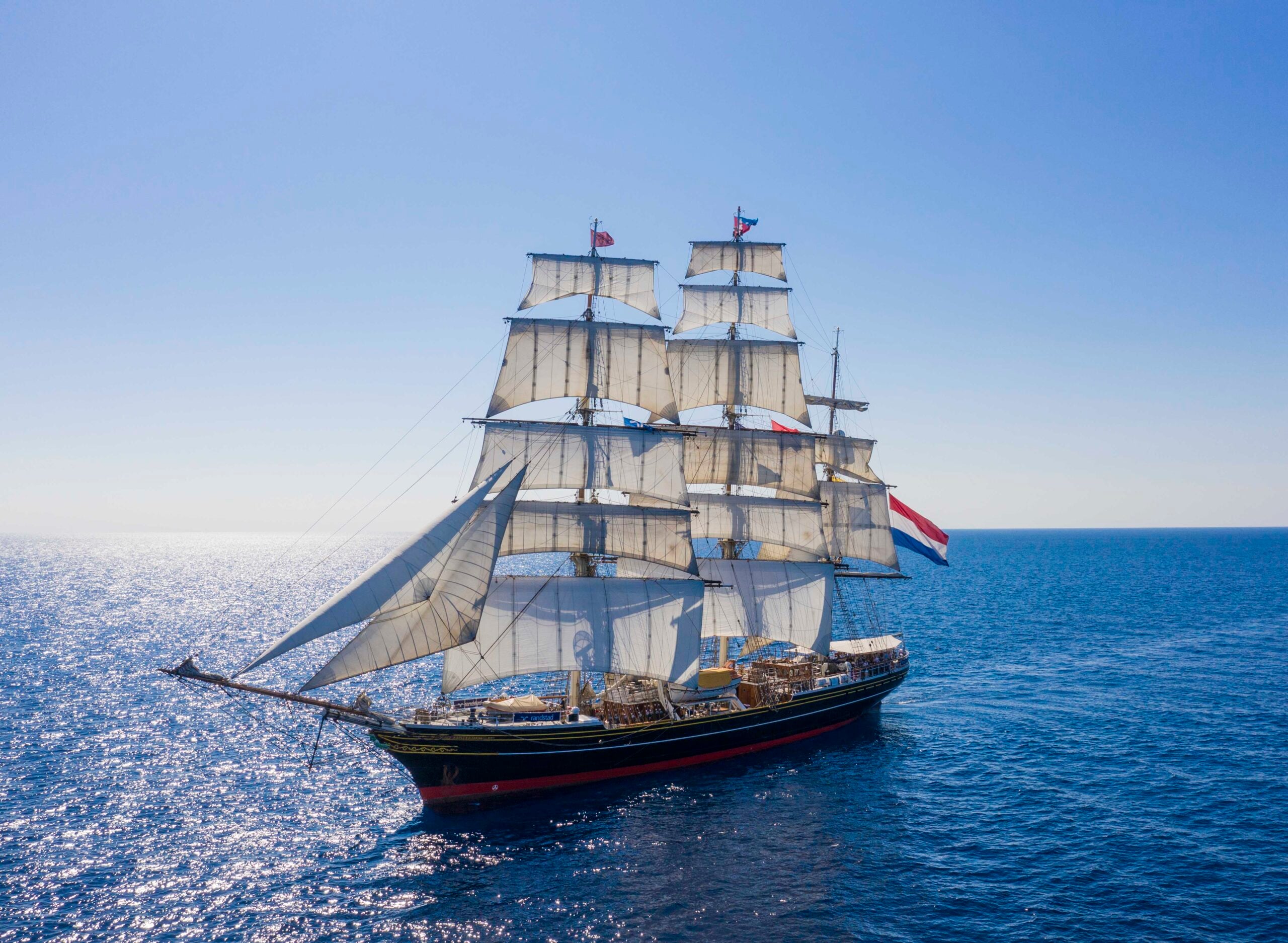
If you are searching for a cruise experience that is genuinely exceptional, Stad Amsterdam offers precisely what the most discerning travellers are looking for: an intimate, carefully curated voyage on board one of the world’s most iconic three-masted clipper ships. There are no anonymous corridors, no crowded buffets, no mass-market itineraries — only a beautifully appointed ship, a maximum of 28 guests, and a crew dedicated entirely to making your voyage extraordinary.
Our luxury sailing cruises in the Caribbean take place during the finest travel season, from December to April, when the climate is at its most glorious and the trade winds ensure comfortable, exhilarating sailing every day. What we offer:
- Sailing under full canvas each day and anchoring each evening in secluded, private bays
- Fully catered on board: exceptional breakfasts, lunches, and dinners prepared by our dedicated chefs
- Curated activities including snorkelling in pristine waters, guided day trips ashore, and leisurely afternoons on white sandy beaches
- A young, passionate, and highly attentive hospitality team committed to your comfort at every moment
- 14 beautifully appointed luxury cabins with the warmth and character of a boutique hotel at sea
Our rates are tailored exclusively to season, cabin category, and duration of voyage. Would you like to learn more about our itineraries or discuss a bespoke cruise experience? Feel free to contact us for a personal quote — we are delighted to help you find the perfect timing and the perfect voyage for your next adventure at sea.