

What Can You Do During a Cruise Stop in Martinique?
During a cruise stop in Martinique, you can enjoy breathtaking beaches, extensive rum distillery visits, tropical nature, and a rich Creole culture that sets the island apart from other Caribbean destinations. Martinique combines French sophistication with Caribbean warmth, making it one of the most versatile islands in the region for many travelers. In this article, we answer the most important questions about what you can do in Martinique, from beach to table.
What are the most beautiful beaches in Martinique?
Martinique has an impressive variety of beaches, from golden sandy shores in the south to unique black lava sand beaches in the north. The most visited beach is Les Salines in the south, a long arc of fine white sand lined with palm trees. This beach is considered one of the most beautiful in the entire Caribbean and is ideal for swimming and relaxing.
Those looking for a quieter alternative will find it at Anse Cafard or Grande Anse des Salines. The north of the island offers a completely different landscape: the beach at Anse Céron is surrounded by rainforest and virtually deserted, making it particularly suitable for travelers who prefer peace and nature over crowds. The black sand beaches around Saint-Pierre are popular with snorkelers, as this is where the wrecks of ships sunk in 1902 by the eruption of Mont Pelée lie.
Which cultural highlights should you not miss in Martinique?
The most important cultural highlights in Martinique are the historic town of Saint-Pierre, the colonial center of Fort-de-France, and the plantations that recall the island’s sugarcane era. Martinique has a turbulent history as a former French colony, and that history is visible everywhere in the architecture, museums, and local traditions.
- Saint-Pierre: Once the cultural capital of the Caribbean, this town was completely destroyed in 1902 by the eruption of Mont Pelée. The ruins are still visible and the Musée Vulcanologique tells the story of this disaster.
- Fort-de-France: The current capital offers the impressive Fort Saint-Louis, the colorful Grand Marché market, and the Bibliothèque Schoelcher, a beautiful art nouveau building named after the abolitionist Victor Schoelcher.
- Habitation Clément Plantation: A former rum plantation with an impressive manor house and art collection, offering a unique insight into the island’s colonial history.
The Creole culture of Martinique is also strongly present in the music, dance, and daily life. Local biguine and zouk music are inextricably linked to the island, and in Fort-de-France there are regular performances and markets where you can soak up that atmosphere.
What can you do in nature in Martinique?
Martinique offers excellent opportunities for nature lovers, from hiking through tropical rainforest to snorkeling in clear coral waters. The north of the island is dominated by Mont Pelée, an active volcano over 1,400 meters high that can be climbed via well-marked hiking trails. The trek to the summit takes half a day and rewards hikers with a spectacular view over the island and the surrounding sea.
In the Parc Naturel Régional de la Martinique you will find extensive hiking routes through lush rainforest, past waterfalls and through mangrove forests. The Gorges de la Falaise is a popular route where you wade through a narrow gorge with water up to your knees. For those who prefer to explore the underwater world, the coast around Le Robert and the southern tip of the island offer beautiful snorkeling spots with diverse coral reefs and tropical fish.
How do you taste the local cuisine and rum in Martinique?
The best way to taste the local cuisine and rum of Martinique is by visiting a traditional snack or restaurant for Creole dishes, combined with a guided tour of one of the active rum distilleries on the island. Martinique is world-renowned for its rhum agricole, a rum made from fresh sugarcane juice rather than molasses, which holds a protected designation of origin (AOC).
The best rum distilleries to visit
Martinique has several distilleries open to visitors. Rhum Clément, Rhum Saint James, and Distillerie J.M are the most well-known. A guided tour typically includes an explanation of the production process, a walk through the sugarcane fields, and a tasting of various rum varieties. Distillerie J.M in the north of the island is also set in a beautiful location at the foot of Mont Pelée.
Creole dishes you must try
The local cuisine revolves around fresh fish, shellfish, plantains, and herbs such as thyme and piment. Typical dishes include accras de morue (fried salt cod fritters), colombo (a Creole curry with meat or fish), and boudin créole (a spiced blood sausage). At the market in Fort-de-France you will find fresh produce and local snacks for an authentic culinary experience.
When is a cruise stop in Martinique most worthwhile?
A cruise stop in Martinique is most worthwhile between December and April, the dry season on the island. During these months the weather is stable, the sun shines abundantly, and the sea is calm. This is also the high season for Caribbean cruises, when temperatures are pleasant without the high humidity of the rainy season.
Outside the high season, from June to November, Martinique falls within the Caribbean hurricane season. Although the island is relatively well protected and direct hurricanes are rare, periods of heavy rainfall and rough seas can occur. Those who are flexible in their planning can still find good weather in the shoulder months of May and November, with fewer crowds at the popular beaches and attractions.
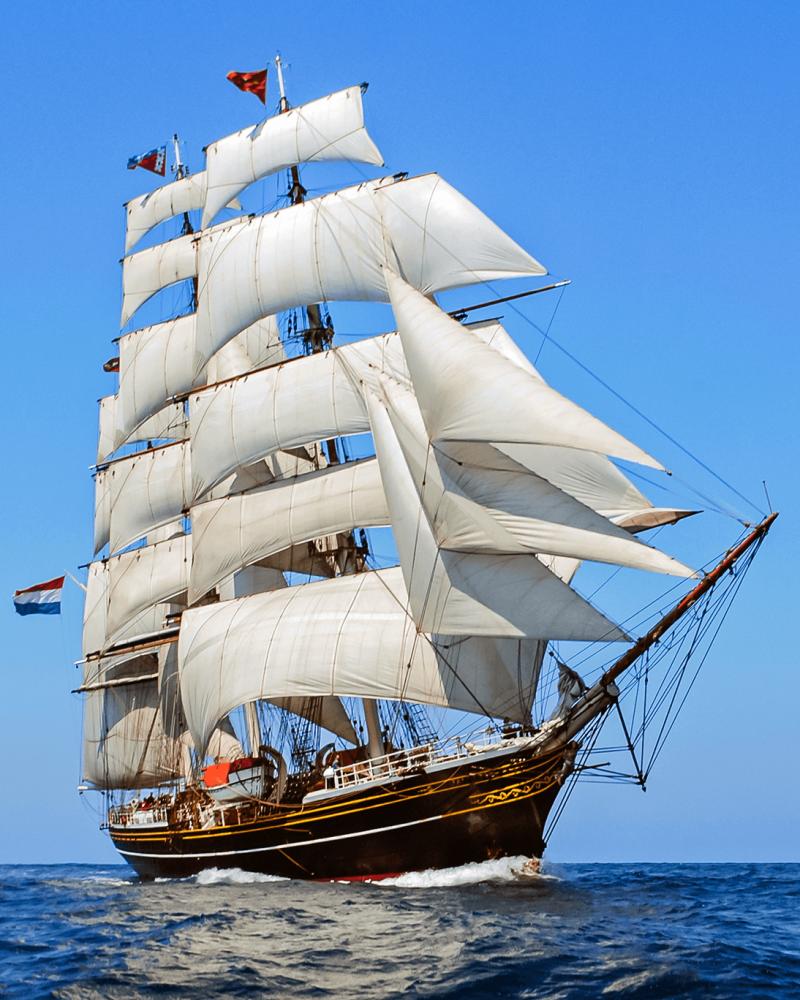
Discover Martinique aboard Clipper Stad Amsterdam
We take you to Martinique in a way that truly does justice to the destination: sailing on wind, mooring in bays unreachable by large cruise ships, and with all the space to explore the island at your own pace. Our luxury sailing cruises in the Caribbean are designed to combine adventure and comfort:
- A maximum of 28 guests on board, spread across 14 cabins, for an intimate and personal atmosphere
- Fully catered with breakfast, lunch, dinner, and cocktails prepared by our own chefs
- Day trips to beaches, rum distilleries, and cultural highlights such as Saint-Pierre
- Snorkeling equipment available for exploring the underwater world
- A young, dedicated crew that operates the ship manually and authentically
Our cruises depart in January and February to the Caribbean, after which the ship sets course for the Mediterranean. Prices for a luxury sailing cruise start from €5,300 per person, excluding flights. Want to know more or are you ready to book? View our offering at Clipper Stad Amsterdam, go directly to our trip booking, or contact our team for personal advice.
Frequently Asked Questions
How much time do I need to properly explore Martinique during a cruise stop?
A cruise stop typically lasts one day, which is sufficient to focus on one or two highlights, such as a visit to Les Salines combined with a rum distillery, or a walk in nature followed by lunch in Fort-de-France. Those who want to see more, such as both the north and south of the island, would do well to book an organized day excursion that combines the main attractions. On a small-scale sailing cruise such as that of Clipper Stad Amsterdam, there is more flexibility to adapt the schedule to your interests.
Do I need a rental car in Martinique, or can I get by without one?
A rental car is by far the most convenient way to explore the island independently, as public transport is limited and the most popular attractions are spread across the island. Taxis are available but can be expensive for longer journeys, especially if you want to make multiple stops. Those who prefer not to rent a car can opt for an organized excursion from the port, which is certainly a practical and stress-free option for a one-day stop.
What language is spoken in Martinique, and can I get by with English or Dutch?
The official language in Martinique is French, and to a lesser extent Antillean Creole. English is reasonably well understood in tourist areas and at larger attractions such as rum distilleries, but in smaller restaurants, at markets, and in remote villages, French is a clear advantage. Learning a few basic phrases in French, such as ‘bonjour’, ‘merci’, and ‘l’addition s’il vous plaît’, is strongly recommended and is greatly appreciated by the local population.
Is Martinique a suitable destination for snorkelers without much experience?
Yes, Martinique is excellent for beginners, particularly the calm bays around Le Robert and the southern tip of the island, where the water is clear and relatively calm. The underwater world near the sunken ships around Saint-Pierre is more spectacular but better suited to experienced snorkelers or divers due to the depth. Those traveling on a small-scale cruise often already have snorkeling equipment available on board, so you don’t need to bring your own gear.
What is the difference between rhum agricole from Martinique and regular rum, and how do I recognize a good bottle?
Rhum agricole is made from freshly pressed sugarcane juice, while most other types of rum are produced from molasses, a by-product of sugar production. This gives Martiniquais rum a fresher, grassier flavor that differs clearly from Caribbean or Latin American rums. A good bottle can be recognized by the AOC label (Appellation d’Origine Contrôlée) on the bottle, which guarantees that the rum was produced according to the traditional method in Martinique. During a distillery visit you can also taste different stages of aging, from blanc (white, unaged) to vieux (aged in oak barrels).
What practical tips are there for visiting Martinique in high season?
Book excursions and rental cars in advance if possible, as demand is high in the high season (December to April) and availability can run out quickly. Visit popular beaches such as Les Salines early in the morning to beat the crowds, as they can get very busy by midday. Also remember to bring sufficient sunscreen, drinking water, and cash, as not all local vendors and stalls accept card payments.
Can I buy local products as souvenirs in Martinique, and what are the top recommendations?
Martinique offers a great range of local souvenirs, with rhum agricole as the absolute highlight: a bottle from Distillerie J.M, Rhum Clément, or Rhum Saint James makes an authentic and high-quality gift. In addition, local products such as vanilla, cocoa powder, Creole spices, and handmade jewelry are popular purchases. The Grand Marché in Fort-de-France is the best place to shop, with a wide range of fresh produce and crafts at fair prices.