

Which Beach Excursions Suit a Cruise Day in Tobago?
Tobago offers travellers arriving by sea an excellent base for beach excursions: the island combines tranquil bays, crystal-clear water, and lush nature in a way that is rarely found in the Caribbean. The most accessible beaches from the sea are Store Bay, Pigeon Point, and Englishman’s Bay, each with its own character. Below you will find answers to the most frequently asked questions about beach excursions on Tobago during a cruise.
Which beaches on Tobago are best accessible from the sea?
The beaches that are easiest to reach from the sea are Store Bay, Pigeon Point, and Englishman’s Bay. Store Bay and Pigeon Point are located on the southwest coast near Scarborough and offer calm anchorages. Englishman’s Bay, on the north coast, is secluded and surrounded by jungle, ideal for those seeking peace and quiet.
Store Bay is popular for its local food stalls and calm waters, while Pigeon Point is known for its white sandy beach with a distinctive wooden pier. For those looking for something more adventurous, Englishman’s Bay offers an almost pristine environment that is accessible almost exclusively by boat or via a narrow road. It is precisely this remoteness that makes it so appealing to sailors. Other beaches worth mentioning are Castara Bay and Parlatuvier Bay, both on the northwest coast and popular with sailors looking for a quiet anchorage.
What makes Tobago different from other Caribbean islands?
Tobago distinguishes itself from other Caribbean islands by its small scale, authenticity, and the absence of mass tourism. The island has no large hotel resorts or busy cruise terminals, which means that nature has largely remained intact. The rainforest in the north is one of the oldest protected tropical forests in the world.
Where islands such as Sint Maarten or Nassau are strongly focused on commercial tourism, Tobago breathes a quieter rhythm. The local population is hospitable, the markets are authentic, and the beaches are rarely crowded. Tobago is part of the twin republic of Trinidad and Tobago, but feels very different from the bustling Trinidad. The coral reefs surrounding the island are among the best preserved in the Caribbean, making it particularly interesting for divers and snorkellers as well. For travellers looking for a Caribbean cruise without the crowds of the larger islands, Tobago is a striking choice.
What beach activities are there to do on Tobago?
On Tobago, the most popular beach activities are snorkelling, diving, kayaking, and hiking along the coastline. The coral reefs at Speyside and Buccoo Reef are world-famous and offer an exceptional underwater experience. Those who prefer to stay on dry land can enjoy the tranquil bays or take a walk through the adjacent rainforest.
- Snorkelling and diving: Buccoo Reef is one of the most accessible reefs on the island. Near Speyside, on the east coast, larger reef formations can be found with manta rays and barracudas.
- Kayaking and paddleboarding: In the calm bays such as Castara and Parlatuvier, the water is calm enough for beginners.
- Birdwatching: Tobago is known as one of the best places in the Caribbean for birdwatchers. Even on the beach you will encounter remarkable species.
- Tasting local cuisine: At Store Bay, local vendors offer fresh fish, crab and dumplings, and other Trinidadian specialities.
- Hiking: Around Englishman’s Bay and Castara, trails run through the rainforest that lead to viewpoints overlooking the sea.
How do you plan a beach day on Tobago from a sailing vessel?
The best way to plan a beach day on Tobago from a sailing vessel is to anchor early in the morning in a quiet bay, so that you have the rest of the day free for excursions. Most bays on the north and west coast offer sufficient anchorage space for smaller vessels. With a dinghy or tender you can easily get ashore.
A good plan takes into account the following steps:
- Choose an anchorage that suits the day’s activities: Castara for peace and quiet, Speyside for diving, Store Bay for local atmosphere.
- Depart early to have the best light and the calmest sea for anchoring.
- Bring snorkelling equipment on board if you plan to explore the reefs.
- Ask the local population about current conditions, as currents and wind direction can vary from day to day.
- Plan a return before sunset, so you can enjoy the atmosphere on the water in the bay in the evening.
For travellers on an organised sailing cruise, the crew and hospitality team take care of all such logistics, including arranging excursions and activities ashore.
What time of year is best for beach excursions on Tobago?
The best time of year for beach excursions on Tobago is the dry season from January to May. During these months, the chance of rain is smallest, the sea is calmer, and underwater visibility is excellent. Tobago lies outside the official hurricane belt, which means the island is relatively safe even in the wetter months.
Tobago has two seasons: a drier period from January to May and a wetter period from June to December, during which rain often falls in short, heavy showers that quickly clear up. Beach excursions are perfectly possible even in the wetter months, but the sea can be rougher and visibility for snorkelling variable. January and February are popular months for a cruise to Tobago, partly because the water is at its clearest and temperatures are pleasant without extreme heat.
Are there also beach excursions suitable for less active travellers?
Yes, Tobago offers plenty of options for less active travellers. Beaches such as Pigeon Point and Store Bay are easy to reach, have calm waters, and are equipped with facilities such as shaded spots and local eateries. You do not need to engage in sporting activities to fully enjoy the surroundings.
For travellers who prefer to relax rather than seek adventure, these are the best choices:
- Pigeon Point: A wide, soft sandy beach with palm trees and a relaxed atmosphere. Ideal for a leisurely day in the sun.
- Store Bay: Compact, easily accessible, and equipped with local stalls. No long walks required.
- Castara Bay: A small fishing village with a quiet beach where you can soak up the local atmosphere without the crowds.
- Buccoo Village: Here you can book a glass-bottom boat tour over the reef, allowing you to admire the underwater world without snorkelling yourself.
In that respect, Tobago is more accessible than many other Caribbean islands, precisely because it is small in scale and the beaches are never overwhelmed by masses of tourists.
How Clipper Stad Amsterdam makes your beach day on Tobago complete
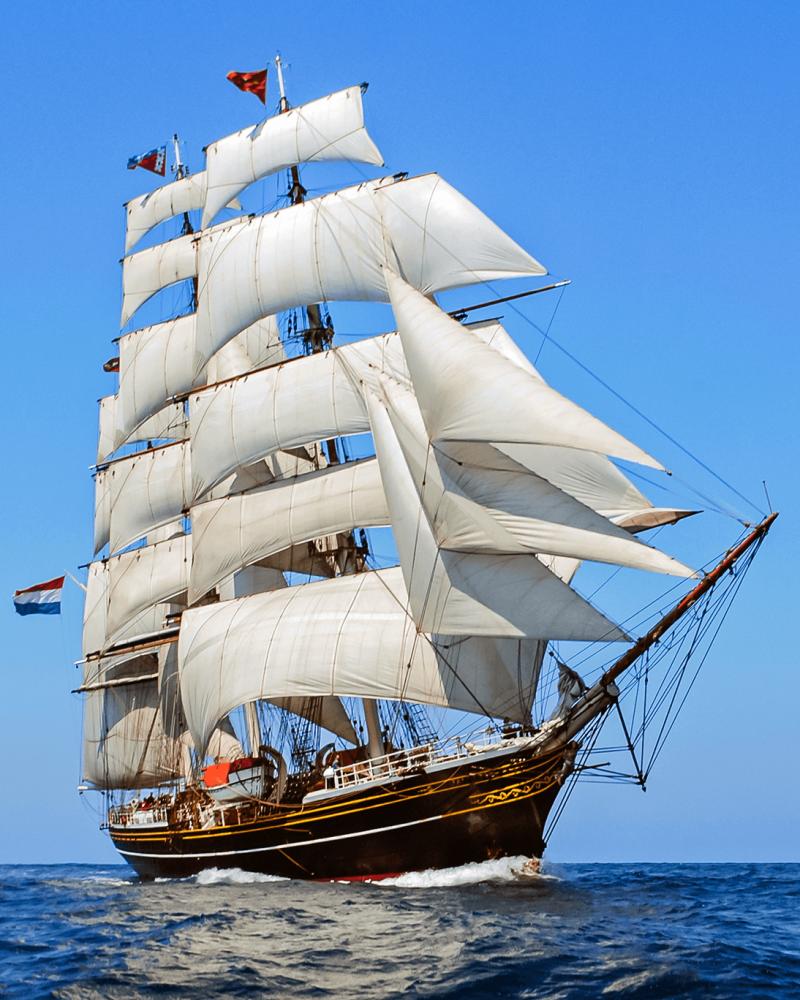
A beach excursion on Tobago is special in its own right, but as part of a luxury sailing cruise aboard the Clipper Stad Amsterdam it becomes an unforgettable experience. We take you by three-masted sailing ship to the most beautiful anchorages on the island, in places that are simply unreachable for large cruise ships. On board, our hospitality team takes care of everything, so you can focus entirely on the destination.
This is what you can expect from us:
- Anchoring in secluded bays that you would never reach on a regular cruise
- Day excursions to beaches such as Castara Bay, Englishman’s Bay, and Pigeon Point
- Snorkelling equipment and guidance available on board
- Fully catered meals and cocktails prepared by our own chefs
- A maximum of 28 guests on board, spread across 14 cabins, for an intimate stay
- A young, friendly crew that lets you discover the most beautiful spots on Tobago
Our luxury sailing cruises in the Caribbean start from €5,300 per person and are exclusive of flights. Would you like to know more or reserve a spot right away? book your trip via our website or contact our team. We would be happy to tell you more about the possibilities on board the Clipper Stad Amsterdam.
Frequently Asked Questions
Do I need a visa to visit Tobago during a cruise?
For most European travellers, including those from the Netherlands and Belgium, no visa is required to visit Trinidad and Tobago. You will need a valid passport that is valid for at least six months after your travel date. Upon arrival you will generally receive a tourist card that entitles you to a stay of up to 90 days. Always check the current entry requirements with the embassy or your travel organisation before departure.
What payment methods are accepted on Tobago and should I bring local currency?
The official currency of Trinidad and Tobago is the Trinidad and Tobago dollar (TTD). At many beach stalls and local vendors, such as at Store Bay, only cash is accepted, so it is wise to have some local currency on hand. US dollars are also accepted in many places, but change will be given back in TTD. ATMs are available in Scarborough, but are scarce in remote villages such as Castara or Parlatuvier.
Is it safe to snorkel independently at the coral reefs of Tobago?
Snorkelling at accessible reefs such as Buccoo Reef is generally safe for experienced snorkellers, but it is always advisable not to go alone and to check the local current conditions in advance. Near Speyside, currents can be stronger, making this area more suitable for experienced swimmers or divers under supervision. Always bring a signal buoy when snorkelling further from the shore, so that you are visible to passing boats. On board the Clipper Stad Amsterdam, snorkelling equipment and guidance are available, which considerably increases safety.
What should I pack for a beach day on Tobago from a sailing vessel?
For an optimal beach day on Tobago, be sure to bring high-factor sunscreen (SPF 50+), a rash guard or lightweight shirt for protection on the water, and waterproof sandals for walking over rocks or coral. A dry bag is essential to keep your phone and valuables dry during the tender ride to the shore. Don’t forget a reusable water bottle either: the tropical heat can dehydrate you quickly. If you plan to hike towards Englishman’s Bay or Castara, light hiking shoes or sturdy flip-flops are recommended.
Can I book local excursions on Tobago on the spot, or do I need to arrange everything in advance?
For popular activities such as a glass-bottom boat tour over Buccoo Reef or a guided diving trip at Speyside, it is wise to book in advance, especially during the high season from January to April. Local guides and boats are available at many beaches without a reservation, but quality and price can vary considerably. If you are travelling with the Clipper Stad Amsterdam, the hospitality team takes care of the organisation of excursions entirely, so you do not lose time searching for reliable providers on the spot. For individual sailors, it is recommended to make contact with local fishermen upon arrival in the bay, as they often provide the best and most authentic tips.
Are there specific environmental rules or codes of conduct for visiting the reefs and beaches of Tobago?
Tobago places great value on the protection of its nature, and strict rules apply around Buccoo Reef, which is a protected marine park. It is forbidden to touch, break, or take coral, and the use of chemical-based sunscreen is harmful to the reef — preferably choose a reef-friendly variant based on minerals. Anchoring on coral reefs is not permitted in protected zones; always use the available mooring buoys. By respecting these simple guidelines, you contribute to the preservation of one of the most beautiful underwater worlds in the Caribbean.
What is the difference between a cruise on the Clipper Stad Amsterdam and a regular Caribbean cruise to Tobago?
The biggest difference lies in the accessibility of the destinations and the personal experience on board. Large cruise ships can only dock in Scarborough, the main port of Tobago, and travellers are dependent on organised bus excursions to the beaches. The Clipper Stad Amsterdam is a three-masted sailing ship with a draught that makes it possible to anchor in secluded bays such as Englishman’s Bay and Castara, places that are completely unreachable for large ships. With a maximum of 28 guests on board, the atmosphere is intimate and personal, and the crew flexibly adapts the programme based on weather conditions and the wishes of the group — something that is simply not possible on a regular cruise.