

What Can You Do During a Cruise Stop in Tobago?
During a cruise stop in Tobago, you can enjoy pristine nature, colorful coral reefs, peaceful beaches, and a vibrant local culture that feels very different from most other Caribbean islands. Tobago is compact enough to see a lot in a single day, yet rich enough to surprise you around every corner. In this article, we answer the most frequently asked questions about what you can do, eat, and experience on this remarkable island.
What makes Tobago different from other Caribbean islands?
Tobago sets itself apart from other Caribbean islands through its small scale, tranquility, and unspoiled nature. While many islands in the Caribbean are heavily focused on mass tourism, Tobago has deliberately stayed modest. The island has no large hotel resorts dominating the beach, no busy shopping streets full of souvenir shops, and no endless queues of cruise tourists. Instead, you find dense rainforests, authentic fishing villages, and a population that welcomes you with genuine hospitality.
Tobago is part of the twin-island republic of Trinidad and Tobago, but feels worlds away from the bustling Trinidad. The economy is less dependent on tourism, which means the local culture and daily life have been well preserved. For travelers seeking an authentic Caribbean experience, Tobago is a rare find.
What nature experiences are available in Tobago?
Tobago offers exceptional nature experiences, from snorkeling and diving on colorful coral reefs to hiking through the oldest protected rainforest in the Western Hemisphere. Nature takes center stage here, and you notice it the moment you step ashore.
- Snorkeling and diving: Buccoo Reef is one of the most well-known coral reef complexes in the Caribbean and a must for snorkelers. The clear water and rich underwater world make it an impressive experience, even for beginners.
- Birdwatching: Tobago is renowned as a paradise for bird lovers. In the Main Ridge Forest Reserve, which has been protected since 1776, dozens of bird species live that you can spot so easily nowhere else.
- Turtle watching: Between March and August, sea turtles come ashore on Tobago’s beaches to lay their eggs. Several local organizations offer guided nighttime excursions to witness this spectacle in a responsible way.
- Hiking: Tobago’s interior offers beautiful hiking trails through tropical forest, past waterfalls, and with views over the coast.
What are the most beautiful beaches in Tobago?
The most beautiful beaches in Tobago are Pigeon Point, Englishman’s Bay, and Parlatuvier Bay. Each has its own character, but they share one quality: peace and quiet. Tobago has no overcrowded beach clubs or loud sound systems. Here you find palm trees, clear water, and space to breathe.
Pigeon Point is the island’s most famous beach, with an iconic wooden pier and turquoise water. It is slightly touristy, but retains its charm. Englishman’s Bay is considerably quieter and surrounded by lush vegetation, ideal for those who truly want to unwind. Parlatuvier Bay in the north of the island is almost untouched and feels like a discovery you’ve kept to yourself. For snorkelers, Speyside on the east coast is an excellent choice, with clear water right off the shore.
What is the best way for cruise guests to get from the ship to the sights?
As a cruise guest, you arrive in Scarborough, the capital of Tobago, which has a conveniently accessible port. From there, most attractions are easily reachable by local taxi, rental car, or organized excursion.
The most practical option is a local taxi driver whom you hire for the day. Many drivers know the island inside out and double as guides. You can ask them to put together a route taking in beaches, viewpoints, and local markets. This is affordable, flexible, and gives you the chance to have a real conversation with someone from the island.
If you want more freedom, a rental car is a good choice. Tobago is compact and the roads are reasonably passable, although the mountain roads in the north can be narrow. An organized day tour through a local travel agency is ideal if you have limited time and want to be sure you hit the highlights within the time available to you.
What should you try from the local Tobagonian cuisine?
The local cuisine in Tobago is a reflection of the island itself: colorful, authentic, and surprising. Fresh fish and seafood take center stage, complemented by Creole spices and influences from African, Indian, and European traditions.
- Crab and Dumplings: The national dish of Tobago. Fresh crab, slow-cooked in a rich, spiced sauce, served with homemade dumplings. Seek out a local restaurant in Speyside or Charlotteville for the most authentic version.
- Bake and Shark: A popular street food classic: fried dough filled with seasoned shark, vegetables, and sauces. Simple, tasty, and unmissable.
- Pelau: A savory rice dish with chicken or meat, coconut milk, and vegetables, found in many local households and eateries.
- Fresh coconut water: Straight from the coconut, freshly hacked open in front of you, this is the best thirst quencher after a morning on the beach.
Avoid the tourist restaurants near the harbor and instead seek out the local “parlours” and market stalls for the most honest flavors the island has to offer.
Is Tobago suitable as a cruise destination for luxury travelers?
Tobago is an excellent cruise destination for luxury travelers who value peace, nature, and authenticity over glamour and crowds. The island offers no five-star resorts or designer boutiques, but it does offer an unspoiled beauty that is becoming increasingly rare in the Caribbean.
For travelers who leave behind the anonymity of large cruise ships and opt for a small-scale, personal experience, Tobago is an ideal destination. The island rewards curiosity: those willing to step off the beaten path will discover bays, nature, and people that leave a standard holiday far behind.
How Clipper Stad Amsterdam takes you to Tobago
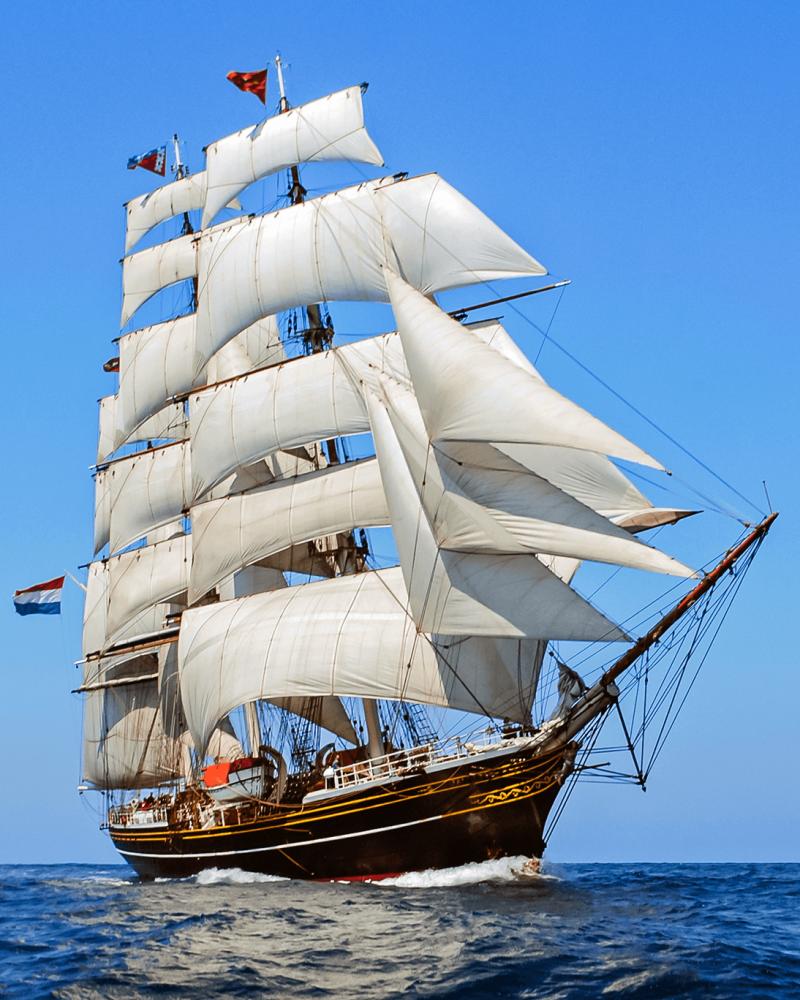
We at Clipper Stad Amsterdam offer luxury sailing cruises in the Caribbean, where destinations like Tobago fit perfectly with the way we travel. On board our historic three-masted clipper ship, a maximum of 28 guests stay in 14 cabins, creating an intimate and personal atmosphere that large cruise ships can never provide.
What sets our cruises apart:
- Sailing by wind and sail power during the day, anchoring in secluded bays in the evening that are unreachable for large ships
- Fully catered with breakfast, lunch, dinner, and cocktails, prepared by our own chefs on board
- Day excursions such as snorkeling, beach days, and local trips are included in the journey
- A young, dedicated crew that places great importance on personal service
- Cruise prices from €5,300 per person (excluding flights)
Tobago is exactly the kind of destination that suits the way we travel: unspoiled, authentic, and worth discovering slowly. Would you like to know which trips are available or do you have questions about a specific route? Contact us or view the options directly on our booking page.
Frequently Asked Questions
How long does a typical cruise stop in Tobago last, and is that enough time to explore the island?
Most cruise stops in Tobago last between 8 and 12 hours, which is more than enough to get a good sense of the island if you plan your day well. Focus on two or three highlights rather than trying to see everything: for example, combine a morning of snorkeling at Buccoo Reef with lunch at a local eatery and a visit to Pigeon Point in the afternoon. A local taxi driver who accompanies you for the day will help you make the most of the time available.
What is the best season to visit Tobago on a cruise?
The dry season from January to May is the most ideal period to visit Tobago: the weather is sunny, the sea is calm, and underwater visibility is excellent for snorkelers and divers. Those who want to watch turtles should plan their visit between March and August, when sea turtles come ashore to lay their eggs. Outside the dry season, the island can experience tropical rain showers, but these are often brief and give the rainforest its characteristic lush character.
Is Tobago safe for tourists who want to explore the island independently?
Compared to many other Caribbean islands, Tobago is known as relatively safe for tourists, especially in the popular tourist areas and beaches. As anywhere in the world, the advice is not to leave valuables unattended on the beach and to be cautious in less familiar areas in the evening. The most comfortable and safe way to explore the island remains hiring a reliable local taxi driver, who will also point you toward the most beautiful spots.
Do I need special equipment for snorkeling at Buccoo Reef, or can I rent it on the spot?
You don’t need your own equipment: at Buccoo Reef and at Pigeon Point there are local providers where you can easily rent snorkel masks, fins, and life vests for a small fee. If you want to make the most of the reef complex, a well-fitting mask is essential; it is worth testing the fit before you enter the water. Anyone who brings their own snorkel set on board naturally has the advantage of familiar equipment.
Which local souvenirs are most worth taking home?
The most authentic souvenirs from Tobago are local products such as handmade wooden objects, homemade hot sauces, and local rum or Angostura bitters produced in Trinidad and Tobago. At local markets in Scarborough you will also find hand-woven baskets, shell jewelry, and local herbs and spices you can use at home to recreate Tobagonian dishes. Avoid mass-produced items near the harbor and instead seek out the craftspeople and market stall holders for a genuine and meaningful memento.
What is the difference between a cruise with Clipper Stad Amsterdam and a regular cruise to Tobago?
The biggest difference lies in the scale, the atmosphere, and the accessibility of destinations. While large cruise ships carry hundreds to thousands of passengers and dock in busy ports, Clipper Stad Amsterdam sails with a maximum of 28 guests and can anchor in secluded bays that are unreachable for large ships. This means you experience Tobago in a far more intimate and peaceful way, far from the crowds, with personal attention on board that simply is not possible with large cruise companies.
Can I join a cruise with Clipper Stad Amsterdam as a non-experienced sailor?
Absolutely, sailing experience is not a requirement to come on board with Clipper Stad Amsterdam. The crew takes care of sailing and managing the ship, so you as a guest can fully enjoy the journey without needing any technical knowledge. Those who are interested in the sailing itself are more than welcome to help on deck under the guidance of the crew, which makes the experience even more adventurous for many.