

What Can You Do During a Cruise Stop in Dominica?
During a cruise stop in Dominica, you can enjoy breathtaking nature, hot sulphur springs, lush rainforests, and exceptionally clear underwater worlds. Dominica is one of the most unspoiled islands in the Caribbean and offers activities you won’t find on any other island in the region. In this article, we answer the most frequently asked questions about what you can do during a visit to this remarkable island.
What makes Dominica different from other Caribbean islands?
Dominica sets itself apart from other Caribbean islands through its volcanic origins and almost untouched nature. While many islands in the region are known for wide sandy beaches and bustling tourism, Dominica is a green, mountainous wilderness surrounded by sea. The island is known as “The Nature Isle of the Caribbean” and that is no marketing term: more than 60% of the island consists of tropical rainforest.
Large cruise ships often cannot call at Dominica’s smaller ports, which has helped the island preserve its tranquillity and authenticity. Travellers who dock here find an island that is still largely inhabited and managed by the local Kalinago people, the indigenous inhabitants of the Caribbean islands. That combination of volcanic landscapes, waterfalls, hot springs, and cultural depth makes Dominica a destination that feels fundamentally different from Aruba, Sint Maarten, or Barbados.
What nature experiences are available on Dominica?
Dominica offers a wide range of nature experiences, from hiking through the rainforest to spectacular waterfalls to swimming in hot sulphur springs. Nature is the island’s absolute main attraction, and even during a short cruise stop, several impressive locations are easily accessible.
- Trafalgar Falls: One of the most visited spots on Dominica. Two waterfalls plunge into a natural basin, surrounded by tropical vegetation. Easily accessible from Roseau.
- Boiling Lake: The second-largest hot lake in the world, located in Morne Trois Pitons National Park (UNESCO World Heritage Site). The hike to reach it is strenuous and takes around five to six hours return, but it is an unforgettable experience for adventurous travellers.
- Titou Gorge: A narrow volcanic gorge with warm, clear water. Visitors swim through the gorge to a small waterfall at the back of the rock face.
- Emerald Pool: A tranquil, emerald-green pool in the heart of the rainforest, accessible via a short walk of around 20 minutes.
For travellers with less time, a combination of Trafalgar Falls and the Emerald Pool is an excellent choice: both are easily accessible and give a great impression of what Dominica has to offer.
What are the best spots for snorkelling and diving in Dominica?
Dominica is considered one of the best diving destinations in the Caribbean, with clear waters, healthy coral reefs, and unique underwater formations created by the volcanic seabed. Snorkelling is also perfectly suited for beginners, particularly along the island’s west coast.
Champagne Reef
Champagne Reef is Dominica’s most famous snorkelling site. Volcanic gases bubble up from the seabed, making the water literally look like champagne. The underwater temperature here is pleasantly warm and the reef is rich in tropical fish and corals. The location is a short drive from Roseau.
Scott’s Head and Soufrière Bay
At the southern tip of the island lies Scott’s Head, a narrow peninsula overlooking the Caribbean Sea and the Atlantic Ocean. The adjacent Soufrière Bay is a popular diving location with walls, caves, and a rich underwater world. This area also attracts advanced divers looking for deeper dives along the volcanic walls.
What can you do in Roseau during a short port call?
Roseau, the capital of Dominica, is compact and easy to explore on foot. During a short cruise stop, the city offers plenty to fill half a day, from local markets to colonial architecture and a botanical garden.
- Dominica Museum: A small but informative exhibition about the island’s history, culture, and nature. Ideal as a first introduction.
- Old Market Plaza: The historic marketplace in the heart of Roseau, where local artists and vendors offer their wares. A great spot for souvenirs and local products.
- Botanical Garden: Located just outside the city centre, this is one of the oldest botanical gardens in the Caribbean. Peaceful, green, and free to enter.
- Local restaurants: Try typical Dominican dishes such as callaloo soup, mountain chicken (a local species of frog), or freshly caught seafood at one of the small eateries around the market.
Roseau is not a major tourist city, and that is precisely its charm. The atmosphere is authentic, the people are friendly, and the city does not feel like a backdrop for cruise tourists.
How long is a typical cruise stop in Dominica?
A typical cruise stop in Dominica lasts between six and eight hours, depending on the sailing schedule. That is enough time to explore the city of Roseau and make one or two nature excursions, but not enough for a full exploration of the island.
Those who want to hike to Boiling Lake will need almost a full day and will require a longer stay. For most other activities, such as Trafalgar Falls, Champagne Reef, or a visit to Roseau, six hours is more than sufficient. It is wise to plan excursions in advance, as local guides quickly fill up popular tours on busy port days.
When is the best time to visit Dominica by cruise?
The best time to visit Dominica by cruise is between December and April. During these months, the dry season is at its peak: temperatures are pleasant (around 26 to 29 degrees Celsius), rainfall is minimal, and the sea is calm. This is also the high season for cruises in the Caribbean.
The rainy season runs from June to November and coincides with the Atlantic hurricane season. Although Dominica’s mountainous character makes it less vulnerable to hurricanes than flatter islands, heavy rainfall can make hiking trails impassable and reduce underwater visibility. Those who want to make the most of the nature and underwater life are best advised to visit in early spring.
Discover Dominica aboard the Clipper Stad Amsterdam
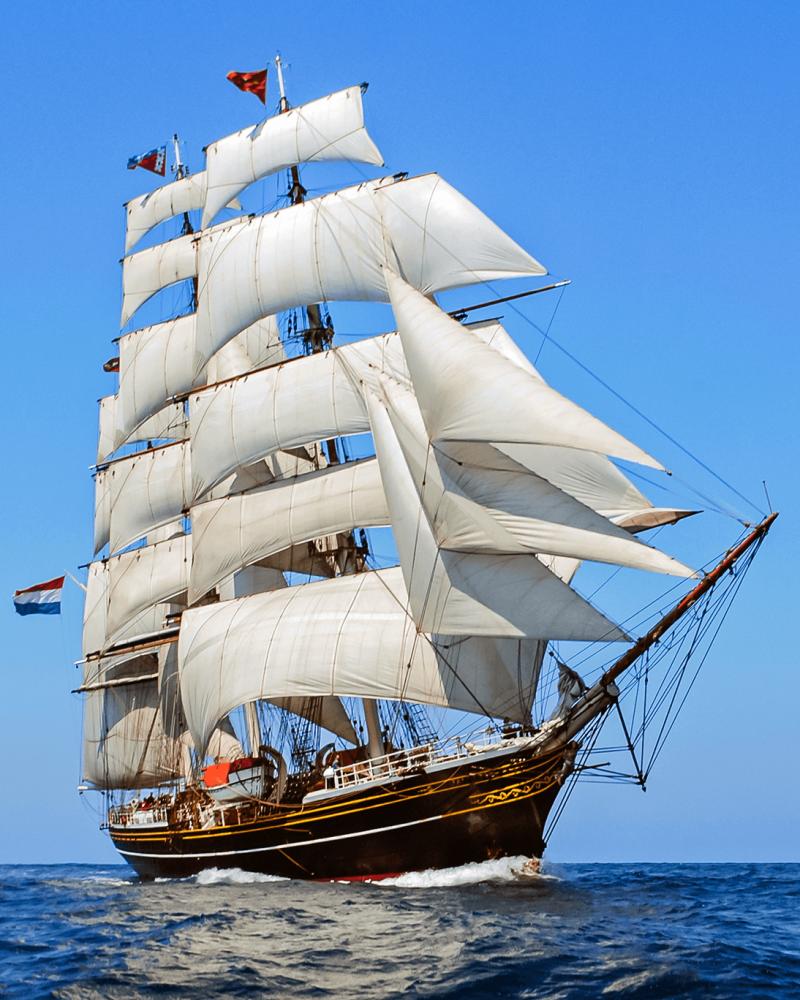
A cruise stop in Dominica is an experience in itself, but the way you arrive makes all the difference. We offer luxury sailing cruises in the Caribbean aboard the Clipper Stad Amsterdam, a historic three-masted clipper ship with a maximum of 28 guests across 14 cabins. That means: no crowds of fellow passengers, no anonymity, but an intimate and personal cruise experience.
- Sailing by wind and sail during the day, anchoring in secluded bays in the evening
- Fully catered with breakfast, lunch, dinner, and cocktails prepared by our own onboard chefs
- Snorkelling, day trips, and relaxing on pristine beaches
- A young, friendly, and dedicated crew ready to assist with everything
- Access to destinations unreachable by large cruise ships
Our luxury sailing cruises in the Caribbean start from €5,300 per person (excluding flights) and are a premium experience for travellers who want to combine adventure and comfort. View our full travel offering for available departure dates, or get in touch if you have questions about a cruise to Dominica. Find out more about who we are and what makes our ship so special at stadamsterdam.com.
Frequently Asked Questions
Is a cruise stop in Dominica also suitable for people who don't enjoy hiking?
Absolutely. Dominica offers activities for a wide range of levels and interests. Champagne Reef, for example, is a snorkelling site accessible without any hiking at all, and the Emerald Pool requires only a short, easy walk of around 20 minutes. A stroll around Roseau, a visit to the botanical garden, or a relaxed lunch at a local restaurant are also excellent alternatives for those who prefer not to hike intensively.
Do I need a local guide, or can I explore Dominica independently?
For straightforward destinations such as Roseau, the Emerald Pool, or Champagne Reef, a guide is not strictly necessary, although local knowledge always adds value. For more demanding routes such as the hike to Boiling Lake, however, a certified local guide is strongly recommended: the route is complex, the terrain is challenging, and weather conditions can change rapidly. Moreover, hiring a local guide directly supports the local economy, which is especially meaningful on an island like Dominica.
What should I bring for a day in Dominica from a cruise?
Be sure to bring a waterproof bag, swimwear, a dry change of clothes, grip-soled hiking shoes, and plenty of sunscreen. Because Dominica is a volcanic, humid island, trails can be wet and slippery even on dry days. A small amount of cash in Eastern Caribbean dollars or US dollars is useful for local purchases, as card payments are not accepted everywhere.
Can I experience Kalinago culture in Dominica during a short stop?
Yes, although time during a cruise stop is limited. The Dominica Museum in Roseau offers a good first introduction to Kalinago culture and the island’s history. Those who want more can visit the Kalinago Territory on the island’s east coast, but this requires more travel time and is better suited for travellers staying on the island for several days. Local guides with a Kalinago background can also provide valuable cultural context during shorter excursions.
Is Dominica safe for tourists?
Dominica is known as one of the safest islands in the Caribbean. Tourists are generally warmly welcomed and serious safety incidents are rare. As with any destination, it is advisable not to leave valuables unattended and to approach quieter areas in the evening with some caution. During a daytime cruise stop, the most visited tourist spots are generally safe and easily accessible.
What makes a sailing cruise on a small ship different from a regular cruise to Dominica?
On a large cruise ship, you are one of thousands of passengers going ashore at the same time, which can quickly feel overwhelming on a quiet island like Dominica. On a small sailing ship like the Clipper Stad Amsterdam, there are a maximum of 28 guests, giving you access to smaller harbours, secluded bays, and a more personal experience both on board and ashore. Furthermore, the wind partly determines the route, creating an adventurous and authentic seafaring feeling that a motor cruiser simply cannot provide.
How far in advance should I book a cruise to Dominica?
Due to the limited number of available places on small-scale sailing cruises, it is strongly advisable to book at least six to twelve months in advance, especially for departure dates in the popular dry season between December and April. Popular departure dates are often fully booked well in advance. Contact us via stadamsterdam.com for current availability and to reserve your place in time.