

What nature spots can you visit on Saint Vincent?
Saint Vincent offers some of the most pristine natural spots in the entire Caribbean. The island combines active volcanoes, lush rainforest, hidden waterfalls, and crystal-clear bays within an area of less than 400 square kilometres. The questions below take you through the most beautiful natural highlights of Saint Vincent and the Grenadines.
What makes the nature of Saint Vincent so special?
The nature of Saint Vincent is special due to the combination of an active volcano, dense tropical rainforest, remote waterfalls, and an unspoiled coastline on a relatively small island. Because mass tourism has barely gained a foothold here, the landscape has largely been preserved in its original state.
While many Caribbean islands are packed with resorts and tourist attractions, Saint Vincent still exudes an authentic atmosphere. The interior is dominated by dense vegetation, crossed by rivers and trails leading to spectacular viewpoints. Along the coast, rugged cliffs alternate with quiet bays accessible only by boat. It is precisely this remoteness that makes the island so appealing to travellers seeking truly undisturbed nature.
How impressive is the La Soufrière volcano to visit?
The La Soufrière volcano is one of the most impressive sights in Saint Vincent and the Grenadines. The active stratovolcano rises to 1,234 metres above sea level, making it the highest point on the island. The climb takes an average of three to four hours and rewards hikers with a breathtaking view over the crater and the surrounding islands.
The route to the summit passes through several vegetation zones, from tropical rainforest on the lower slopes to bare, rocky lava plains just below the crater rim. Along the way, you can see how the volcanic soil shapes the vegetation and how the mist moves between the trees. La Soufrière is an active volcano that last erupted in 2021, so it is wise to check the current safety status before setting out. With a local guide, the climb is not only safer but also far richer in content.
Where can you find the most beautiful waterfalls on Saint Vincent?
The most beautiful waterfall on Saint Vincent is the Falls of Baleine, an impressive waterfall of approximately 18 metres in height tucked away in the north of the island. The Falls of Baleine are accessible only by boat, making them one of the most exclusive natural spots on Saint Vincent.
Because there is no road leading to them, the area around the waterfall remains remarkably quiet and unspoiled. After arriving by boat, a short walk through the jungle brings you to a natural pool at the base of the waterfall. The water is cool and clear, perfect for swimming. The combination of the boat trip along the rugged west coast and the waterfall itself makes this excursion one of the most memorable experiences on the island. Visitors arriving by sailing ship can relatively easily include the Falls of Baleine in their route.
Which bays and beaches are most worth visiting?
Wallilabou Bay and Cumberland Bay are the most worthwhile on Saint Vincent. Wallilabou Bay on the west coast became famous as a filming location for Pirates of the Caribbean and offers a picturesque setting with rustic wooden jetties and lush greenery. Cumberland Bay is a tranquil, secluded anchorage surrounded by hills and palm trees.
In addition to these two bays, Blue Lagoon on the southern side of the island is also popular as a departure point for boat trips to the Grenadines. For those in search of beaches with black volcanic sand, the west coast of Saint Vincent offers several beautiful options. The black sand is a direct result of the island’s volcanic origins and gives the beaches a very different character from the white sand beaches further along in the Grenadines. Many of the most beautiful bays are accessible only by boat, which makes them all the more special.
What wildlife lives in the rainforest and seas around Saint Vincent?
In the rainforest of Saint Vincent lives, among others, the Saint Vincent parrot, the national bird of the island found nowhere else in the world. The seas surrounding the island are home to colourful coral reefs with a great variety of tropical fish, turtles, and other marine life.
The rainforest on the higher slopes provides shelter for countless bird species, bats, lizards, and amphibians. Those who look carefully and move quietly have a good chance of spotting the rare Saint Vincent parrot in its natural habitat. Underwater, the biodiversity is at least as impressive. Coral reefs line the coast, ideal for snorkelling and diving. Sea turtles are a common sight, and in the deeper waters dolphins and sometimes even whales swim alongside the coast. The combination of rich wildlife above and below water makes Saint Vincent an excellent destination for nature lovers.
When is the best time to visit Saint Vincent by sailing ship?
The best time to visit Saint Vincent by sailing ship is from December through April. During these months, the dry season is at its peak: the wind is steady, the sea is calm, and the chance of rain is minimal. These are also the months when sailing conditions in the Caribbean are at their finest.
Outside the dry season, the chance of tropical showers and hurricanes increases, particularly between June and November. Although Saint Vincent is certainly worth visiting outside the high season as well, conditions for sailing and outdoor activities are most pleasant from December to April. Temperatures remain pleasantly warm throughout the year, but the sea breeze during the dry season provides welcome cooling on deck. For those considering exploring the island by sailing ship, the winter months are therefore the ideal period.
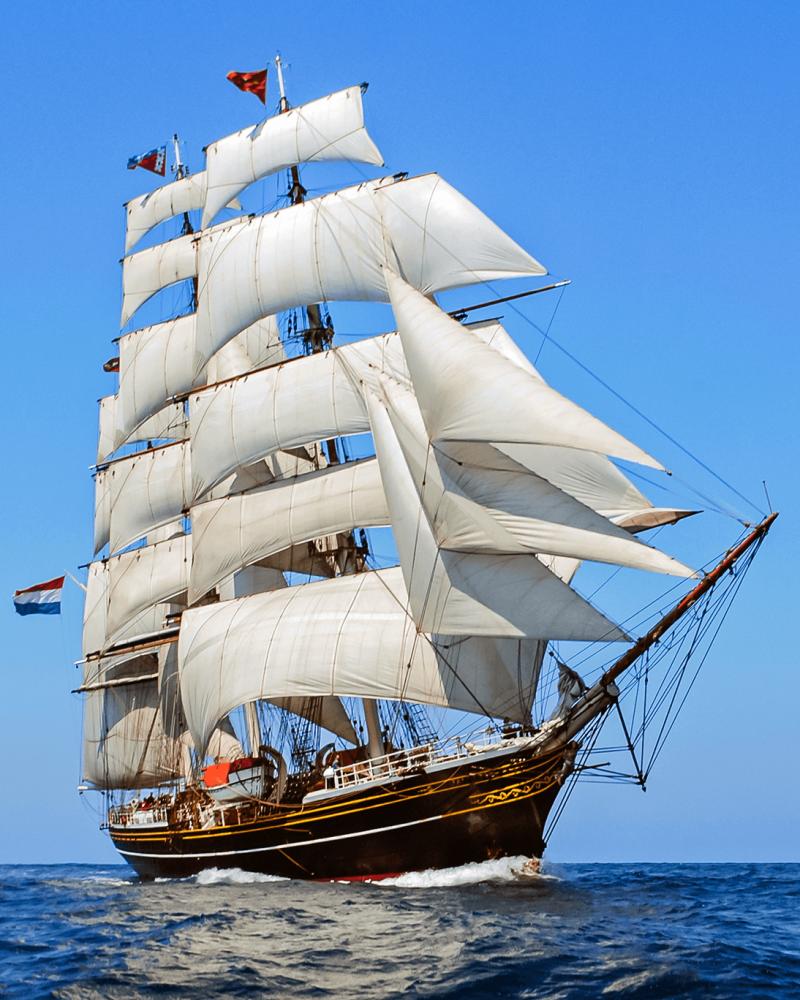
Discover Saint Vincent on board the Clipper Stad Amsterdam
Would you like to discover the natural spots of Saint Vincent in the most extraordinary way? On board the Clipper Stad Amsterdam, we combine the adventure of sailing with a high level of comfort and personal service. Our luxury sailing cruises in the Caribbean take you to exactly the places that are out of reach for large cruise ships:
- Sailing by wind power during the day, anchoring in secluded bays such as Wallilabou Bay or Cumberland Bay in the evening
- Day trips to the Falls of Baleine, snorkelling above coral reefs, and hiking through tropical rainforest
- A maximum of 28 guests on board, spread across 14 cabins, for an intimate and personal atmosphere
- Fully catered with breakfast, lunch, dinner, and cocktails prepared by our chefs on board
- A young, dedicated crew who bring you into the real sailing experience, with genuine attention to every detail
Our cruises do not include flights. Would you like to know which routes we offer or do you have questions about the possibilities? View the travel offerings on our website or contact our team. We would be happy to tell you more about what makes a sailing cruise on the Clipper Stad Amsterdam so unforgettable.
Frequently Asked Questions
Do I need a guide for the climb up La Soufrière, or can I do it independently?
Although it is technically possible to make the climb independently, a local guide is strongly recommended. La Soufrière is an active volcano where the safety status can change rapidly, and a guide knows the current conditions on the mountain better than anyone. Moreover, a guide greatly enriches the trip with knowledge about the volcanic geology, local flora and fauna, and the history of the island. Through the local authorities or your accommodation, you can easily arrange a reliable guide.
Is Saint Vincent suitable for beginners in snorkelling and diving?
Yes, Saint Vincent is excellent for both beginners and experienced snorkellers and divers. Along the coast there are calm, shallow coral reefs that are perfect for those just starting out, while the deeper waters offer more of a challenge for experienced divers. Local dive schools and boat operators offer guided trips where you can safely discover the rich underwater life. An introductory dive can also be easily combined with a day trip to the Falls of Baleine.
What should I bring for a day hike through the rainforest or to the volcano?
For a hike through the rainforest or to the summit of La Soufrière, sturdy hiking boots with grip are absolutely essential, as the trails can be steep and slippery. Also bring plenty of water (at least two litres per person), sunscreen, a light rain jacket, and insect repellent. A small backpack with snacks and a first aid kit is also useful. If you are travelling by sailing ship, you can easily store these essentials on board and bring them along on excursions.
How do I reach the Falls of Baleine if I don't have my own boat?
The Falls of Baleine are accessible only by boat, but that does not mean you need your own vessel. From Kingstown and other places along the west coast, day charters and organised boat trips are available that include the waterfall in their route. Travellers on board a sailing ship such as the Clipper Stad Amsterdam have a great advantage here: the waterfall can easily be included as a stop along the way while sailing along the west coast of the island.
Can I spot the Saint Vincent parrot without joining an organised birdwatching tour?
The Saint Vincent parrot lives mainly in the dense rainforest on the higher slopes of the island, which makes spotting it without guidance considerably more difficult. A local bird guide knows the best locations and times — early in the morning offers the greatest chance — and significantly increases your odds. The Vermont Nature Trail in the centre of the island is one of the most promising spots to see the parrot in the wild. Patience and silence are your best friends here.
What is the difference between a sailing cruise and a regular cruise when it comes to experiencing nature on Saint Vincent?
The biggest difference lies in the accessibility and the intimacy of the experience. Large cruise ships can only dock in the port of Kingstown and have no access to remote bays such as Cumberland Bay or the area around the Falls of Baleine. A sailing ship with a small group of guests can anchor at precisely the spots where nature is most unspoiled. Moreover, a sailing cruise offers a slower pace, giving you more time to snorkel, hike, and truly experience the surroundings rather than rushing through.
Is Saint Vincent also suitable as a travel destination for children or less mobile travellers?
Saint Vincent offers activities for various levels, but it is good to know that many natural spots require some physical effort. The climb up La Soufrière is strenuous and not suitable for young children or people with limited mobility, but bays such as Wallilabou Bay and Blue Lagoon are very accessible and ideal for families as well. Snorkelling in calm bays is also suitable for children. If in doubt, discuss in advance with the organiser of your trip which activities are feasible for your travel party.