

What are the most beautiful cruising destinations?
The most beautiful cruising regions in the world are the Caribbean, the Mediterranean, the Norwegian fjords, and the Scottish islands. Which region suits you best depends on your preference for climate, atmosphere, and the type of experience you are looking for. Whether you choose turquoise water and white beaches or rugged coastlines and historic harbour towns, every sailing region has its own character. In this article, we answer the most frequently asked questions about cruise destinations so that you can make your choice well prepared.
Which cruising region suits your travel style best?
The cruising region that suits you best depends on three factors: the climate you are looking for, the activities you want to pursue, and the atmosphere you expect on board and ashore. Travellers who seek rest, warmth, and nature often choose the Caribbean. Those who want culture, history, and variety feel at home in the Mediterranean or along the European coast.
A useful way to make your choice is to ask yourself the following questions:
- Climate: Do you want guaranteed warm weather and sunshine, or is a cooler environment also fine?
- Activities: Are you an active traveller who wants to snorkel, hike, and swim, or are you looking for more relaxation and culture?
- Atmosphere: Do you prefer unspoilt nature and secluded bays, or lively harbour towns with local markets and restaurants?
- Travel companions: Are you travelling with a partner, friends, or family? Some destinations lend themselves better to romantic trips, others to adventurous group travel.
The choice of sailing region also determines the character of the journey itself. A cruise through the Caribbean feels different from a sailing trip along the Portuguese coast or a voyage through the Greek islands. Both are wonderful, but they appeal to different types of traveller.
What makes the Caribbean such a popular cruise destination?
The Caribbean is so popular as a cruise destination because of the combination of a tropical climate, crystal-clear water, white beaches, and a wide variety of islands and cultures. The sailing region offers good weather almost all year round and a rich diversity of attractions, from unspoilt nature to vibrant local communities.
What sets the Caribbean apart from other cruising regions:
- The water is exceptionally clear, with excellent conditions for snorkelling and diving
- Each island has its own character: from the French atmosphere on Martinique to the British influence on Barbados and the Dutch culture on Curaçao
- Secluded bays and anchorages are easily accessible for smaller vessels, allowing you to visit places that large cruise ships can never reach
- The local food, music, and culture give the journey an authentic dimension
For travellers looking for a luxury sailing cruise in the Caribbean, the region also offers ideal sailing conditions: steady trade winds and calm waters make it one of the finest sailing areas in the world.
Which European sailing regions are most worth visiting?
The most rewarding European sailing regions are the Mediterranean, the Atlantic coast of Portugal and Spain, the Greek islands, the Adriatic Sea, and the Norwegian fjords. Each region combines impressive nature with a rich cultural history and is easily accessible from the Netherlands.
The Mediterranean and the Greek islands
The Mediterranean is the most varied sailing region in Europe. From the Spanish coast via the Balearic Islands to Italy, Croatia, and Greece, each part has its own atmosphere. The Greek islands are particularly beloved for their combination of archaeology, local cuisine, and beautiful anchorages in small bays.
The Atlantic coast and the Norwegian fjords
The Atlantic coast of Portugal and Spain appeals to travellers who want more than just sun and beaches. Historic cities such as Lisbon, Porto, and San Sebastián lie on the water and are ideal to visit by ship. The Norwegian fjords are for those seeking impressive nature: steep rock faces, waterfalls, and a tranquillity found nowhere else.
When is the best time to plan a cruise?
The best time for a cruise depends entirely on the destination. For the Caribbean, the high season runs from December to April, when it is dry and sunny and the risk of hurricanes is minimal. For the Mediterranean, May, June, and September are ideal: pleasantly warm without the crowds of the summer months.
A few guidelines per sailing region:
- Caribbean: December to April for the best weather; avoid August to October because of hurricane season
- Mediterranean: May to June and September to October for pleasant weather and fewer tourists
- Greek islands: April to June and September are the most beautiful months
- Norwegian fjords: June to August for the longest days and the best weather conditions
- Atlantic coast: May to October, with the finest conditions in the shoulder seasons
Book well in advance, especially for popular routes during high season. Smaller ships with limited capacity fill up quickly.
What is the difference between a large cruise ship and a sailing ship cruise?
The biggest difference between a large cruise ship and a sailing ship cruise lies in the scale, the experience, and the destinations you can reach. A large cruise ship carries thousands of passengers and is a floating resort with all the associated amenities. A sailing ship cruise is intimate, authentic, and takes you to places that are out of reach for large ships.
The key differences at a glance:
- Group size: Large cruise ships sometimes carry more than 5,000 passengers; smaller sailing ships accommodate a limited number of guests, creating personal contact and an intimate atmosphere
- Destinations: Sailing ships can anchor in small, secluded bays and harbours that are inaccessible to large ships
- Experience: On a sailing ship you truly experience the sea: you feel the wind, watch the sails rise, and are close to nature. On a large cruise ship, the on-board environment takes centre stage
- Pace: A sailing cruise has a calmer, more organic rhythm; the day is shaped by wind, tide, and destination
- Service: Smaller ships offer a boutique-hotel level of service where the crew knows you by name
Which cruise destination is most suitable for a first sailing cruise?
The Caribbean is the most suitable destination for a first sailing cruise, thanks to its stable climate, calm waters, and the wide variety of islands and activities. For those who prefer to start closer to home, the Portuguese coast or the Greek islands are excellent alternatives with a shorter flight.
What makes the Caribbean an ideal first sailing cruise:
- Steady trade winds ensure pleasant sailing without extreme weather conditions
- The waters are calm and manageable, making the crossing enjoyable even for travellers with no sailing experience
- A new island with its own character every day keeps the journey varied
- Activities such as snorkelling, beach visits, and day trips ashore are accessible to everyone
For a first sailing cruise it is also wise to choose a ship with a professional hospitality team and a high standard of service. That way you can fully enjoy the experience without worrying about practical matters on board.
How Clipper Stad Amsterdam helps you discover the most beautiful cruising regions
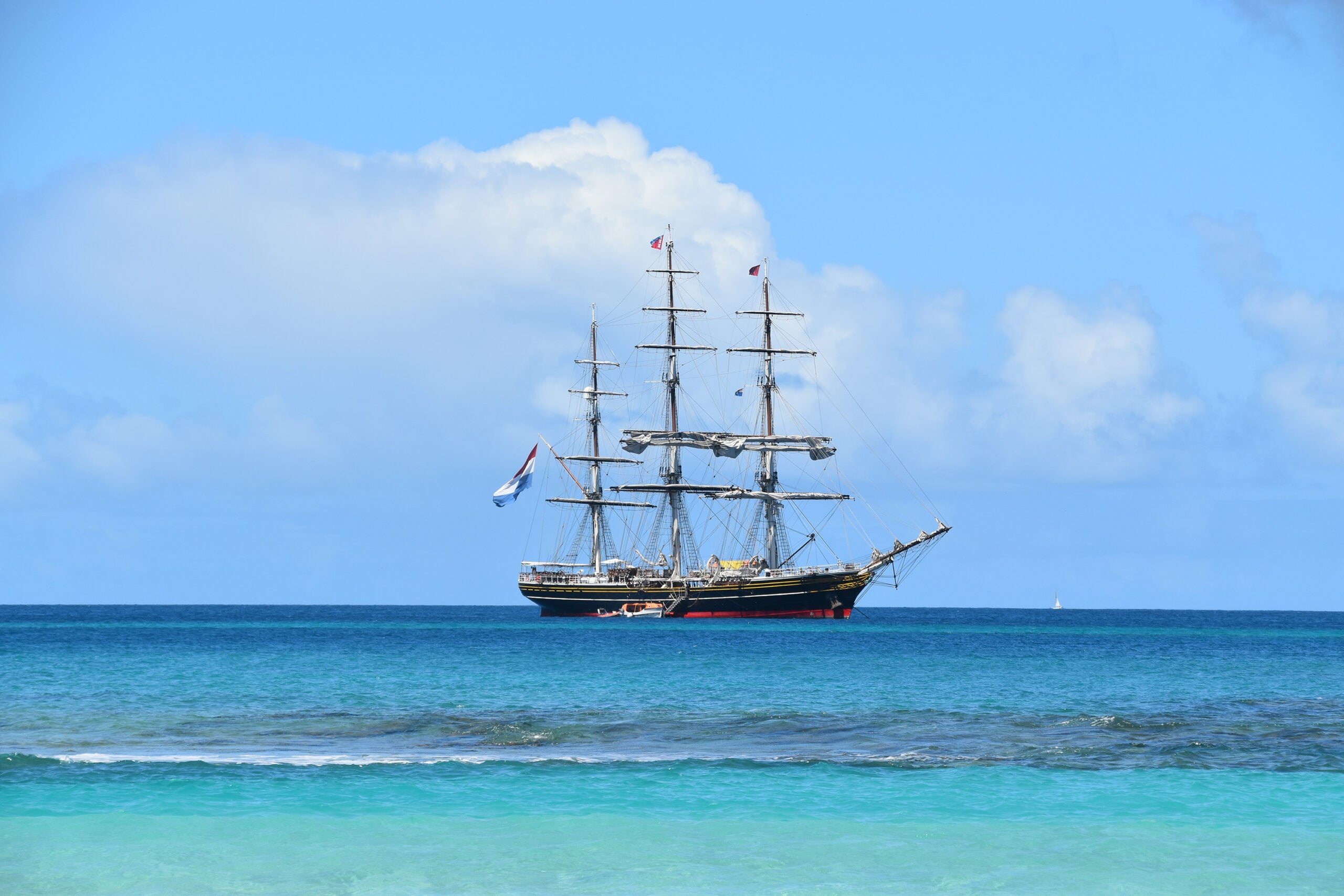
We sail with the Clipper Stad Amsterdam to the most beautiful sailing regions in the world, with our luxury sailing cruises in the Caribbean as a highlight. During the day we sail past islands and anchorages that are out of reach for large cruise ships; in the evenings we anchor in secluded bays where you can truly experience the silence of the sea.
What sets our luxury sailing cruise apart:
- A maximum of 28 passengers on board, spread across 14 cabins, for an intimate and personal atmosphere
- A young and dedicated hospitality team available throughout the day, from breakfast to sundowner drinks at sunset
- Authentic sailing on a three-masted clipper ship of 76 metres, with 31 sails handled by hand
- Activities such as snorkelling and relaxing on white beaches
- An exclusive, tailor-made pricing structure, aligned with the duration of the trip, cabin category, and departure date
Are you ready to discover the most beautiful cruising regions on board an iconic sailing ship? Get in touch for a personal quote or book your trip and discover availability for 2026.
Frequently Asked Questions
Heb ik zeilervaring nodig om mee te gaan op een zeilcruise?
Nee, zeilervaring is absoluut niet vereist. Op een luxe zeilcruise zoals aan boord van de Clipper Stad Amsterdam wordt alles verzorgd door een professionele bemanning. Jij geniet als passagier van de zeilervaring zonder zelf aan het roer te hoeven staan. Wil je toch meer leren over het zeilen, dan is de bemanning doorgaans blij om je meer te vertellen over het schip en de zeilen.
Wat moet ik inpakken voor een zeilcruise in de Caraïben?
Voor een zeilcruise in de Caraïben pak je lichte zomerkleding, een goede zonnebrandcrème met hoge factor, snorkelspullen (of controleer of deze aan boord beschikbaar zijn), en stevige maar lichte schoenen voor daguitstapjes aan land. Vergeet ook een lichte avondjas of vest niet, want het kan ‘s avonds aan dek frisser aanvoelen door de zeewind. Houd de bagage compact, want op een zeilschip is de opbergruimte in de hutten beperkter dan in een hotelkamer.
Is een zeilcruise ook geschikt voor mensen die snel zeeziek worden?
Dat hangt af van het vaargebied en het type schip. In de Caraïben zijn de vaarwateren relatief rustig, wat de kans op zeeziekte aanzienlijk verkleint. Neem bij twijfel preventief zeeziektepillen of -pleisters mee en bespreek dit eventueel met je huisarts voor vertrek. Veel reizigers die op zee wat gevoelig zijn, ervaren in de Caraïben nauwelijks klachten dankzij het stabiele weer en de kalme zee.
Hoe ver van tevoren moet ik een zeilcruise boeken?
Voor een luxe zeilcruise op een kleinschalig schip is het verstandig om minimaal zes tot twaalf maanden van tevoren te boeken, zeker voor populaire vertrekdata in het hoogseizoen (december tot april voor de Caraïben). Schepen met een beperkt aantal plaatsen — zoals de Clipper Stad Amsterdam met slechts 28 passagiers — zijn snel volgeboekt. Vroeg boeken geeft je bovendien meer keuze uit beschikbare hutten en vertrekdata.
Wat zijn de grootste valkuilen bij het kiezen van een cruisebestemming?
Een veelgemaakte fout is het kiezen van een bestemming puur op basis van mooie foto’s, zonder rekening te houden met het seizoen of de eigen reistijl. Wie de Middellandse Zee in augustus bezoekt, kan worden verrast door extreme drukte en hitte in populaire havens. Een andere valkuil is het onderschatten van het verschil tussen een grote cruisemaatschappij en een kleinschalige zeilcruise: de sfeer, het tempo en de bestemmingen zijn fundamenteel anders. Verdiep je dus goed in het type cruise voordat je boekt.
Kan ik tijdens een zeilcruise ook zelf deelnemen aan het zeilen?
Op sommige zeilschepen krijg je als passagier de gelegenheid om actief mee te helpen met het hijsen van de zeilen of het bedienen van de tuigage, onder begeleiding van de bemanning. Dit is een unieke ervaring die je op een groot cruiseschip nooit zult hebben. Informeer bij het boeken of en in welke mate passagiers kunnen deelnemen aan het zeilen, zodat je weet wat je kunt verwachten.
Wat is het verschil tussen een cruise in het voor- of naseizoen ten opzichte van het hoogseizoen?
Reizen in het voor- of naseizoen heeft meerdere voordelen: minder toeristen in de havens, aangenamere temperaturen en een uitgelezen moment om te genieten van de bestemming op zijn rustigst. Voor de Griekse eilanden en de Middellandse Zee zijn april-juni en september-oktober zelfs de meest geliefde periodes onder ervaren reizigers. Het nadeel kan zijn dat sommige lokale voorzieningen nog niet volledig open zijn in het vroege voorseizoen, maar in de meeste populaire vaargebieden is dit nauwelijks een probleem.