

What is the cheapest month to go on a cruise?
The cheapest months for a cruise are generally January, February, and September. This applies to most popular cruise destinations worldwide, including the Caribbean and the Mediterranean. Prices are noticeably lower during these periods than in the summer holidays or around public holidays, simply because demand drops. In this article, we answer the most frequently asked questions about cruise holiday planning and timing.
Which months are the cheapest for a cruise?
The cheapest months for a cruise holiday are generally January, February, and September. January and February fall after the busy Christmas period, causing demand to drop sharply and cruise lines to lower their prices to keep ships full. September marks the end of the European summer high season, which also results in lower fares and less crowding on board.
The Caribbean follows a slightly different dynamic. The official low season runs from May through November, with June, July, and August being popular with families but still cheaper than the winter months of December through April. The so-called shoulder months of April and November often offer the best combination of acceptable weather and lower prices.
A general rule of thumb: avoid school holidays, public holidays, and major events in the region. These periods always drive prices up, regardless of the destination.
How much cheaper is a cruise outside the high season?
A cruise holiday outside the high season can be tens of percent cheaper than the same trip during peak periods. The exact difference depends on the destination, the type of ship, and how far in advance you book. With last-minute bookings in the low season, discounts can be even greater.
Major cruise lines use dynamic pricing, similar to airline tickets. The fuller the ship, the higher the price. During quieter periods, they want to avoid empty cabins and offer more attractive fares. Smaller, more exclusive ships sometimes operate on a different pricing model, where the price depends more on the specific route than on the season.
What are the advantages and disadvantages of travelling in the low season?
Travelling in the low season has clear advantages, but also a number of points worth knowing before you plan a cruise holiday.
Advantages of the low season
- Lower prices: less competition means better rates for the same quality
- Less crowding: popular destinations and ports are quieter and more pleasant
- More personalised service: a less full ship means more attention per guest
- A more authentic experience: tourist attractions feel different outside the high season
Disadvantages of the low season
- Weather risk: in some regions the low season coincides with the rainy season or hurricane season
- Fewer activities: local restaurants, shops, and attractions may have limited opening hours
- Less atmosphere on board: a smaller group of fellow travellers may feel less dynamic for some guests
For most travellers, the advantages outweigh the disadvantages, especially when the destination is carefully chosen based on the climate in those specific months.
How far in advance should you book a cruise to get the best price?
For the best price on a cruise holiday, booking 6 to 12 months in advance is the most reliable strategy. During this window, many cruise lines offer early-booking discounts, and you have the greatest choice of cabins, routes, and departure dates. The longer you wait, the higher prices tend to climb as the ship fills up.
There is also another strategy: last-minute booking. If a ship still has empty spots a few weeks before departure, prices can drop significantly. The risk, however, is having less choice of accommodation and finding that your preferred dates are sold out. Last-minute booking works best for flexible travellers without fixed holiday periods.
A practical rule of thumb: book early if you want a specific cabin, route, or date. Only book last-minute if flexibility is your greatest asset.
When is the best time for a sailing cruise in the Caribbean?
The best time for a sailing cruise in the Caribbean is from December through April. During these months it is dry, a steady trade wind blows, and temperatures are pleasantly warm without extreme heat. The sea is calm, which is ideal for sailing, snorkelling, and day trips to white sandy beaches.
The period from June through November is technically the hurricane season in the Caribbean. That does not mean there are constant storms, but the chance of bad weather is greater and some routes are less accessible. Cruise lines that sail in the region year-round take this into account when planning their routes.
For those looking for the combination of good sailing weather, warm temperatures, and relative calm at the destinations, February and March are the sweet spot: the high season has already begun, but the bustle of the Christmas period is over and prices are slightly lower than in December and January.
Is a luxury sailing cruise cheaper than a large cruise voyage?
A luxury sailing cruise is generally not cheaper than a standard cruise holiday, but it offers a fundamentally different value proposition. Large cruise ships can offer low prices per person thanks to their scale. A small-scale, luxury sailing cruise focuses on quality, intimacy, and authenticity, which translates into a richer, more immersive experience for the guest.
The difference lies not only in the ship itself, but also in what is included. With a luxury sailing cruise, meals and service are often fully included, and the ratio of crew to guests is much more favourable. On a large cruise ship, you often pay extra for excursions, restaurants, and other services.
Anyone who compares the total cost including all those extras will find that the price difference is smaller than it first appears. Moreover, a small group on board creates a personal atmosphere that simply cannot be found on a ship carrying thousands of passengers.
How Clipper Stad Amsterdam fits your cruise holiday wishes
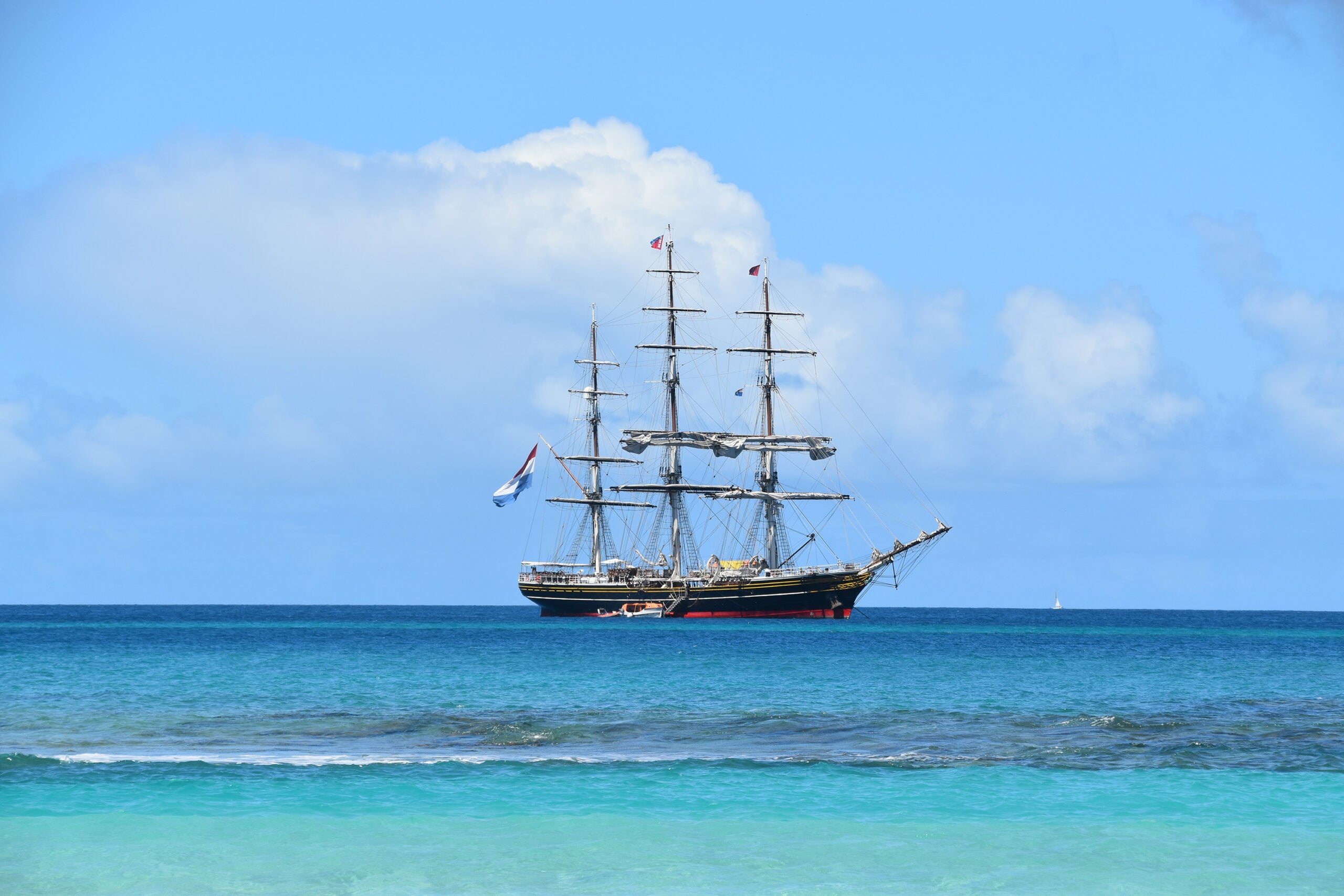
If you are looking for a cruise holiday that goes beyond the standard formula, Clipper Stad Amsterdam offers a unique alternative. We sail with a maximum of 28 guests on board our historic three-masted clipper ship, creating an intimate and personal atmosphere that large cruise ships simply cannot match.
What sets our luxury sailing cruise apart:
- Small-scale and intimate: a maximum of 28 guests in 14 cabins, with a young and dedicated hospitality team
- All-inclusive: breakfast, lunch, and dinner prepared by our chefs on board
- Authentic sailing: by hand with 31 sails, no automated systems
- Caribbean destinations: sailing by day, anchoring in a secluded bay in the evening
- Activities: snorkelling, day trips ashore, and relaxing on white sandy beaches
- Sustainable sailing: we use HVO fuel wherever it is available
Our cruises are exclusively priced to match the season, suite category, and duration of travel. Would you like to find out more or reserve a place directly? Book your trip or contact us for a personalised quote and tailored advice.
Frequently Asked Questions
Kan ik een cruise boeken als ik geen ervaring heb met zeilen?
Absoluut. Bij een luxe zeilcruise zoals die van Clipper Stad Amsterdam hoef je zelf niets te doen aan het zeilen — tenzij je dat wilt. De professionele bemanning zorgt voor alles aan boord, terwijl jij geniet van de vaart, de bestemmingen en de sfeer. Ervaring met zeilen is dus geen vereiste; nieuwsgierigheid en een avontuurlijke geest zijn veel belangrijker.
Wat moet ik meenemen op een zeilcruise in de Caraïben?
Denk aan lichte, ademende kleding, goede zonnebescherming (zonnebrandcrème, zonnebril en een pet), en stevige maar lichte schoenen voor aan dek. Neem ook zwemkleding mee voor snorkelen en daguitstapjes, en een lichte regenjas voor incidentele buien. Omdat de ruimte in de hutten beperkt is, is een compacte, soepele koffer of duffeltas handiger dan een harde reiskoffer.
Is een cruise in het laagseizoen veilig, ook tijdens het orkaanseizoen in de Caraïben?
Professionele rederijen monitoren het weer continu en passen hun routes aan op basis van actuele weersomstandigheden en voorspellingen. Het orkaanseizoen (juni–november) betekent niet dat er voortdurend gevaar is, maar rederijen kiezen in die periode bewust voor routes in minder kwetsbare gebieden, zoals het zuidelijkere deel van de Caraïben. Informeer altijd bij je rederij hoe zij omgaan met weersrisico’s en wat het annuleringsbeleid is.
Wat is het verschil tussen een all-inclusive cruise en een standaard cruise met extra's?
Bij een all-inclusive cruise zijn maaltijden, dranken en doorgaans ook bepaalde activiteiten volledig inbegrepen in de basisprijs. Bij een standaard cruise op een groot schip betaal je vaak apart voor specialiteitsrestaurants, drankarrangementen, uitstapjes en andere services, waardoor de eindrekening aanzienlijk hoger kan uitvallen dan de advertentieprijs doet vermoeden. Het loont altijd om de totaalprijs inclusief alle gewenste extra’s te vergelijken voordat je een keuze maakt.
Hoe zit het met reisziekte op een zeilschip vergeleken met een groot cruiseschip?
Grote cruiseschepen zijn door hun omvang stabieler op het water en hebben doorgaans minder beweging, wat voor gevoelige reizigers een voordeel kan zijn. Een kleinere zeilboot beweegt meer mee met de golven, maar veel reizigers wennen hier snel aan. Preventieve maatregelen zoals reisziektetabletten, polsbandjes of het kiezen van een hut midscheeps (het meest stabiele punt) helpen effectief. Vraag bij twijfel advies aan je huisarts voor vertrek.
Kan ik een cruise combineren met een vliegvakantie voor of na de reis?
Ja, dat is zelfs een populaire keuze. Veel reizigers vliegen een paar dagen eerder naar de vertrekhaven om bij te komen van de vlucht en alvast te genieten van de bestemming, of blijven na afloop nog enkele dagen in de regio. Controleer wel of de vluchttijden voldoende marge bieden ten opzichte van het inschepen of uitschepen, en informeer bij je rederij naar de exacte haven van vertrek en aankomst zodat je de logistiek goed kunt plannen.
Voor welk type reiziger is een kleine zeilcruise het meest geschikt?
Een kleine zeilcruise is ideaal voor reizigers die rust, authenticiteit en persoonlijk contact verkiezen boven een druk, activiteitengericht cruiseschip. Het past goed bij stellen, vrienden of kleine groepen die willen genieten van bijzondere bestemmingen, goed eten en een ontspannen sfeer zonder de anonimiteit van een megaschip. Als je houdt van avontuur met comfort — en openstaat voor het onverwachte dat zeilen met zich meebrengt — dan is dit type cruise een uitstekende keuze.