

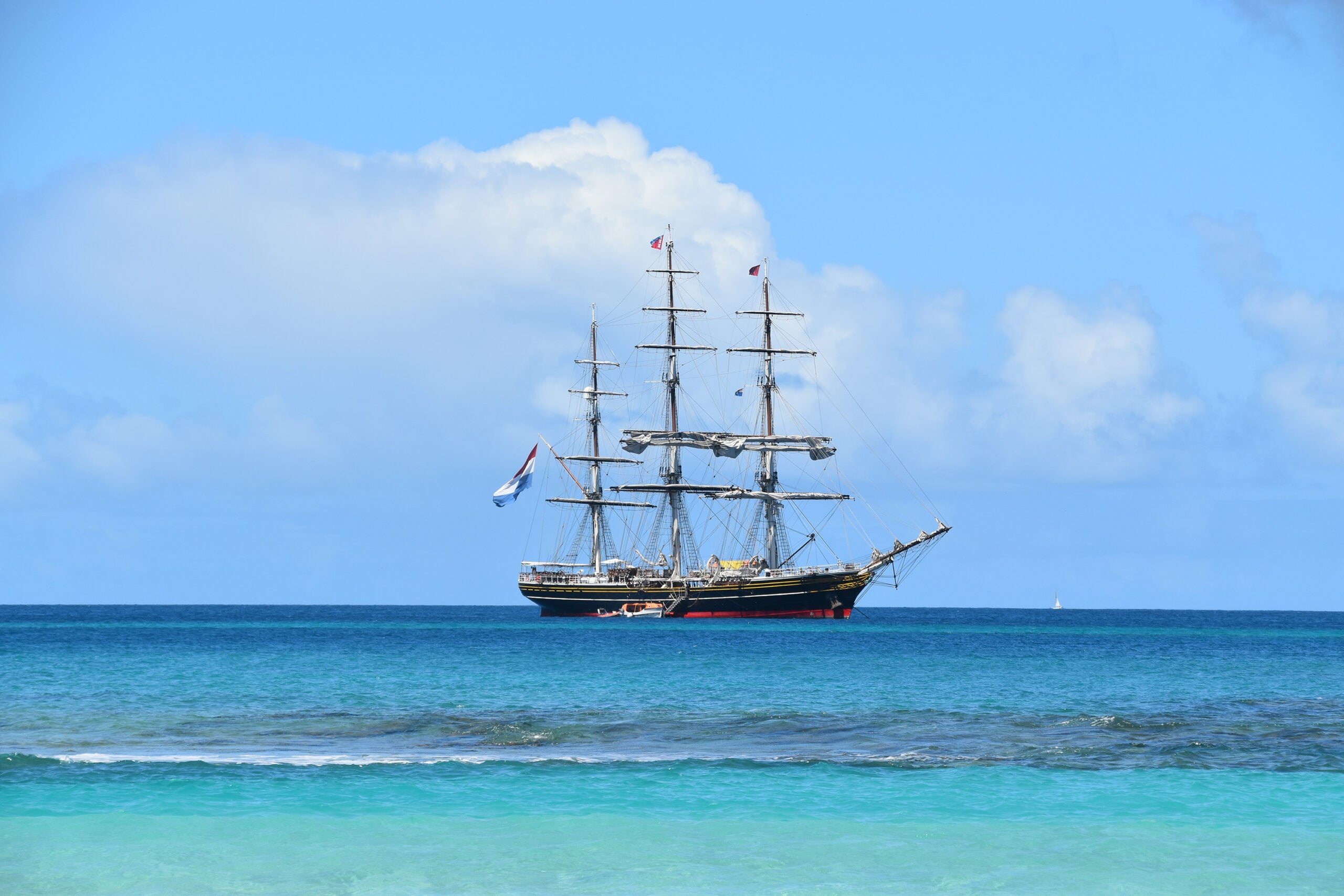
What is the most beautiful sailing ship in the world?
The most beautiful sailing ship in the world is not an objective fact, but there are vessels that are repeatedly named as the most impressive ever built. Historic clippers such as the Cutty Sark and modern tall ships such as the Stad Amsterdam combine beauty, speed, and character in a way that few other ships can match. In this article, we answer the most frequently asked questions about what truly makes a sailing ship beautiful.
What criteria determine whether a sailing ship is beautiful?
The beauty of a sailing ship is determined by a combination of proportions, rigging, speed, and historical character. A beautiful sailing ship has a harmonious hull that cuts through the water, an imposing rig that commands attention at sea, and an appearance that speaks to the time and culture in which it was built.
Sailors, designers, and travellers generally apply the same core factors when evaluating a sailing ship:
- Hull and bow: A sharp, elegant bow that cleaves the water gives a ship its distinctive silhouette.
- Rigging: The number of sails, the masts, and the complexity of the standing rigging determine the visual impact at sea.
- Proportions: A ship that is long and slender looks faster and more graceful than a wide, heavy vessel.
- Authenticity: Ships with a genuine history or a historically faithful construction are perceived as more beautiful and more valuable.
- Performance: Speed and sailing qualities contribute to a ship’s reputation. A ship that sails well is also considered more beautiful.
Beauty in sailing ships is therefore an interplay of function and form. The most beautiful ships are almost always the best-performing ones too.
Which sailing ships are most often named the most beautiful in the world?
The sailing ships most often named the most beautiful in the world are historic clippers and modern tall ships. The Cutty Sark, the Thermopylae, and the Flying Cloud rank among the most admired historic sailors. Among modern vessels, the Stad Amsterdam, the Amerigo Vespucci, and the Royal Clipper are regularly mentioned in the same breath.
Each of these ships has its own story:
- Cutty Sark (1869): One of the most famous tea clippers ever built, preserved in Greenwich and a symbol of the golden age of sail.
- Amerigo Vespucci: The Italian navy ship is renowned as one of the most beautiful vessels still sailing today, with a stately appearance and perfect proportions.
- Royal Clipper: The largest fully rigged sailing ship in use as a cruise ship, with five masts and an impressive profile.
- Stad Amsterdam: A modern three-masted clipper, built in 2000, that won the Cutty Sark Tall Ships’ Race in 2001 and is considered one of the fastest and most beautiful tall ships in the world.
What all these ships have in common: they are built with attention to detail, they perform exceptionally well at sea, and they evoke a sense of adventure and freedom that modern ships rarely match.
What makes a clipper different from other sailing ships?
A clipper distinguishes itself from other sailing ships through its combination of extreme speed, a sharp bow, and a large sail area. Clippers were built in the nineteenth century for fast passage on long routes, such as the tea and wool trade between Asia, Australia, and Europe. Their slender hulls and tall rigs made them the fastest sailing ships of their era.
The characteristics of a clipper are recognisable:
- A strongly pronounced, sharp clipper bow that cleaves the water rather than ploughing through it.
- Square rigging with multiple yards per mast, allowing large amounts of canvas to be set.
- A relatively narrow hull in relation to its length, which contributes to speed as well as an elegant appearance.
- Three or more masts with a full complement of square sails, supplemented by staysails.
Clippers are therefore fundamentally different from, for example, schooners, brigs, or modern yachts. They are built for performance on the open sea, not for comfort in harbour. That makes them visually imposing and technically fascinating at the same time.
How does the Stad Amsterdam compare to historic clippers?
The Stad Amsterdam scores exceptionally highly compared to historic clippers, both in terms of appearance and performance. The ship was deliberately designed as a “modern extreme clipper in historical perspective” and combines the finest qualities of nineteenth-century clippers with contemporary techniques and safety standards.
On paper and in practice, the Stad Amsterdam holds its own:
- Length and rigging: At 76 metres in length, with three masts and 31 sails covering a total area of 2,200 square metres, the ship ranks among the largest and best-rigged tall ships in the world.
- Speed: A cruising speed of 15 knots is exceptional for a ship of this size. Historic clippers such as the Cutty Sark achieved comparable speeds, but it was rare and required ideal conditions.
- Authenticity: The ship has an authentic square rig and is operated by hand, without automated systems for the sails and helm. That makes sailing on the Stad Amsterdam as pure an experience as sailing on a historic vessel.
- Recognition: The victory in the 2001 Cutty Sark Tall Ships’ Race confirms that the Stad Amsterdam is not only beautiful to look at, but also performs like a true clipper.
Historic clippers have the advantage of a rich history, but they no longer sail or have become museum pieces. The Stad Amsterdam is a living ship that actively sails the seas, and that makes it unique.
Where can you board one of the most beautiful sailing ships?
You can board the Stad Amsterdam through organised sailing voyages and cruises that the ship offers annually. It sails on fixed routes through Europe and the Caribbean, giving passengers the opportunity to travel aboard one of the most beautiful sailing ships currently in active use.
How Clipper Stad Amsterdam brings you aboard an iconic sailing ship
We offer travellers the chance to experience for themselves why the Stad Amsterdam is counted among the most beautiful sailing ships in the world. On board, we combine the romance of historic sailing with the comfort of a boutique hotel at sea.
What you can expect:
- A luxury sailing cruise in the Caribbean, sailing by day and anchoring in a secluded bay in the evening.
- A maximum of 28 guests on board during a luxury cruise, spread across 14 cabins, for an intimate and personal stay.
- Full board on board: breakfast, lunch, and dinner prepared by our chefs.
- Activities such as snorkelling and relaxing on white sandy beaches, as well as day trips to local destinations.
- Authentic hand-operated sailing under the guidance of a young, dedicated crew.
- Exclusive tailored rates depending on trip duration, cabin category, and season — contact us for a personal quote.
Would you like to know more or plan a trip straight away? Book your trip online or contact our team for personal advice.
Frequently Asked Questions
Hoe ver van tevoren moet ik een cruise op de Stad Amsterdam boeken?
Vanwege het beperkte aantal van maximaal 28 gasten per cruise is het sterk aan te raden om zo vroeg mogelijk te boeken, bij voorkeur minimaal drie tot zes maanden van tevoren. De intieme opzet van de luxe zeilcruises maakt ze erg gewild, waardoor populaire vertrekdata snel volgeboekt zijn. Neem contact op met het team van Stad Amsterdam voor actuele beschikbaarheid en persoonlijk advies.
Is een cruise op de Stad Amsterdam geschikt voor mensen zonder zeilervaringervaring?
Absoluut. Je hebt geen enkele zeilervaringervaring nodig om mee te varen op de Stad Amsterdam. De professionele bemanning zorgt voor alle navigatie en het bedienen van de zeilen, maar geeft passagiers ook de mogelijkheid om actief mee te helpen als ze dat willen. Het is een ideale manier om voor het eerst kennis te maken met authentiek zeilen in een veilige en comfortabele omgeving.
Wat is het verschil tussen een tallship en een gewoon zeilschip?
Een tallship is een grootschalig, traditioneel getuigd zeilschip met meerdere masten en vierkante zeilen, zoals een klipper, bark of fregat. Gewone zeilschepen, zoals jachten of schoeners, zijn doorgaans kleiner en hebben een eenvoudiger tuig met voornamelijk langsscheepse zeilen. Tallships worden gekenmerkt door hun imposante profiel, hun historische tuigage en de grote bemanning die nodig is om ze te bedienen.
Welke bestemmingen vaart de Stad Amsterdam en wanneer?
De Stad Amsterdam vaart jaarlijks op meerdere routes, waaronder het Caribisch gebied in de wintermaanden en Europese wateren in de zomer. Caribische cruises voeren langs bestemmingen zoals Martinique, Saint Lucia en de Grenadines, terwijl Europese reizen langs de Middellandse Zee of de Atlantische kust kunnen gaan. De actuele vaarschema’s en beschikbare vertrekdata zijn te vinden op de website van Stad Amsterdam.
Hoe comfortabel zijn de hutten aan boord van de Stad Amsterdam?
De 14 hutten aan boord zijn ingericht als een boutique hotel op zee, met aandacht voor comfort, sfeer en authenticiteit. Elke hut heeft een eigen badkamer en is zo ontworpen dat gasten optimaal kunnen genieten van het unieke karakter van het schip. Ondanks de historische uitstraling van het schip zijn de accommodaties volledig modern en voorzien van alle faciliteiten die je van een luxe cruise mag verwachten.
Zijn er andere tallships waarmee ik een zeilreis kan maken, of is de Stad Amsterdam uniek in zijn soort?
Er zijn wereldwijd een aantal tallships die passagiers meenemen op zeilreizen, zoals de Royal Clipper en de Sea Cloud. Wat de Stad Amsterdam uniek maakt, is de combinatie van een authentiek handmatig bediend dwarstuig, een uitzonderlijk kleine groepsgrootte van maximaal 28 gasten en een bewezen prestatieprofiel als racewinnaar. Daarmee onderscheidt het schip zich duidelijk van grotere cruiseschepen die weliswaar zeilen hebben, maar meer op een regulier cruiseschip lijken.
Kan ik de Stad Amsterdam ook bezoeken zonder mee te varen, bijvoorbeeld als museumschip?
De Stad Amsterdam is geen museumschip en ligt niet permanent in een haven voor bezoekers. Het schip is actief in gebruik als zeilschip en is dus primair te beleven door mee te varen op een van de aangeboden cruises. Soms ligt het schip tijdelijk aangemeerd in Nederlandse of Europese havens, waarbij bezoek mogelijk kan zijn; het is raadzaam de website of sociale media van Stad Amsterdam in de gaten te houden voor actuele informatie over havenbezoeken.