

How do you pay on a cruise?
On a cruise, almost everything is paid through a shipboard account that is maintained throughout the voyage and settled in full at the end. Cash is rarely needed on board, but it can come in handy at the destinations you visit along the way. In this article, we answer the most frequently asked questions about paying on a cruise, from credit cards to currency and everything in between.
Which payment methods are accepted on a cruise ship?
On most cruise ships, credit cards such as Visa, Mastercard, and American Express are accepted as the primary payment method. At the start of the cruise, you link your credit card to your shipboard account, after which all purchases on board are automatically charged to it. Cash is rarely needed on board and is no longer accepted by many cruise lines at all.
In addition to credit cards, larger cruise companies sometimes also accept debit cards, although different terms often apply. Some cruise lines require a deposit at the start and block that amount on your card as security for the shipboard account. Prepaid travel cards are less frequently accepted, so it is wise to check this with your cruise line in advance.
On smaller, more intimate ships, payment options may be more limited. It is always advisable to enquire beforehand which payment methods are accepted, so you are not caught off guard.
How does a shipboard account work on a cruise?
A shipboard account is a personal account that is opened at the start of your cruise and to which all on-board expenses are automatically charged. Think of drinks, excursions, spa treatments, and souvenirs. At the end of the cruise, you receive a summary and the total amount is settled against the payment method you provided at check-in.
In practice, it works as follows: at check-in, you link a credit card or debit card to your boarding pass. You then use that boarding pass as your means of payment for all purchases on board. There is no need to bring a wallet to the restaurant or bar. At the end of each day or at the end of the voyage, you can review your account and raise any discrepancies at the reception desk.
Some cruise ships also offer the option of loading credit onto your shipboard account in advance, so you are not surprised by a large final bill. This is particularly useful if you want to stick to a tight budget during your cruise holiday.
Do you need cash on a cruise?
On board a cruise ship, you generally do not need cash, as everything is settled through the shipboard account. At the destinations you visit, however, cash is often useful or even necessary — for example at local markets, small restaurants, or for tips to local guides.
Tips on board are a separate point of attention. On some ships, gratuities are automatically added to the shipboard account; on others, it is customary to tip in cash. Check with your cruise line in advance so you know whether you need to bring cash for this purpose.
Do you need to withdraw money along the way? Larger cruise ships sometimes have an ATM on board, but the fees are often high. It is wiser to exchange sufficient local currency before departure or to bring a payment card that is suitable for use abroad.
Which currency should you bring on a cruise?
Which currency you bring depends entirely on the destinations you visit during your cruise. For a cruise holiday in the Caribbean, the US dollar is widely accepted on most islands, even though countries such as Aruba or Curaçao have their own currency. For European cruises, the euro is common in many port cities, but local currency is always useful.
A few practical guidelines:
- Exchange money preferably before departure at a bank or currency exchange office, as airports and on-board exchange points often charge higher rates.
- Bring small denominations for tips, local transport, and small purchases at markets.
- Check per destination whether ATMs are available and whether your bank card works there.
- A credit card or debit card with no foreign transaction fees is a handy complement to cash.
For a Caribbean cruise, the general rule of thumb is that dollars and a good payment card will see you through most situations. Still, it is always smart to check what is customary on each individual island.
What are the costs of paying by credit card on a cruise?
Paying by credit card on a cruise can involve various additional costs. Many credit card providers charge a foreign transaction fee on purchases outside the eurozone, and currency conversion costs may also apply if the shipboard account is maintained in a different currency from that of your card. For a personal overview of the terms that apply to your situation, we recommend contacting your credit card provider before departure.
Some credit cards are specifically designed for travellers and charge no or low foreign transaction fees. It is worth reviewing your credit card terms before your cruise holiday or choosing a card that is advantageous for use abroad.
Also be aware of dynamic currency conversion (DCC): you may sometimes be asked whether you want to pay in euros or in the local currency. Always choose the local currency, as on-the-spot conversion typically involves an unfavourable exchange rate.
How does payment work on board the Clipper Stad Amsterdam?
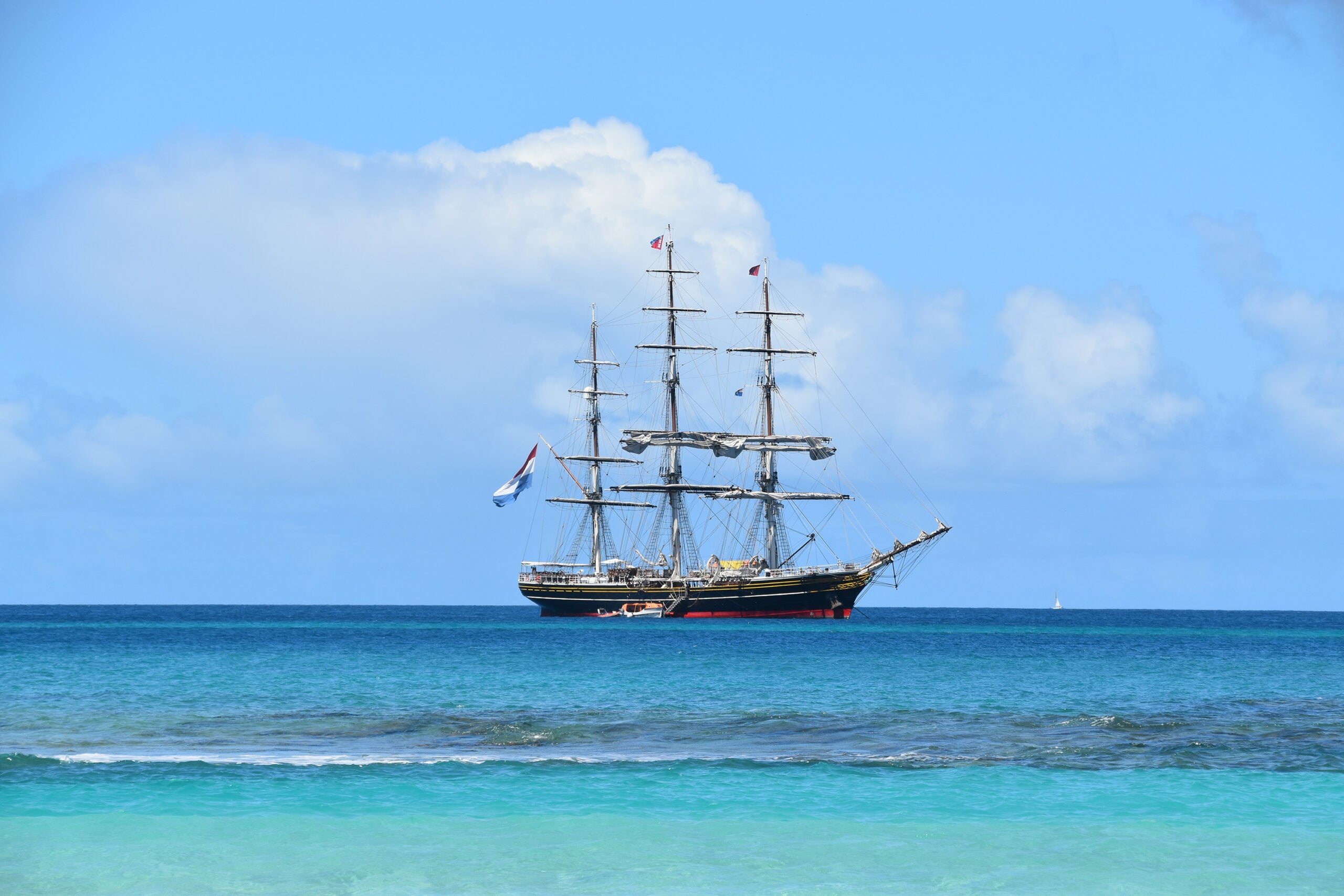
On board the Clipper Stad Amsterdam, the payment system is simple and transparent. Because we work with a small, intimate group of a maximum of 28 guests on our luxury sailing cruise, the atmosphere is personal and easy to oversee. All costs that are included in the price, such as meals and use of the facilities on board, are clearly communicated in advance.
What you can expect:
- Breakfast, lunch, and dinner are included in the cruise price, prepared by our chefs on board.
- For any extras or purchases during excursions on the islands, cash or a payment card is useful.
- We inform you in advance about what is and is not included in the price, so you encounter no surprises.
- Tips for the crew are not obligatory, but are always appreciated.
Would you like to know exactly what is included in your trip, or do you have questions about payment on board? Rates are tailored to your requirements, depending on the duration of the trip and personal preferences. Contact us for a personal quote, or view the options directly and book your trip with Clipper Stad Amsterdam.
Frequently Asked Questions
Kan ik mijn boordrekening tussentijds controleren, en wat als ik een fout ontdek?
Ja, op de meeste cruiseschepen kun je je boordrekening dagelijks inzien via een scherm op je hut of via de app van de rederij. Ontdek je een fout, ga dan zo snel mogelijk naar de receptie aan boord om dit te melden — hoe eerder je dit doet, hoe eenvoudiger het te corrigeren is. Wacht niet tot het einde van de cruise, want dan kan het drukker zijn bij de receptie en duurt het langer voordat een correctie wordt verwerkt.
Wat is de beste betaalkaart om mee te nemen op een cruise?
De ideale betaalkaart voor een cruise is een creditcard of betaalkaart zonder buitenlandse transactiekosten en met een gunstige wisselkoers. Populaire opties onder Nederlandse reizigers zijn kaarten van aanbieders zoals Wise, Revolut of specifieke reiscreditcards van banken. Controleer ook of je kaart wereldwijd geaccepteerd wordt (Visa en Mastercard hebben de breedste dekking) en stel eventueel je daglimiet hoger in voor de duur van je reis.
Moet ik mijn bank of creditcardmaatschappij informeren voordat ik op cruise ga?
Ja, het is sterk aan te raden je bank en creditcardmaatschappij vooraf te informeren over je reisbestemming en -periode. Zonder deze melding kan een reeks buitenlandse transacties worden gezien als verdachte activiteit, waarna je kaart tijdelijk geblokkeerd kan worden — iets wat je tijdens een cruise wilt vermijden. De meeste banken bieden tegenwoordig een eenvoudige manier aan om dit via hun app of website door te geven.
Hoeveel contant geld moet ik meenemen voor een cruise van een week?
Hoeveel contant geld je meeneemt voor een cruise van een week hangt af van het aantal aanloophavens en je persoonlijke uitgavenpatroon. Denk aan fooien aan lokale gidsen, kleine aankopen op markten, lokaal vervoer en een drankje in een lokaal café. Voor een persoonlijk advies op maat kun je vooraf contact opnemen met je rederij. Houd er rekening mee dat je voor duurdere uitstapjes of winkels in toeristische gebieden vaak ook met een betaalkaart terechtkunt.
Zijn er kosten verbonden aan het gebruik van een geldautomaat aan boord van een cruiseschip?
Geldautomaten aan boord van cruiseschepen rekenen doorgaans aanzienlijk hogere kosten dan pinautomaten op de wal, bovenop de kosten die je eigen bank in rekening brengt. Bovendien wordt er vaak een ongunstige wisselkoers gehanteerd. Het is daarom veel voordeliger om vóór vertrek voldoende lokale valuta te regelen of op de aanloophavens geld op te nemen bij een lokale pinautomaat.
Wat gebeurt er als ik mijn betaalkaart verlies tijdens de cruise?
Verlies je je betaalkaart tijdens de cruise, blokkeer deze dan onmiddellijk via de app of het noodnummer van je bank. Meld het verlies ook bij de receptie aan boord, zodat eventuele verdachte transacties op je boordrekening direct worden gesignaleerd. Het is verstandig om altijd een reservekaart (op een andere plek bewaard) en een klein bedrag aan contant geld bij de hand te hebben als back-up voor noodgevallen.
Kan ik aan boord van de Clipper Stad Amsterdam ook vooraf betalen voor extra's, zoals een specifiek uitstapje?
Bij de Clipper Stad Amsterdam worden de meeste kosten, waaronder maaltijden, dranken en gebruik van de faciliteiten, vooraf duidelijk gecommuniceerd en zijn ze inbegrepen in de cruiseprijs. Voor eventuele extra uitstapjes of persoonlijke wensen kun je vooraf contact opnemen met het team om te bespreken wat de mogelijkheden zijn en hoe de betaling het best geregeld kan worden. Zo kom je volledig voorbereid aan boord en kun je zorgeloos genieten van je zeilcruise.