

What is the most beautiful island in the world?
The most beautiful island in the world is a matter of taste, but the islands that consistently top the rankings are places where nature, culture, and atmosphere come together in a way that stays with you long after you leave. Travelers looking for a tropical vacation with genuine experiences have different priorities than those who simply want to relax in a lounge chair. In this article, we answer the most frequently asked questions about islands — from the most beautiful places in the world to how to make the most of your visit.
Which islands are most often named the most beautiful in the world?
The islands most frequently voted the most beautiful in the world are Bora Bora (French Polynesia), Palawan (Philippines), the Maldives, Santorini (Greece), and the islands of the Caribbean, such as Saint Lucia, Grenada, and the British Virgin Islands. What these places have in common is an exceptional combination of natural beauty, crystal-clear water, and a unique atmosphere that is hard to match.
Bora Bora is famous for its turquoise lagoon and iconic overwater bungalows. Palawan draws travelers with its untouched nature and underground rivers. The Maldives offer a sense of complete seclusion on atolls in the middle of the Indian Ocean. But closer to home, the Caribbean is also home to islands that are praised time and again for their beauty.
Saint Lucia stands out for its dramatic volcanic peaks, the Pitons, which rise straight out of the sea. Grenada, also known as “the Spice Island,” surprises visitors with lush interiors and virtually undiscovered bays. The British Virgin Islands offer a combination of tranquil anchorages and a vibrant sailing culture. Each of these destinations transforms a tropical vacation from an ordinary trip into a memory that lasts a lifetime.
What makes an island truly unforgettable?
An island becomes unforgettable when it offers more than beautiful scenery: it’s about the combination of nature, authenticity, personal experience, and the way you arrive and get around. Travelers who later say that an island changed their lives have almost always experienced something they couldn’t have found anywhere else.
In concrete terms, a few factors make all the difference:
- Accessibility and seclusion: Islands that aren’t easy to reach feel more exclusive and authentic. A bay accessible only by boat creates a completely different feeling than a beach crowded with umbrellas.
- Local culture and cuisine: The best island experiences are rooted in the local way of life. A meal at a small family restaurant stays with you far longer than an all-inclusive buffet.
- Nature up close: Snorkeling over a coral reef, hiking through a rainforest, or swimming with sea turtles are experiences that connect you to the place itself.
- Pace and freedom: The most beautiful islands let you breathe. No rigid schedule — just the freedom to explore.
The way you travel also makes an island unforgettable. Arriving by sailboat or tall ship gives you a literally different perspective on an island than landing at a busy airport.
What is the difference between a Caribbean and a Mediterranean island?
The biggest difference between Caribbean and Mediterranean islands lies in atmosphere, culture, and the type of nature on offer. Caribbean islands feature lush tropical landscapes, coral reefs, and a laid-back island culture, while Mediterranean islands such as Santorini, Corsica, or the Balearics have a more European character, with historic towns, olive groves, and a rich culinary tradition.
The Caribbean: tropical, adventurous, and unspoiled
The Caribbean is ideal for those seeking a true tropical vacation with snorkeling, vivid blue water, and a laid-back vibe. The islands vary enormously — from the busy beaches of Barbados to the virtually uninhabited cayes of Belize. The climate is warm and humid, the nature is lush, and the sea constantly invites you in. Many bays and anchorages are also only accessible by boat, which gives them a special quality all their own.
The Mediterranean: culture, history, and gastronomy
Mediterranean islands appeal to a different kind of traveler. Those who want to wander through Greek villages, enjoy Italian pasta by the coast, or discover Moorish architecture in Mallorca will find exactly what they’re looking for here. The climate is more temperate for those who want to avoid extreme heat, and the cultural depth is greater. The downside is that popular Mediterranean islands such as Mykonos or Ibiza can become extremely crowded during the summer months.
The choice ultimately depends on what you’re looking for: adventure and nature point toward the Caribbean, while culture and gastronomy point toward the Mediterranean.
What is the best season to visit an island?
The best season to visit an island depends entirely on the destination. For Caribbean islands, the dry season from December to April is most recommended, while Mediterranean islands are best visited in the shoulder seasons: May, June, or September. Outside of peak season, things are quieter and more pleasant.
In the Caribbean, hurricane season runs from June to November, with the peak in August and September. Anyone planning a tropical vacation in the Caribbean should therefore aim for the winter months. The weather is dry and sunny, the sea is calm, and the risk of extreme weather conditions is minimal.
In the Mediterranean, July and August are the busiest and hottest months. Islands like Santorini or Capri are overrun with tourists during this period. Those seeking peace and quiet should plan their visit in May or September, when the water is still warm but the crowds have thinned.
A practical rule of thumb: visit tropical islands during their dry season and Mediterranean islands during the shoulder seasons. That way, you get the best weather with the fewest crowds.
How do you turn an island visit into a real adventure?
An island visit becomes a real adventure when you choose active experiences, unexpected routes, and a way of traveling that brings you closer to nature and the place itself. That means fewer organized excursions, more independent exploration, and ideally a mode of transport that gives you freedom.
Practical ways to make an island visit more adventurous:
- Explore by boat: Many of the most beautiful spots on and around islands are only accessible by water. A sailboat or small vessel gives you access to remote bays and snorkeling spots that mass tourists never see.
- Sleep on the water: Anchoring in a quiet bay instead of sleeping in a hotel gives you a completely different sense of freedom and connection with your surroundings.
- Head inland on foot: Most islands are visited from the coastline, but the interior is often the most beautiful and least-known part.
- Eat locally and off the beaten path: Ask locals where they eat. The best meals on islands are rarely found in guidebooks.
- Travel in a small group: The smaller the group, the more flexible and authentic the experience. Large groups mean more logistics and less freedom.
The difference between an ordinary vacation and a real adventure isn’t in the destination — it’s in the approach. The same islands can deliver completely different experiences depending on how you get there and how you get around.
How Clipper Stad Amsterdam brings your island adventure to life
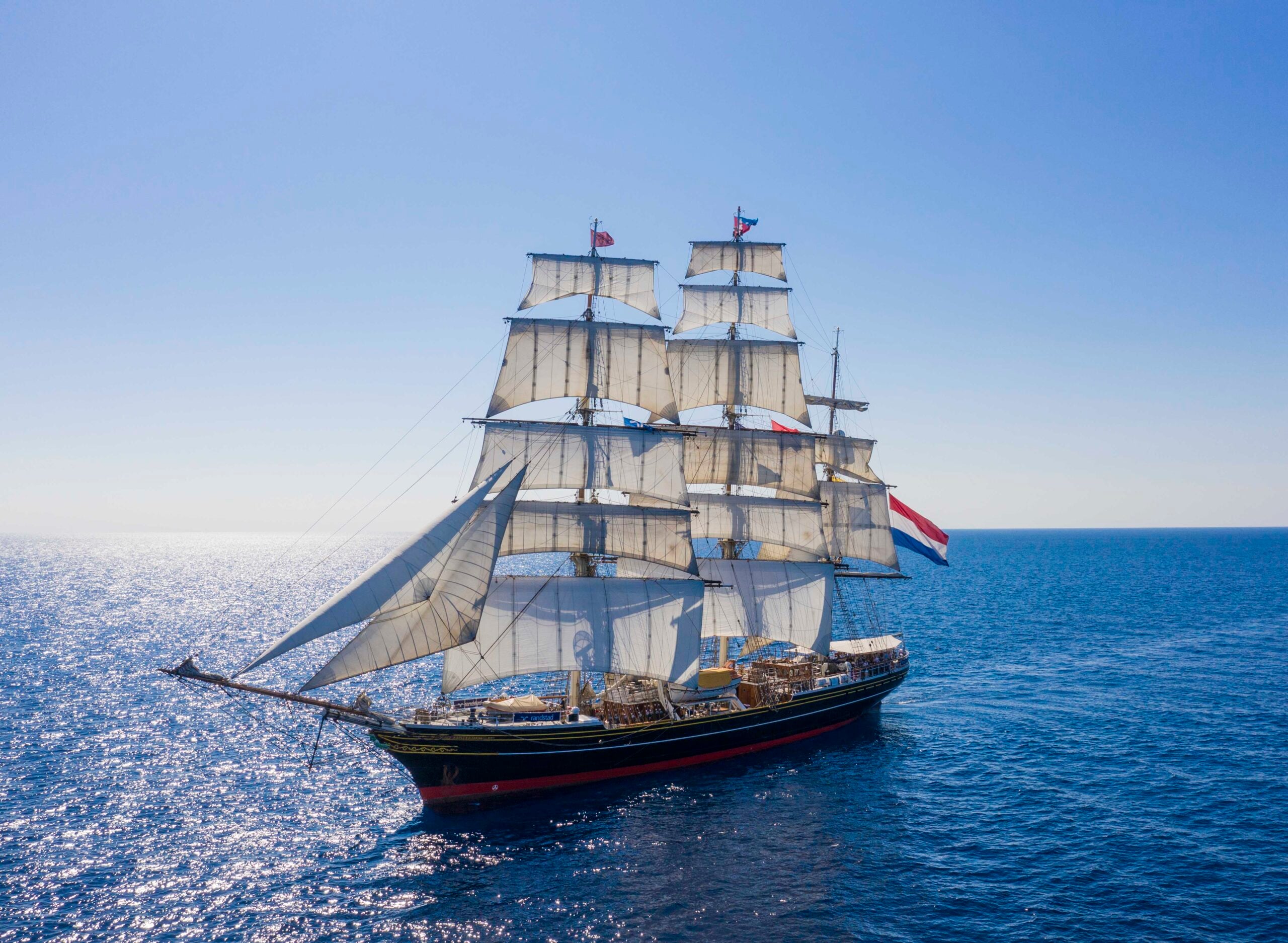
We understand that the finest island experiences don’t happen in a hotel room, but on the water, in a quiet bay, with the wind in the sails. Clipper Stad Amsterdam offers luxury sailing cruises in the Caribbean aboard an iconic three-masted clipper ship, designed specifically for travelers who want to experience a tropical vacation in a way that is truly different.
What sets our cruises apart:
- Small and intimate: A maximum of 28 guests on board, spread across 14 cabins, for a boutique hotel feel at sea
- Authentic sailing: Manually operated sails and helm, with a young and dedicated crew who sail the ship with genuine passion
- Remote destinations: Sailing by day to bays and islands unreachable by plane, anchoring in peaceful waters each evening
- Fully catered: Breakfast, lunch, dinner, and drinks prepared by our on-board chefs — with nothing for you to arrange
- Active and relaxing: Snorkeling, day trips, and white-sand beaches, combined with the comfort of a luxury cruise
Pricing is tailored to your journey, reflecting the season, cabin category, and duration of your voyage. Contact us for a personal quote and let us help you find the perfect sailing experience. Curious to find out more? Browse our voyages for an overview of all available routes and destinations. Ready to start planning? You can easily book your trip directly on our website. Have questions first? Get in touch and we’ll be happy to help.