
When is it quiet at holiday destinations for a cruise??
Who wants to spend their cruise surrounded by thousands of strangers, queuing for shore excursions, and competing for a sun lounger? Nobody who values a truly refined travel experience. Yet most people still book the same mass-market voyages during the same crowded periods. Discerning travellers know that the finest cruise experiences happen when you choose the right ship, the right route, and the right time — and that is exactly what this article is about. From the Caribbean to the European coasts: we show you how to get the most out of a luxury sailing cruise.
Whether you dream of gliding into a sun-drenched Caribbean harbour at dawn, exploring a historic Mediterranean port town at your own pace, or feeling the open Atlantic beneath your feet — the timing and the vessel you choose will define your entire experience. Read on and discover how to plan your ideal cruise.
When is the best time to book a luxury cruise?
The finest cruise experiences are found just outside the peak tourist season — in what seasoned travellers call the shoulder period. These are the months just before or just after the high season, offering the perfect combination of beautiful weather, uncrowded anchorages, and an atmosphere that feels genuinely exclusive rather than mass-produced.
Popular sailing destinations such as the Mediterranean, the Caribbean, and the Atlantic coast each have their own rhythm. While charter fleets and cruise ships crowd the Greek islands and Croatian harbours in July and August, those same destinations are far more serene and accessible in May, June, or September. Restaurants welcome you warmly, historic sites can be explored without the crush, and every anchorage feels like a private discovery. For those who value authenticity and exclusivity, the shoulder period is almost always the superior choice.
What are the advantages of cruising outside the high season?
Choosing a cruise outside the high season is not a compromise — it is an upgrade. You gain a more exclusive experience, quieter anchorages, more attentive service at every port, and an atmosphere that allows you to connect genuinely with the places you visit. At certain destinations, nature is also at its most spectacular outside the peak months — think lush, blooming coastlines or perfectly calm, crystal-clear waters.
The advantages at a glance:
- Exclusivity: fewer vessels in harbour means more space, more privacy, and a far more refined atmosphere on board and ashore.
- Uncrowded destinations: iconic ports and anchorages feel like private discoveries rather than tourist attractions.
- Superior service: local restaurants, guides, and shore-side experiences have the time and attention to offer something truly special.
- Authentic encounters: you experience destinations as they truly are, not as a backdrop for mass tourism.
- Greater flexibility: itineraries can be shaped more freely around wind, weather, and your personal wishes.
Cruising outside the high season does call for thoughtful planning. Always review the local climate in advance, as some regions experience rainfall or unsettled weather during transitional months. Those who plan carefully, however, will find a voyage that is both more beautiful and more memorable than anything the peak season can offer.
When is the best time for a luxury cruise in the Caribbean?
The Caribbean is at its most inviting during the dry season, which runs from December through April. This is when the islands are bathed in warm sunshine, trade winds keep the air fresh and comfortable, and the sea is calm and brilliantly clear — ideal conditions for a sailing cruise of the highest order. For those who prefer to avoid the busiest weeks, May and early June offer an excellent alternative: the weather remains beautiful, but the crowds have already thinned considerably.
During the peak winter months, North Americans and Europeans flock to the Caribbean in large numbers. The most popular anchorages fill quickly, and the atmosphere at many ports becomes decidedly less intimate. A carefully timed cruise — departing in late November, early December, or in May — allows you to enjoy the very best of the Caribbean with far greater tranquillity and space.
It is worth noting the hurricane season, which officially runs from June to November, with the highest risk concentrated in August and September. Islands such as Aruba, Bonaire, and Curaçao lie outside the hurricane belt and can be visited safely year-round — making them particularly attractive for a luxury cruise during the transitional months.
How does the ideal cruise season differ by destination?
The optimal time to cruise varies significantly depending on where in the world you wish to sail. Tropical destinations have their own seasonal rhythms, Mediterranean waters follow a different calendar entirely, and northern routes offer extraordinary experiences at unexpected times of year. Understanding these differences is the first step to planning a truly exceptional voyage.
Tropical destinations
In tropical regions such as the Caribbean, Southeast Asia, and the Indian Ocean, the low season coincides with the rainy season. While this brings higher humidity and occasional storms, it is not without its own appeal: showers are often brief and dramatic, and the landscape is lush and vivid. For a luxury cruise, however, the dry season remains the gold standard.
Mediterranean destinations
The Mediterranean is at its quietest from November to March. Temperatures are cooler, but the light is extraordinary and the ports are a pleasure to explore without summer crowds. Cities such as Barcelona, Rome, and Athens reveal their true character in the off-season — making a winter cruise through these waters a genuinely cultured and unhurried experience.
Northern European destinations
Norway, Iceland, and the Baltic coastline have their low season during the darker winter months. Yet for those seeking the drama of the northern lights, silent fjords, and a sense of true adventure at sea, winter sailing in these waters is an experience unlike any other — raw, beautiful, and deeply memorable.
When is the best time for a sailing cruise through Europe?
The finest window for a European sailing cruise runs from April through October. During these months, conditions along the Atlantic and Mediterranean coasts are most stable, temperatures are ideal, and the ports are alive with character and charm. May, June, and September stand out as the very best months for those who want to experience Europe’s most beautiful sailing destinations in relative tranquillity.
July and August bring peak congestion to the most sought-after harbours. Croatia, Portugal, and the Greek islands are crowded with charter yachts and day-trippers. Those who choose to cruise in May or September discover the same magnificent destinations, but with more space at the quay, a more relaxed pace ashore, and an atmosphere that feels genuinely exclusive.
Spring sailing carries an additional reward: the coastlines are at their most beautiful, with blooming landscapes, vivid blue water, and a fresh sea breeze that makes every passage a pleasure. A luxury sailing cruise during this period is not simply a holiday — it is an experience that stays with you long after you have returned to shore.
How do you choose the right time for an exclusive sailing cruise?
Choosing the ideal timing for a luxury sailing cruise comes down to three considerations: the climate of your chosen destination, the level of activity in the harbours along your route, and your own vision of what a perfect voyage looks like. Those who prize privacy and exclusivity will almost always find the shoulder period most rewarding. Those who want the assurance of guaranteed sunshine may prefer the high season — accepting that the most popular anchorages will be busier.
Here are the steps to making a good choice:
- Choose your destination: Europe or the Caribbean? Both offer extraordinary sailing, each with its own optimal season.
- Check the climate: avoid the rainy season in tropical waters or unsettled conditions in northern seas.
- Consider the atmosphere you want: do you prefer a quiet, private anchorage, or is a lively harbour port part of the appeal?
- Request a personal quote: rates are tailored to season, cabin category, and trip duration — contact us for a bespoke, no-obligation proposal.
- Think about your travel companions: cruising as a couple or with close friends offers the greatest flexibility; if children are joining, school holiday windows will shape your options.
A sailing cruise is fundamentally different from any other form of travel. You are not fixed to a single resort or a rigid itinerary — you move with the wind and the tide, discovering places that larger vessels can never reach. That freedom makes timing both more flexible and more rewarding. Explore the full range of possibilities on the Stad Amsterdam website to understand everything that is available to you.
How Clipper Stad Amsterdam delivers the perfect luxury cruise experience
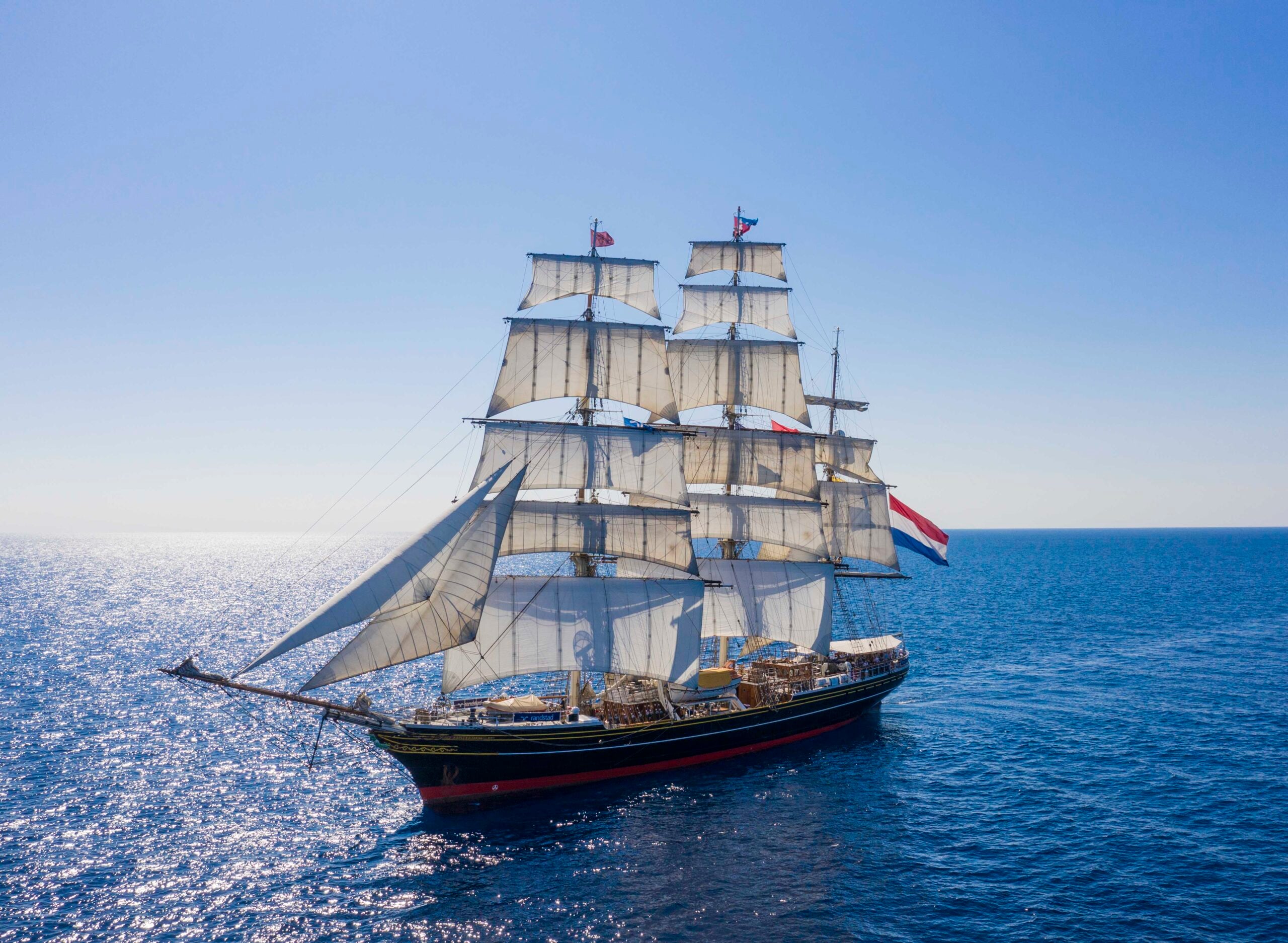
At Clipper Stad Amsterdam, we understand that a truly exceptional cruise is defined by far more than the destination alone. It is the vessel, the crew, the intimacy on board, and the care with which every detail is considered. We deliberately plan our routes during the periods when our destinations are at their most beautiful, most serene, and most rewarding for the discerning traveller.
What we offer:
- Luxury sailing cruises in the Caribbean during the dry season, with a maximum of 28 passengers across 14 private cabins — an intimacy that no large cruise ship can replicate.
- Exclusive sailing voyages through Europe during the shoulder period — quiet anchorages, authentic ports, and a deeply personal experience at every stop.
- Fully catered on board: breakfast, lunch, and dinner prepared daily by our own chefs using fresh, carefully selected ingredients.
- A young, passionate crew that sails the ship by hand — genuine, traditional sailing at its finest, not a motorised imitation.
- An intimate atmosphere with a maximum of 28 passengers — no anonymity, no queues, no crowds. Just you, your fellow passengers, and the sea.
Rates are tailored exclusively to season, suite category, and trip duration. Curious about which voyages are available and what we can create for you? Get in touch with us for a personal quote and we will be delighted to help you plan the perfect cruise, at exactly the right time.