
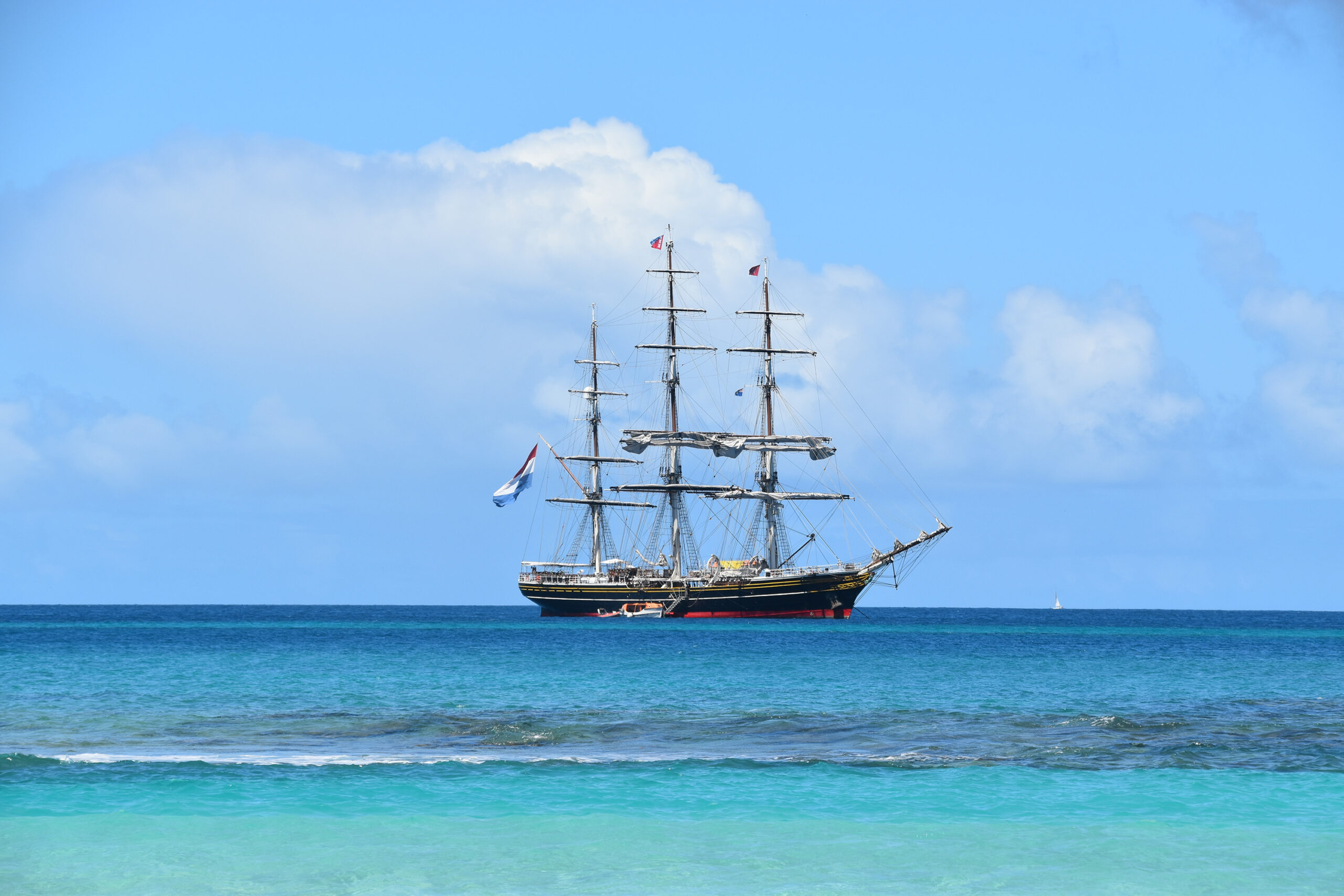
Cruise on a historic sailing ship
A cruise on a historic sailing ship combines the romance of classic sailing with the comfort of modern hospitality. Instead of an anonymous large cruise ship, you step aboard an authentic sailing vessel with a small group, a dedicated crew, and destinations unreachable by large ships. In this article, we answer the most frequently asked questions about this extraordinary way of travelling.
What does a cruise on a historic sailing ship look like?
A cruise on a historic sailing ship is an intimate travel experience where you sail under real sails during the day and anchor in secluded bays in the evening that are inaccessible to large cruise ships. The daily rhythm is shaped by wind, water, and destination — not by a fixed entertainment schedule. The group is small, the atmosphere informal, and the connection with the sea tangible.
Every day on board has its own character. In the morning you depart after a hearty breakfast while the crew hoists the sails. During the day you enjoy the sailing, the views, and the tranquility. At your destination, a day excursion, a snorkelling trip, or simply relaxing on a white beach awaits. In the evening you return on board for a dinner prepared by the chefs, followed by drinks under a starlit sky. It is a rhythm you quickly embrace.
What sets a cruise on a historic sailing ship apart from other holidays is the combination of movement and destination. You are not on your way to the holiday — the journey is the holiday.
What is the difference between a historic sailing ship and a modern cruise ship?
The biggest difference is scale and atmosphere. A modern cruise ship carries thousands of passengers and offers a floating hotel with a casino, theatre, and shopping street. A historic sailing ship carries a small group, has an authentic character, and provides a personal experience where you know the crew by name and truly feel the sea.
In addition, the way of sailing is fundamentally different. On a historic sailing ship, the sails are operated manually by the crew, without automated systems. The helm and rigging demand craftsmanship and dedication. This makes the sailing itself an experience, not merely a means of transport.
The destinations also differ. Large cruise ships sail to busy port cities with docking piers. A historic sailing ship anchors in quiet bays, off peaceful islands, and in places where you rarely encounter another tourist vessel. For travellers who want to avoid mass tourism, that is a significant advantage.
Which destinations can you reach with a historic sailing ship?
With a historic sailing ship you can reach destinations that are inaccessible to large cruise ships: remote islands, shallow bays, and authentic small harbours. The most popular routes run through the Caribbean, along European coastlines, and across the Atlantic Ocean, depending on the season and type of voyage.
In winter, the Caribbean is ideally suited for a luxury sailing cruise. Think of the Lesser Antilles, the British Virgin Islands, or the unspoiled waters around Grenada and St. Lucia. The combination of steady trade winds, clear blue water, and white beaches makes this region ideal for sailing.
In the summer months, European routes along the Mediterranean, the Atlantic coast, or the Scandinavian fjords offer a very different yet equally impressive landscape. Each route has its own character, and it is precisely that variety that makes the historic sailing ship so versatile as a travel destination.
What luxury amenities are available on board the Clipper Stad Amsterdam?
On board you will find 14 luxury cabins with a boutique hotel feel, a spacious dining room for dinners and presentations, an outdoor bar, and a hospitality team available throughout the entire cruise. From breakfast to late-evening drinks: the level of service is high, without feeling stiff or overly formal.
The cabins accommodate a maximum of two people per cabin, giving the cruise an intimate character. The group on board consists of a maximum of 28 passengers on a luxury cruise, meaning everyone receives personal attention from the crew. That crew is young, friendly, and genuinely engaged — something guests repeatedly mention as one of the highlights of the voyage.
On deck you can enjoy the outdoor bar and the views. During stopovers there are activities such as snorkelling, day excursions, and relaxing on the beach. It is luxury that feels like freedom, not like a mandatory programme.
Who is a cruise on a historic sailing ship suitable for?
A cruise on a historic sailing ship is ideally suited for travellers who are looking for an authentic, intimate experience that goes beyond the standard holiday. It appeals to people who value both adventure and comfort, and who consciously choose a small group over an anonymous crowd.
Specifically, this type of voyage attracts people who have grown tired of large cruise ships and all-inclusive resorts. They long for a genuine connection with the sea, nature, and the people around them. They often travel with a partner, close friends, or family, and value special moments over standard comfort.
The voyage does require some flexibility. The weather, wind, and sea all play a role in how the day unfolds. Those who experience that as an adventure rather than an inconvenience will feel right at home on board. Seasickness is a concern for some people, but in the Caribbean the conditions are generally calm and pleasant.
How sustainable is sailing on a historic sailing ship?
Sailing on a historic sailing ship is inherently more sustainable than travelling on a large cruise ship, because wind is the primary energy source. When the sails are set, the ship consumes almost no fuel. This makes the ecological footprint per passenger considerably smaller than that of conventional cruises.
In addition to wind power, work is also being done on further greening the fuel choices. Where possible, the ship runs on HVO, a biofuel that significantly reduces CO2 emissions during combustion compared to traditional marine fuel. This is not guaranteed for every port or route, but it is a conscious step towards more responsible sailing.
For travellers who factor sustainability into their choices, a historic sailing ship is therefore a logical and meaningful option. You enjoy an exceptional voyage while at the same time contributing to a smaller impact on the environment.
How Clipper Stad Amsterdam welcomes you on board
Clipper Stad Amsterdam offers exactly the experience described in this article: an authentic, luxury cruise on board an iconic three-masted clipper ship with 25 years of sailing history. What we offer:
- Luxury sailing cruises in the Caribbean, with a maximum of 28 passengers on board
- 14 comfortable cabins with a boutique hotel feel
- Fully catered: breakfast, lunch, dinner, and drinks prepared by our chefs
- A young, friendly, and dedicated crew that sails manually
- Anchoring in secluded bays, snorkelling, day excursions, and relaxing on pristine beaches
- Sailing on HVO where possible, as part of our sustainability ambitions
Our luxury cruises are priced exclusively, tailored to the season, cabin category, and duration of your voyage. Contact us for a personalised quote, or book your voyage directly online to secure your place on board.
Frequently Asked Questions
Do I need sailing experience to join a cruise on a historic sailing ship?
No, prior sailing experience is absolutely not required. The crew takes care of all the sailing, so you can simply enjoy yourself as a passenger. Would you like to learn more about the ship and the sails? The crew is happy to walk you through how the ship works, but this is always on a voluntary basis.
What should I pack for a luxury sailing cruise in the Caribbean?
Think light, airy clothing for daytime, a good sunscreen and swimwear for snorkelling and beach visits. For evening dinners on board, a smart-casual outfit is appropriate, but there is no formal dress code. Also be sure to bring walking shoes with grip for day excursions ashore and a light rain jacket for unexpected showers.
What if I get seasick during the cruise?
In the Caribbean, conditions are generally calm thanks to the steady trade winds and relatively calm seas, which limits the risk of seasickness. It is nonetheless wise to bring preventive seasickness patches or tablets as a precaution, available at most pharmacies. Should you experience symptoms, the crew is on hand to help, and it can help to stay on deck in the fresh air and keep your eyes on the horizon.
Can I book a cruise if I am travelling alone, or is this only suitable for couples and groups?
A cruise on the Clipper Stad Amsterdam is certainly suitable for solo travellers as well. Because the group on board consists of a maximum of 28 passengers, the atmosphere is informal and connections with fellow passengers form quickly. When booking, contact the team to enquire about the availability of a single-occupancy cabin and tailored pricing options.
How far in advance do I need to book my voyage to secure a place?
Because the ship carries a maximum of 28 passengers, places are limited and popular routes fill up quickly. It is advisable to book at least six to twelve months in advance, especially for the sought-after winter cruises in the Caribbean. Booking early also gives you the best choice of available cabins and departure dates.
Are there activities on board if the weather is poor or we cannot dock?
Yes, even on quieter or rainy days there is plenty to enjoy. The crew provides presentations about the history of the ship, the route, and seafaring, and there is always space to relax in the dining room or on the covered parts of the deck. The informal atmosphere on board also means that fellow passengers and crew quickly create a convivial and engaging environment.
Is the cruise also suitable for people with limited mobility?
A historic sailing ship naturally has narrow corridors, steep companionways, and a moving deck, which can be challenging for people with limited mobility. It is strongly recommended to contact the team of Clipper Stad Amsterdam before booking to discuss your specific situation. They can give you honest advice about what is feasible and what adjustments may be possible.