

What Can You Do on Dominica if You Love Nature?
Dominica is one of the most nature-rich islands in the Caribbean, ideal for travellers looking for more than a beach holiday. The island is known for its lush rainforests, active volcanoes, crystal-clear rivers and pristine coral reefs. In this article, we answer the most frequently asked questions about the nature of Dominica and everything you can do there if you love the outdoors.
Which nature areas should you not miss in Dominica?
The absolute highlights of nature in Dominica are Morne Trois Pitons National Park, Boiling Lake and Emerald Pool. This UNESCO World Heritage Site covers a large part of the island and offers access to volcanic landscapes, tropical forests and spectacular waterfalls that are rarely found elsewhere in the Caribbean.
Morne Trois Pitons National Park is the heart of Dominica and a must for every nature lover. Here you will find the famous Boiling Lake, the second-largest hot lake in the world, surrounded by sulphurous vapours and volcanic rocks. Emerald Pool is another iconic spot: an emerald-green pool of water beneath a waterfall, accessible via a short walk through the rainforest. Titou Gorge, a narrow volcanic gorge filled with warm water, is also well worth a visit and offers a unique swimming experience.
What makes Dominica different from other Caribbean islands?
Dominica sets itself apart from other Caribbean islands through its unspoiled nature, active volcanic activity and the absence of mass tourism. While many islands in the Caribbean are known for their white beaches and resorts, Dominica is primarily a destination for adventurers and nature lovers seeking authenticity.
The island is also known as “The Nature Isle of the Caribbean”, and that is no coincidence. More than 60 percent of the island consists of protected rainforest. There are no large all-inclusive resorts and no busy cruise terminals dominating the landscape. Instead, you will find 365 rivers, geothermal springs, an active volcano and one of the most diverse flora and fauna in the region. Nature activities in Dominica stand in stark contrast to what is on offer on neighbouring islands such as Sint Maarten or Aruba, which are more focused on sun and beach.
Which hiking trails are there for nature lovers in Dominica?
Dominica offers numerous hiking trails for different levels, from short forest walks to multi-day treks. The most well-known and challenging route is the Boiling Lake Trail, a hike of approximately six to seven hours that leads through Morne Trois Pitons National Park to the iconic boiling lake.
Popular hiking trails in Dominica
- Boiling Lake Trail: The most strenuous and impressive route, with spectacular views over the Valley of Desolation and Boiling Lake. Suitable for experienced hikers.
- Middleham Falls Trail: A relatively accessible walk of about an hour and a half that leads to one of the highest waterfalls on the island.
- Syndicate Nature Trail: A peaceful route through the rainforest, ideal for birdwatchers and families. There is a good chance of spotting the rare Sisserou parrot here.
- Waitukubuli National Trail: The longest hiking trail in the Caribbean, covering 115 kilometres that cross the island from north to south. Suitable for multi-day trekkers.
Tips for hikers in Dominica
It is strongly recommended to hire a local guide, especially for the more challenging routes. The terrain can be treacherous due to the high humidity and sometimes steep paths. Wear sturdy footwear, bring plenty of water and expect changeable weather, even outside the rainy season.
Can you snorkel and dive in the waters around Dominica?
Yes, Dominica is one of the best diving destinations in the Caribbean. The underwater world surrounding the island is exceptionally rich due to the volcanic seabed, which creates dramatic underwater landscapes, clear waters and a great biodiversity of coral and marine life.
Champagne Reef is one of the most unique snorkelling spots in the world: warm water bubbles rise from the volcanic seabed, giving you the feeling of swimming in a glass of champagne. Tintamarre and Scotts Head are popular dive sites with healthy coral reefs, sea turtles and colourful fish species. Dominica is also known for its sperm whales, which live year-round in the deep waters off the coast and are sometimes spotted during diving excursions. Those looking for Caribbean island nature underwater will find one of the most pristine environments in the region in Dominica.
Which animals can you encounter in the wild in Dominica?
In Dominica you can encounter in the wild, among others, the Sisserou parrot, sea turtles, sperm whales, iguanas and a great variety of tropical birds. The island has one of the highest densities of endemic species in the Caribbean.
The Sisserou parrot is the national symbol of Dominica and one of the rarest parrots in the world. You can spot it in the rainforest around the Syndicate Nature Trail. In the sea, sea turtles are a familiar sight, particularly along the south-west coast. Sperm whales live permanently in the deep waters off the coast of Dominica, making the island one of the few places in the world where whale-watching excursions are possible year-round. There are also iguanas, migratory birds and countless insect species that inhabit the rainforest.
When is the best time to visit Dominica for nature?
The best time to visit Dominica for nature is from December to April. During this dry season, the weather is most stable, the hiking trails are more accessible and underwater visibility for snorkelling and diving is at its best.
The rainy season runs from June to November, with the peak of hurricane activity in August and September. Although the rainforest looks at its most lush during this period, heavy rainfall and muddy paths can make hiking more difficult. For those who want to combine whale-watching excursions with hiking and diving, the months of January through April are most suitable. Attractions in Dominica such as Boiling Lake and Emerald Pool are accessible year-round, but the journey is more pleasant and safer in the dry season.
How Clipper Stad Amsterdam takes you to Dominica
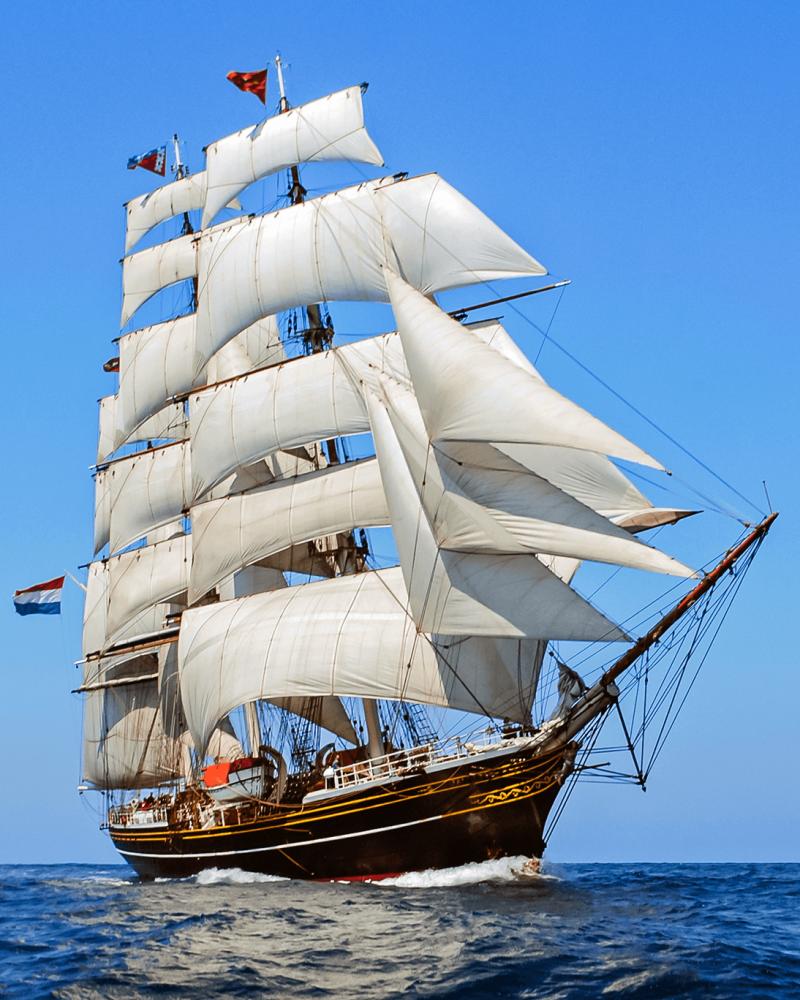
One of the most unique ways to discover Dominica is by sailing ship. We offer luxury sailing cruises in the Caribbean aboard the Clipper Stad Amsterdam, a historic three-masted clipper ship with modern equipment and a high level of service. Dominica is exactly the kind of destination that fits the philosophy of our cruises: unspoiled, authentic and far from the crowds of mass tourism.
What you can expect on board and along the way:
- A maximum of 28 guests spread across 14 cabins for an intimate, personal atmosphere
- Sailing by wind power during the day, anchoring in remote bays in the evening
- Fully catered with breakfast, lunch, dinner and cocktails prepared by our own chefs
- Opportunity to snorkel, go on day trips and relax on uninhabited beaches
- A young, dedicated crew that sails the ship manually and authentically
The cruises in the Caribbean are offered in January and February, after which the ship sets course for the Mediterranean. The price for a luxury sailing cruise starts from €5,300 per person, excluding flights. Would you like to know more or are you ready to book? View the full travel offer on our website or contact us for personal advice. Read more about who we are and what sets us apart at stadamsterdam.com.
Frequently Asked Questions
Do I need a visa to visit Dominica as a Dutch citizen?
Dutch citizens do not need a visa to visit Dominica for tourist purposes for up to 21 days. You will need a valid passport, a return ticket and proof of sufficient financial means for your stay. It is always advisable to check the most up-to-date entry requirements via the official website of the Dominican government or your travel insurer before departure.
Is Dominica suitable for beginners who have never dived or snorkelled before?
Absolutely, Dominica is an excellent diving and snorkelling destination for beginners too. Places such as Champagne Reef are shallow and calm enough for snorkellers without experience, and there are local dive schools that offer certified PADI courses for beginners. It is always advisable to enter the sea with a certified guide or dive school, so that you can safely and responsibly enjoy the underwater nature.
What are common mistakes made by first-time travellers to Dominica?
A common mistake is underestimating how physically demanding the hiking trails are due to the combination of heat, high humidity and steep terrain. Many visitors bring too little water or wear unsuitable footwear, which can significantly spoil the experience. In addition, some travellers do not book a local guide, while this is strongly recommended for routes such as the Boiling Lake Trail due to the complexity of the terrain and the rapidly changing weather conditions.
How fit do I need to be to do the Boiling Lake Trail?
The Boiling Lake Trail is a serious challenge that requires a good basic level of fitness. The hike lasts six to seven hours and includes steep ascents, uneven terrain and a descent through the Valley of Desolation. It is not a route for people with knee problems or limited fitness, but those who hike regularly and are in reasonable physical condition can complete the trek with the right preparation. Always book a certified local guide and start early in the morning to avoid the midday heat.
Can I combine Dominica with other Caribbean islands during one trip?
Yes, Dominica lends itself excellently to combination with nearby islands such as Martinique, Guadeloupe or St. Lucia, all of which are within short distance. A sailing cruise, such as aboard the Clipper Stad Amsterdam, offers exactly that possibility: visiting multiple islands on one trip, while staying comfortably on board the ship and reaching a new destination every day. This is an ideal way to experience the contrasts between the islands, from the unspoiled nature of Dominica to the vibrant culture of other Caribbean destinations.
Is Dominica a safe travel destination for solo travellers or couples?
Dominica is generally considered a safe and friendly destination, including for solo travellers and couples. The absence of mass tourism creates a calm and authentic atmosphere, and the local population is known for its hospitality. It is wise to take the usual precautions, such as not leaving valuables unattended and not walking alone in remote areas in the evening. For activities in nature, the advice always applies not to go out alone and to inform someone of your route.
What should I pack for a nature trip to Dominica?
For a nature trip to Dominica, sturdy hiking shoes with grip, light and breathable clothing, a good rain jacket or poncho and insect repellent are absolute must-haves. Also bring a waterproof bag or dry bag for your electronics, as rain and humidity are never far away. Do not forget a good sunscreen, a reusable water bottle and snorkelling gear if you prefer to bring your own, although rental is also available locally.