

What Can You Do During a Cruise Stop in Saint Lucia?
During a cruise stop in Saint Lucia, you can choose from an impressive mix of nature, culture, and culinary experiences. Think of a hike to the iconic Piton mountains, snorkeling in crystal-clear bays, tasting fresh Creole dishes at the local market, or relaxing on one of the most beautiful beaches in the Caribbean. Saint Lucia is compact enough to see a lot in a single day, yet rich enough to keep surprising you. In this article, we answer the most frequently asked questions about what you can do during a visit to this stunning island.
Which attractions are a must-see on Saint Lucia?
The absolute must-sees on Saint Lucia are the Piton mountains, the volcanic black sand beaches, the rainforest, and the unique drive-in volcano near Soufrière. These are the sights that set Saint Lucia apart from other Caribbean islands and that you won’t find in this combination anywhere else in the world.
The Gros Piton and Petit Piton are the symbol of the island. These two volcanic peaks rise dramatically from the sea and are visible from virtually every corner of the island. Gros Piton can be climbed with a local guide, but even if you simply admire the views from the coast, the sight is overwhelming. Both Pitons are listed as a UNESCO World Heritage Site.
Near Soufrière you’ll find La Soufrière, one of the few volcanoes in the world you can drive through. The sulphur vents and steaming mud pools are a remarkable spectacle. Nearby lie the Diamond Falls, a series of colorful waterfalls surrounded by botanical gardens. The combination of volcanic landscape and lush nature makes this area the most photogenic part of the island.
What are the best activities on Saint Lucia for sailors and adventurers?
For sailors and adventurers, Saint Lucia offers an excellent mix of watersports, jungle adventure, and exploration of secluded bays. Snorkeling, kayaking, ziplining through the rainforest, and hiking to the Piton mountains are the most popular adventurous activities on the island.
The waters surrounding Saint Lucia are clear and teeming with marine life. Snorkeling at Anse Chastanet is considered one of the best snorkeling spots in the Caribbean: colorful coral reefs, tropical fish, and excellent visibility make this an unforgettable experience. Those who want to go deeper can dive at the Piton Wall, a spectacular underwater rock face.
On land, Saint Lucia’s rainforest offers adventurous possibilities. Ziplining through the treetops provides a unique perspective on the lush greenery. Hikers can tackle the trail to the summit of Gros Piton, a climb of around two to three hours that rewards you with a panoramic view over the entire island and the surrounding sea. For a more leisurely pace, there are also guided boat trips along the coast where you can admire the Pitons from the water.
Where can you find the best local food on Saint Lucia?
The best local food on Saint Lucia can be found at the weekly market in Castries, at the fishing villages along the coast, and in the simple Creole restaurants in Soufrière. Local dishes such as green fig and saltfish, grilled fish specialties, and fresh tropical fruits give you an authentic taste of the island’s cuisine.
Castries Market is the lively central market of the capital and an ideal place to sample local produce, spices, and fresh juices. You’ll also find local food stalls serving simple but flavorful dishes at friendly prices. The market is most vibrant on Fridays and Saturdays.
In and around Soufrière, you’ll find smaller restaurants and street stalls preparing fresh-caught fish and Creole specialties daily. Dishes are often seasoned with local spices such as cinnamon, nutmeg, and pepper, which are grown on the island itself. A meal here is not only delicious but also a cultural experience in its own right.
Which beaches on Saint Lucia are worth visiting during a short stay?
During a short visit to Saint Lucia, Anse Chastanet, Anse Mamin, and Reduit Beach are the beaches most worth your time. Each beach has its own character: from quiet, secluded bays with volcanic sand to wide, white beaches with facilities and water activities.
Anse Chastanet is one of the most beautiful beaches on the island, located right next to Soufrière. The beach features both dark volcanic and lighter sand, excellent snorkeling opportunities directly from the shore, and a picturesque setting with the Pitons in the background. It is quieter than the tourist beaches in the north, giving it an intimate and authentic atmosphere.
Reduit Beach near Rodney Bay in the north is the most accessible beach for cruise visitors traveling from Castries. The beach is wide, has white sand, and offers plenty of opportunities for watersports, sunbathing, and a drink at one of the beach bars. For those with limited time who still want to enjoy a typical Caribbean beach, Reduit is an excellent choice.
How does Saint Lucia differ from other Caribbean islands?
Saint Lucia differs from other Caribbean islands through its dramatic volcanic landscape, its lush rainforest, and its relatively unspoiled nature. While many Caribbean islands are primarily characterized by white beaches and flat terrain, Saint Lucia offers a spectacular combination of mountains, jungle, and sea that gives the island an adventurous character.
The island has a strong French and British heritage, reflected in the language (the local Kwéyòl, a Creole dialect), the architecture, and the cuisine. This cultural layering makes Saint Lucia more interesting for travelers who are looking for more than just a beach holiday. The local population is known for its hospitality, and the atmosphere is relaxed and authentic.
Compared to popular islands such as Aruba or Sint Maarten, Saint Lucia is less commercially developed. Large all-inclusive resorts are present, but the island has also preserved many small-scale accommodations and unspoiled areas. This makes it particularly attractive for travelers seeking peace, nature, and a genuine island experience.
What is the best way to explore Saint Lucia during a cruise stop?
The best way to explore Saint Lucia during a cruise stop is with an organized day tour or a private driver, supplemented by your own exploration on foot near the port. The island has limited public transport, but local taxi drivers are well-informed about the sights and often offer combination routes.
Most cruise ships dock in Castries, the capital. From here, the south of the island, with Soufrière and the Pitons, is about an hour’s drive away. A popular day route combines a visit to the volcano, the Diamond Falls, and Anse Chastanet in a single round trip. These kinds of tours can be booked locally through certified guides at the pier.
Those who prefer to explore independently can walk from Castries to the market and the city center. Rodney Bay in the north is reachable by taxi and offers a good starting point for the beach and water activities. Keep travel times in mind: the roads on Saint Lucia are narrow and winding, which makes driving times longer than you might expect from looking at the map.
How Clipper Stad Amsterdam helps you discover Saint Lucia
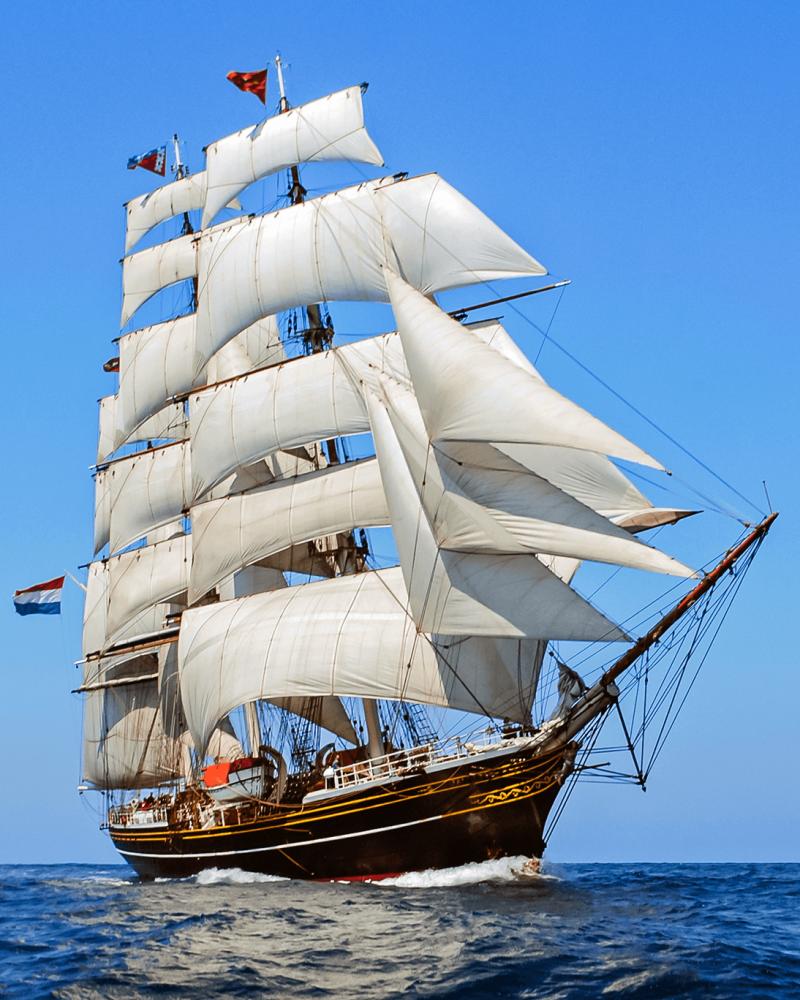
A cruise stop in Saint Lucia is wonderful, but imagine visiting the island as part of a full luxury sailing cruise through the Caribbean. That is exactly what we at Clipper Stad Amsterdam offer: an intimate sailing voyage aboard a historic three-masted clipper ship, calling at Saint Lucia and other Caribbean islands in a way that large cruise ships simply cannot match.
What sets our luxury sailing cruise apart:
- A maximum of 28 guests on board, spread across 14 cabins, for a personal and intimate atmosphere
- Sailing by wind power during the day, anchoring in secluded bays in the evening that are unreachable by large ships
- Fully catered with breakfast, lunch, dinner, and cocktails, prepared by our own chefs on board
- Activities such as snorkeling, day excursions, and relaxing on white sandy beaches
- A young, dedicated crew that handles the sailing manually and authentically
- Prices from €5,300 per person (excluding flights)
Our Caribbean cruises take place in January and February, when the weather is at its best. Would you like to know more about the options or book a trip? View our travel offerings or contact us for more information.
Frequently Asked Questions
How much time do I need at minimum to see the highlights of Saint Lucia during a cruise stop?
A well-planned day of six to eight hours is enough to see the main highlights, provided you book a combination tour. The most popular day route combines a visit to the volcano near Soufrière, the Diamond Falls, and a stop at Anse Chastanet. Do bear in mind that the narrow, winding roads significantly extend travel times, so an early start is strongly recommended.
What are common mistakes cruise visitors make on Saint Lucia, and how can I avoid them?
A common mistake is underestimating how long it takes to travel from Castries to the south of the island. Always allow at least an hour’s drive to Soufrière, even if the distance looks small on the map. Another pitfall is booking too many activities in one day: it is better to choose two or three experiences you can enjoy at a relaxed pace than an overpacked itinerary where you rush through everything.
Is it safe to travel independently on Saint Lucia without a guide or organized tour?
For most tourist areas such as Castries, Rodney Bay, and the marked beaches, independent travel is perfectly fine. For activities such as climbing Gros Piton, a certified local guide is mandatory and also strongly recommended for your own safety. Local taxi drivers are reliable and well-informed; agree on a fixed price for the ride or day tour in advance.
What is the best season to visit Saint Lucia, and why are January and February ideal?
The dry season from December to April is the best time to visit Saint Lucia, with January and February as the absolute peak months. During this period the chance of rain is minimal, the zeeën are calm, and the temperature is pleasant at an average of 27 to 29 degrees Celsius. Outside this season, particularly from June to November, the island can experience tropical downpours and hurricane season, which can make excursions and sailing activities more difficult.
What local souvenirs or products are typical for Saint Lucia and worth taking home?
Saint Lucia is known for its locally produced rum, cacao, and handmade products from local artisans. At the Castries Market you’ll find authentic spices, coconut products, and local handicrafts at a fair price. Chocolate made from Saint Lucian cacao is a particularly popular and unique souvenir that you’ll find in this quality at very few other places in the Caribbean.
How does a luxury sailing cruise with Clipper Stad Amsterdam differ from a regular cruise stop in Saint Lucia?
With a regular cruise stop you have only one day and share the sights with hundreds to thousands of fellow passengers. With Clipper Stad Amsterdam you anchor in the evening in secluded bays that are unreachable by large ships, allowing you to experience Saint Lucia in an intimate and unspoiled way. With a maximum of 28 guests on board and a fully catered program including meals and activities, it is a complete experience that far surpasses an average cruise stop.
Should I book activities in advance for my visit to Saint Lucia, or can I arrange them on the spot?
For popular activities such as climbing Gros Piton and snorkeling excursions at Anse Chastanet, it is wise to book in advance, especially during the high season from January to April when the island is busier. Local taxi tours and simple day excursions can often also be arranged on the spot through certified guides at the pier in Castries. If you are part of an organized sailing cruise such as that of Clipper Stad Amsterdam, excursions and activities are generally coordinated for you, which takes away a great deal of planning stress.