
What Are the Must-See Places in Martinique?
Martinique is one of the most varied and fascinating islands in the Caribbean Sea. The French overseas department combines lush rainforests, volcanic mountains, azure bays, and a rich cultural history. Whether you come for nature, history, or food: Martinique has something special to offer every type of traveler. In this article, we answer the most frequently asked questions about the most beautiful places and attractions on Martinique.
What are the most beautiful beaches in Martinique?
Martinique has some of the most beautiful beaches in the Caribbean, ranging from white sandy beaches in the south to black volcanic beaches in the north. The most visited beaches are Les Salines in the far south and Anse d’Arlet, known for its colorful fishing village and clear water.
Les Salines is considered by many to be the most beautiful beach in Martinique. The wide, calm beach is lined with palm trees and has a sheltered location that makes it ideal for swimming and snorkeling. Anse d’Arlet is slightly more intimate and offers an authentic glimpse of island life: local fishermen pull their boats onto the beach and the church stands right at the water’s edge.
Those looking for something less touristy can head to Grande Anse des Salines or Anse Cafard, a quieter beach with an impressive slave monument overlooking the sea. The north of the island has black beaches such as those near Le Prêcheur, which have a very different, rougher character than the white sandy beaches in the south.
Which nature areas are a must-see in Martinique?
The absolute must-see for nature lovers in Martinique is the Montagne Pelée, the active volcano in the north of the island. In addition, the Parc Naturel Régional de la Martinique provides access to tropical rainforests, mangroves, and spectacular hiking trails. The nature on Martinique is impressively diverse and largely unspoiled.
The Montagne Pelée rises to 1,397 meters and can be climbed via several routes. The hike to the summit rewards walkers with views across the entire island and, in clear weather, even of neighboring islands. The rainforest surrounding the volcano is rich in tropical plants, orchids, and birds found nowhere else.
For those who prefer to enjoy things at sea level, the mangroves of the Baie du Robert offer a unique experience. By canoe or kayak you can glide through this unique ecosystem, surrounded by root trees and colorful birds. Snorkelers will find their paradise at the Réserve Naturelle de la Caravelle, a peninsula with coral reefs and clear shallow bays.
What makes Saint-Pierre a special destination in Martinique?
Saint-Pierre is special because it was once the cultural and economic capital of Martinique, until the eruption of the Montagne Pelée in 1902 destroyed the entire city and claimed the lives of almost all its inhabitants. The city is therefore also known as the “Pompeii of the Caribbean.” The ruins and shipwrecks make Saint-Pierre a unique historical destination.
During the catastrophic eruption of May 8, 1902, an estimated 30,000 people lost their lives. What remained are the ruins of theaters, churches, and factories, now scattered throughout the city as an open-air museum. The Musée Vulcanologique Frank Perret tells the story of the disaster through artifacts excavated from the ash.
Underwater, Saint-Pierre is at least as impressive. Around fourteen shipwrecks lie on the floor of the bay, sunk during the eruption. These wrecks are covered in coral and populated by colorful fish, making Saint-Pierre one of the most popular dive sites in the Caribbean. Even snorkelers can get a good look at the shallower wrecks.
How does the north of Martinique differ from the south?
The north of Martinique is wild, green, and volcanic in character, dominated by the Montagne Pelée and dense rainforests. The south is drier, sunnier, and has most of the white sandy beaches and tourist facilities. The two parts of the island each offer a very different experience of Martinique.
In the north you will find the most spectacular nature: lush tropical vegetation, waterfalls, black beaches, and the historic city of Saint-Pierre. It is a region for adventurers and nature lovers who want to explore the island in an authentic way. The roads are narrower and the villages smaller, but that is precisely where the charm lies.
The south of Martinique is more accessible and has more tourist infrastructure. Les Salines, Anse d’Arlet, and the capital Fort-de-France are all located in the southern part. Fort-de-France itself is a vibrant city with a large market, colonial architecture, and excellent restaurants. Anyone planning a Martinique holiday who wants the best of both worlds would do well to explore both parts of the island.
Which local dishes and drinks should you try in Martinique?
In Martinique, you absolutely must not miss the Colombo, a spiced stew inspired by Indian curry, and the local rum agricole, made from fresh sugarcane juice rather than molasses. This rum is world-renowned for its refined flavor and is an essential part of Martiniquais culture.
The cuisine of Martinique is a blend of French, African, Indian, and Caribbean influences. In addition to the Colombo, accras are popular: deep-fried fritters made from salted cod or vegetables, eaten as a snack or starter. Boudin créole, a seasoned blood sausage, is another local specialty found at many markets and in small restaurants.
As a drink, the Ti’ Punch is indispensable: a simple mix of rum agricole, sugar syrup, and lime that is drunk at any time of day. Tours of the rum distilleries of Martinique are popular and provide insight into the production process. Well-known distilleries such as Rhum Clément and J.M. offer tastings in a beautiful setting of sugarcane fields.
When is the best time to visit Martinique?
The best time to visit Martinique is from December to April. During this period it is dry, sunny, and pleasantly warm with temperatures around 27 degrees Celsius. It is also the low season for hurricanes, which greatly reduces the chance of bad weather. This is therefore also the busiest tourist period on the island.
From June to November it is officially the rainy season and also the hurricane season. Although Martinique is not directly hit by hurricanes every year, there can be more rainfall and thunderstorms during this period. Those who travel in the low season benefit from lower prices and fewer crowds on the beaches.
Those wanting to visit Martinique in January or February are in the ideal period. The island is at its most beautiful and the weather is stable. This is also precisely the period when we sail through the Caribbean aboard the Clipper Stad Amsterdam.
Discovering Martinique aboard the Clipper Stad Amsterdam
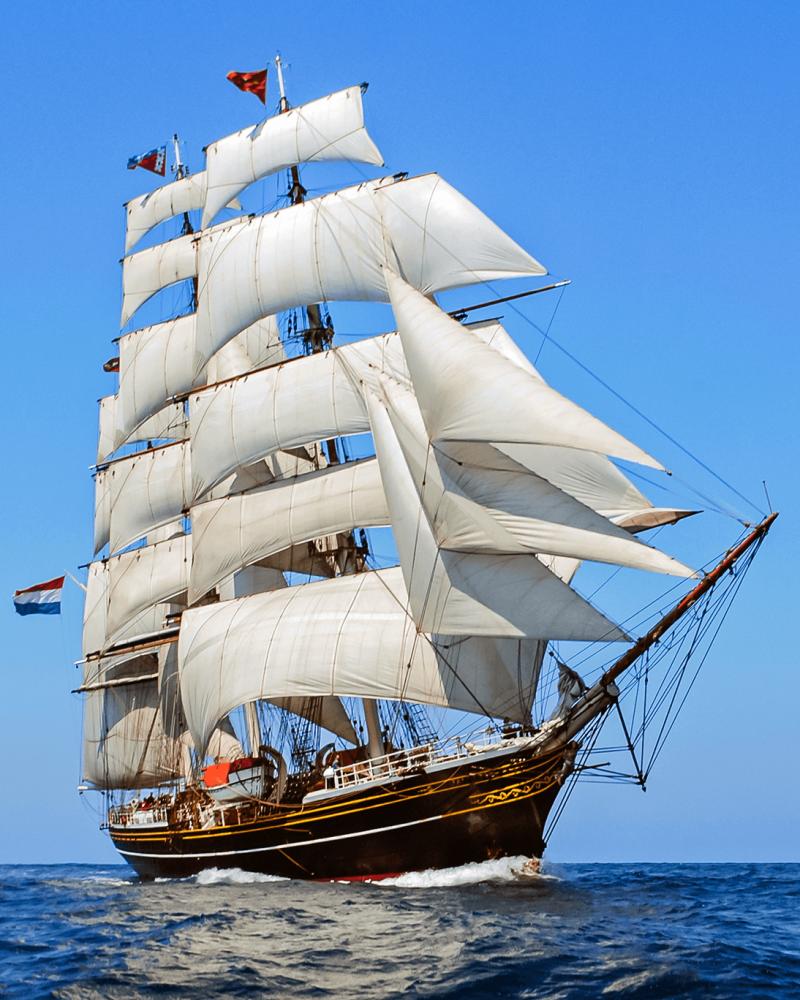
A cruise to Martinique is one of the most beautiful ways to discover this island, especially when you do so aboard a historic three-masted clipper ship. We offer luxury sailing cruises in the Caribbean where you sail by wind power during the day, and anchor in secluded bays in the evening that are inaccessible to large cruise ships. This way you experience Martinique in a way that few travelers know.
What sets our cruise apart:
- A maximum of 28 guests on board, spread across 14 cabins, for an intimate and personal atmosphere
- Fully catered with breakfast, lunch, dinner, and cocktails prepared by our own chefs
- Activities such as snorkeling, day trips, and relaxing on white sandy beaches
- A young, friendly, and dedicated crew always ready to assist you
- Docking at places inaccessible to large cruise ships
- Cruises from €5,300 per person, excluding flights
Would you like to know more about our Caribbean sailing cruises or book a trip directly? Visit Clipper Stad Amsterdam for an overview of all journeys, or go directly to our booking page to reserve your spot. Do you have questions? Contact us and we will be happy to help you.
Frequently Asked Questions
Do I need a visa to visit Martinique?
Because Martinique is a French overseas department, EU rules apply for entry. EU citizens, including those from the Netherlands and Belgium, do not need a visa and can enter with a valid passport or identity card. Travelers from outside the EU should check the French visa requirements, as these apply to Martinique.
What language is spoken in Martinique and can I get by with English?
The official language in Martinique is French, and most locals also speak Antillean Creole. In tourist areas, hotels, and restaurants you can get by reasonably well with English, but outside the tourist hotspots French is the common language. It is strongly recommended to learn a few basic French words, as locals appreciate it enormously and it makes your stay much more enjoyable.
What is the best way to get from the north to the south of Martinique?
The most flexible way to explore the island is by rental car, which you can pick up at Aimé Césaire airport or in Fort-de-France. Bear in mind that the roads in the north are narrow and winding, but are perfectly manageable with a regular car. There is also a local bus network (collectifs), but the frequency and routes are limited, making a rental car by far the most convenient option for those who want to see the whole island.
Is Martinique suitable for children and families?
Martinique is certainly suitable for families with children. The sheltered, calm beaches such as Les Salines are ideal for young swimmers, and activities such as snorkeling, kayaking through the mangroves, and visiting a distillery with a guided tour offer something fun for every family member. Do watch out for the sun: the Caribbean sun is intense, so good sun protection and adequate hydration are essential, especially for children.
What are common mistakes travelers make on a first visit to Martinique?
A common mistake is underestimating travel times between attractions: the island looks small on a map, but the narrow, winding roads in the north mean that distances take much more time than expected. Many visitors also focus only on the south and miss the spectacular nature and history of the north around Saint-Pierre and the Montagne Pelée. Plan your days generously and ideally combine a stay in both the north and the south for a complete picture of the island.
What equipment do I need if I want to climb the Montagne Pelée?
For a climb of the Montagne Pelée you need sturdy hiking boots with good grip, as the paths can be slippery due to the humid conditions in the rainforest. Bring sufficient water, a light rain jacket or poncho, and sun protection for the open sections above the tree line. It is advisable to set off early in the morning so that you avoid the midday heat and have the best chance of clear visibility from the summit.
Can I visit other islands besides Martinique on a cruise aboard the Clipper Stad Amsterdam?
Yes, the Caribbean sailing cruises aboard the Clipper Stad Amsterdam visit multiple islands in the Caribbean, allowing you to discover a wide range of destinations in a single trip. Thanks to the small scale of the ship — with a maximum of 28 guests — it is possible to dock in secluded bays and at smaller islands that are inaccessible to large cruise ships. Check the full travel overview on the Clipper Stad Amsterdam website for the specific routes and destinations per departure date.